Get Full Government Meeting Transcripts, Videos, & Alerts Forever!
Get email alerts on the Habitat Restoration topic
No spam. Unsubscribe anytime.
Tribal, local restoration projects reconnected Dungeness floodplain; presenters said salmon returns rose sharply
Summary
A restoration practitioner described removal of a core dike, engineered log jams and levee setbacks on the lower Dungeness River and related projects on nearby rivers. Presenters showed monitoring data and photo comparisons they said demonstrate large increases in salmon production after reconnection and habitat work.
Randy, a restoration practitioner presenting to the Dungeness River Management Team on Oct. 8, described floodplain reconnection and engineered log‑jam projects he said have restored habitat and increased salmon production on the Dungeness and nearby rivers.
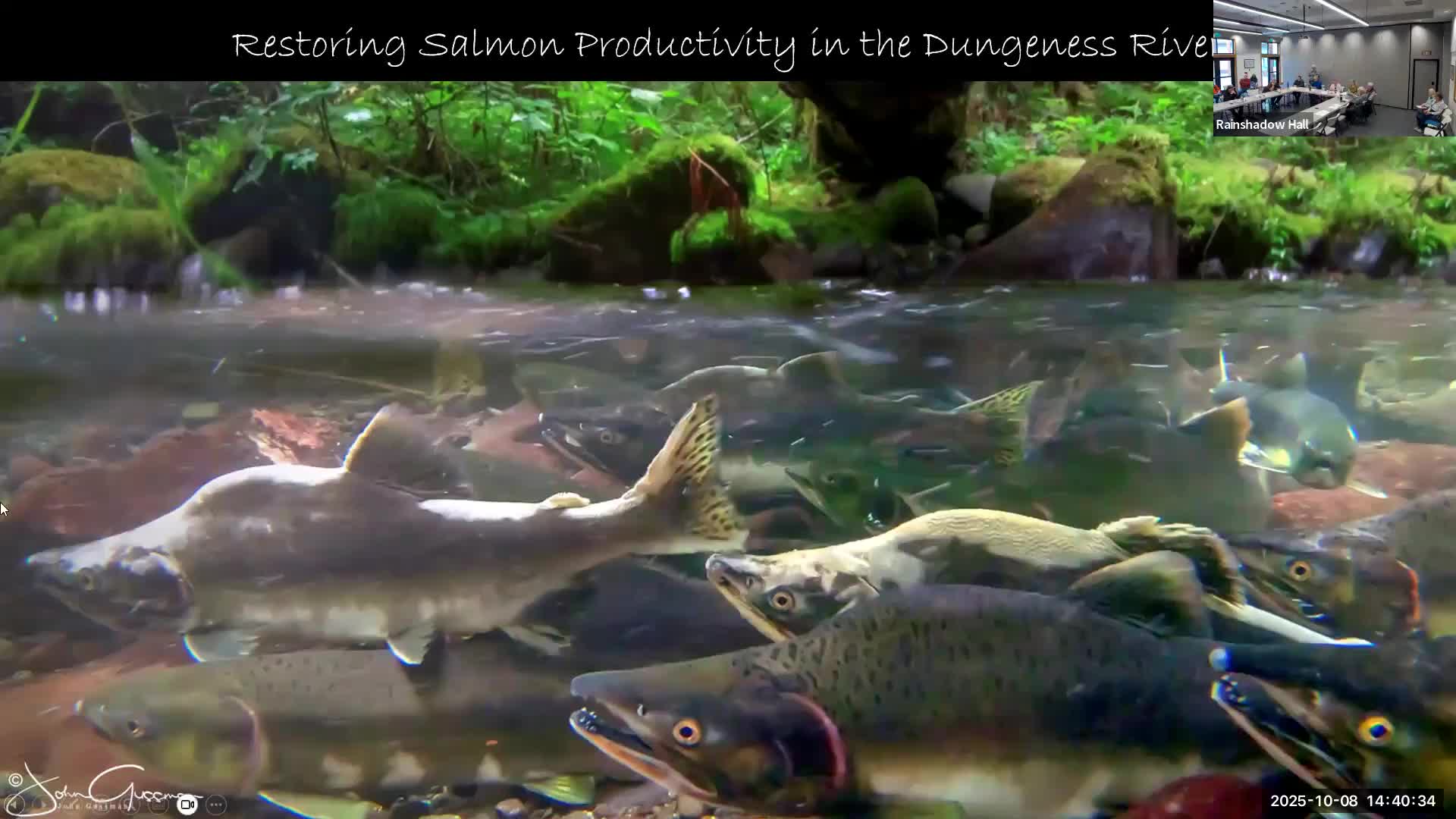
“Projects can work,” Randy told the group, recounting a case history in which a reach with only seven returning adults in 1999 later produced a roughly 13‑year average of about 2,400 natural‑origin spawners after combined habitat restoration and stock recovery work. He illustrated the restoration with before‑and‑after photos, maps of former dikes and levees, and monitoring results from spawning and juvenile surveys.
Randy described work that included removal of a core dyke, construction of a setback levee, reconnection of oxbows and the installation of engineered log jams (ELJs). He said the Dungeness project restored multiple channels, created pools and reconnected floodplain forest, which “bled off” energy from the main channel and reduced extreme scour at redd sites. He described similar projects at the Salmon Hatchery reach, at a restored estuary and upstream ELJ placements that he said raised the local river bed and improved side‑channel habitat.
Members asked about the scale and next steps. Randy said tribal leadership prioritized work on the Big Quilcene River and that project had advanced to a flood‑spanning bridge and more than 7,000 feet of main and side channel construction and roughly 100 engineered jams. He also said additional helicopter‑placed log jams and side‑channel reconnection are planned for 2026, and that further work will require either landowner permission or land acquisition.
Questions addressed monitoring and counts. Randy explained that summer chum numbers are captured by a state trap and counted; his summer chum reporting relied on Department of Fish and Wildlife counts and tribal monitoring. When asked about upstream extent, he said the main productive summer chum reach is just under 2 miles and that coho and steelhead are present above some barriers.
Why it matters: presenters framed the work as reversing a century of channel simplification (dike construction, log‑jam removal and channelization) and as restoring both capacity (area available to fish) and productivity (juveniles produced per unit area). Team members asked about implementation timelines, bridges, and landowner permissions required for continued floodplain reconnection, and several thanked Randy for the detailed data and success metrics.
Randy closed by reiterating planned work on the Big Quilcene and additional log‑jam placements planned for 2026 and by inviting follow‑up contact.