Get Full Government Meeting Transcripts, Videos, & Alerts Forever!
Get email alerts on the Charter Schools topic
No spam. Unsubscribe anytime.
Charter committee accepts Milwaukee Academy of Science annual report, urges focus on reading and math
Summary
The Charter School Review Committee reviewed Milwaukee Academy of Science(MAS) 2024-25 annual report and voted to accept Evidence Changerecommendations for continued monitoring, highlighting concerns about attendance, early literacy and teacher licensure.
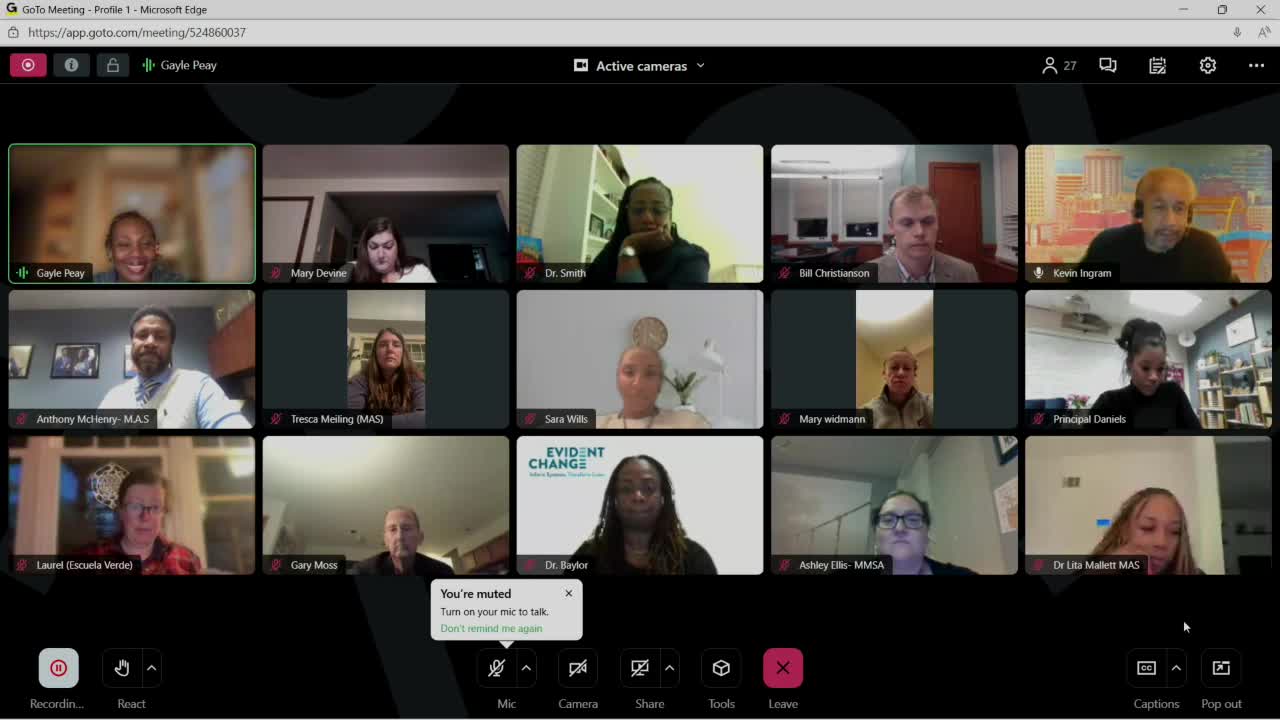
The Charter School Review Committee voted Nov. 3 to accept Evidence Changerecommendations that Milwaukee Academy of Science continue annual academic monitoring, with particular emphasis on improving student outcomes in reading and math.
Evidence Change reviewer Dr. LaShawn Baylor presented the MAS 2024-25 report, saying MAS began the year with 1,701 students and ended with 1,575 after 34 enrollments and 160 withdrawals. "They had 92 teachers who were eligible to return for the school year. 82 returned, resulting in an 89.1% return rate," Baylor said, and noted a 95.5% teacher retention rate by year-end. The report flagged attendance and parent-conference targets that were not met in several grade bands and identified 14 teacher licensure issues at the time of the report.
The report used multiple scorecards to summarize performance. Baylor said the Milwaukee Academy of Science elementary scorecard showed MAS earned 59.1% of possible points for the K-5 group; middle grades scored 64.8%; the high school scorecard and DPI four-year cohort rate diverged, with the DPI cohort graduation rate at 86.9% while local measures show higher senior completion. "On the scorecard, we use the DPI 4 year cohort graduation rate, which was at 86.9," Baylor said.
School leaders told the committee the district opened a second K campus and a second middle school campus, adding nearly 600 students across three years and many students from other schools, which they said likely affected short-term outcomes. A school representative said the influx required time for students to acclimate and for staff to align instruction across campuses.
Committee members pressed the school on literacy instruction and licensure follow-up. Member Bill Christiansen cited declines in AIMSweb-plus benchmarks across early grades and asked what the school is doing to address the trend. MAS leaders said they are implementing more fidelity in phonics-based reading programs, training academic deans as instructional coaches and strengthening data systems. On licensure, Evidence Change and school staff said they have staff dedicated to monitoring applications, follow-up reminders for teachers, and support for applicants who need to complete credentials or resolve licensure flags with the Department of Revenue or DPI.
After discussion, committee member Bill Christiansen moved to accept Evidence Changerecommendation for MAS monitoring; the motion was seconded and approved unanimously.
The committeeaction requires continued reporting and targeted support to strengthen K-12 reading and math outcomes at MAS.