Get Full Government Meeting Transcripts, Videos, & Alerts Forever!
Get email alerts on the Tribal Relations topic
No spam. Unsubscribe anytime.
Pierce County proclaims Native American and Alaska Native Heritage Month; tribal leaders stress government‑to‑government partnership
Summary
Pierce County Council and executive designated November 2025 as Native American and Alaska Native Heritage Month. Tribal members and educators spoke about sovereignty, cultural preservation, tribal economic contributions, and tribal‑school partnerships.
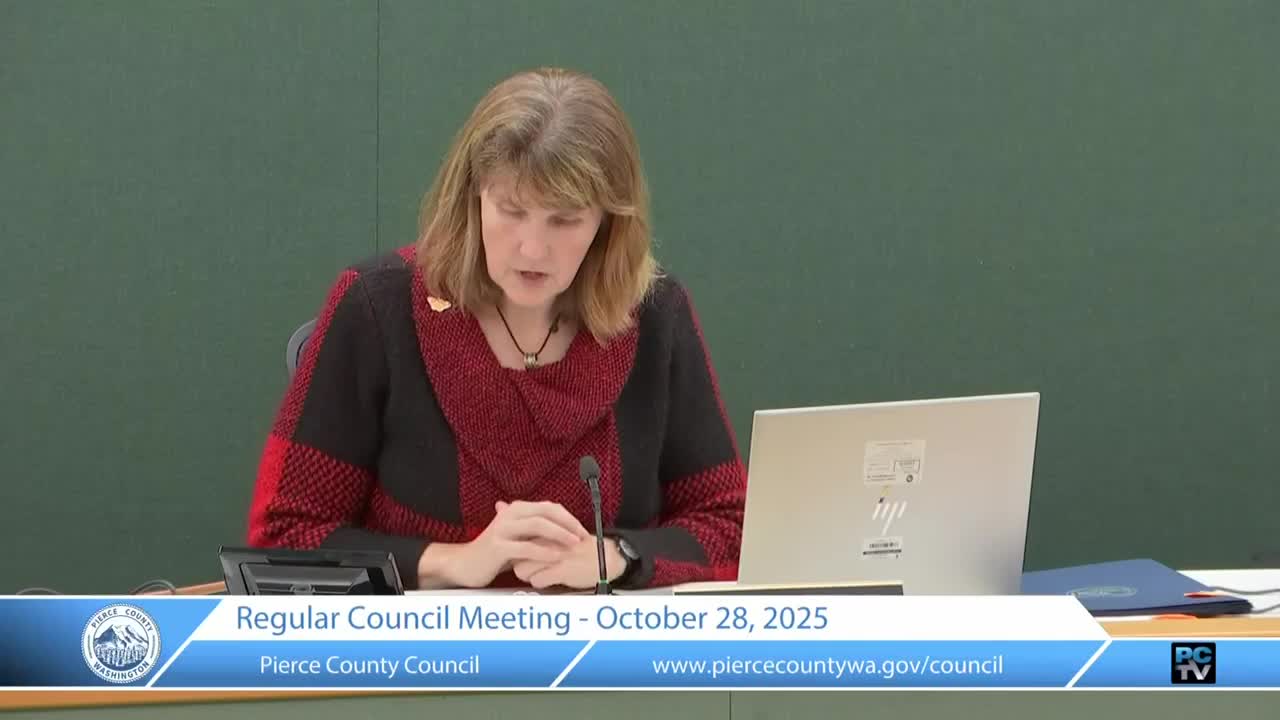
The Pierce County Council and Executive on Oct. 28 proclaimed November 2025 as Native American and Alaska Native Heritage Month and invited tribal members, educators and economic stakeholders to speak.
Councilmembers noted that Pierce County sits on the ancestral lands of the Puyallup, Muckleshoot, Nisqually and Squaxin Island tribes and stressed the county’s commitment to government‑to‑government partnerships. Tribal speakers described continuing cultural practices, treaty rights, environmental stewardship, and historical injustices, then highlighted economic contributions from tribal enterprises.
Bettina Giese, a Puyallup tribal member and business owner, described a family business (Thunderbird Trading Post) and cited the tribe’s broad economic footprint—ranging from hospitality and fuel stations to the Emerald Queen Casinos—and said tribal enterprises reinvest millions in local charities and programs. Giese cited a figure—more than $18 million donated by the Puyallup Tribe’s Charity Trust Board since 2012—during her remarks.
Jason Lafontaine, director of the Indian education program for the Puget Sound Educational Service District, described work with multiple school districts in Pierce County and said Native education staff provide cultural supports, place‑based learning and leadership opportunities for students. Speakers and councilmembers emphasized the value of tribal consultation in naming schools and parks and noted ongoing collaborations in restoration and public‑health efforts such as the Cedar Wellness Center.
Councilmembers thanked tribal representatives, recognized the tribes’ economic and cultural contributions, and invited guests for a photo. The proclamation itself urges residents to learn about tribal histories, culture and traditions and reaffirms county commitments to tribal sovereignty and partnership.