Get Full Government Meeting Transcripts, Videos, & Alerts Forever!
Get email alerts on the Instruction topic
No spam. Unsubscribe anytime.
District reports 2,100+ non-evaluative classroom walkthroughs, focuses next quarter on conceptual change and formative assessment
Summary
Conway school leaders reported more than 2,100 brief, non-evaluative classroom visits in the first nine weeks, using a walkthrough tool focused on Danielson and Hattie high-impact strategies. Staff said conceptual-change strategies were least observed and will be a focus of second-quarter coaching.
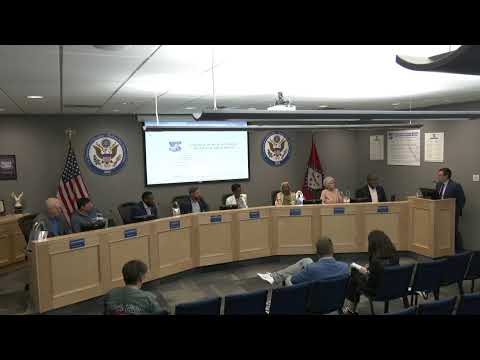
District instructional staff reviewed a unified classroom walkthrough initiative at the Oct. 14 meeting and reported documentation of 2,138 classroom visits in the first nine weeks. The walkthroughs are explicitly non-evaluative and intended to increase instructional consistency and provide quick feedback to teachers and leaders.
Instructional leader Shanda Nue said the walkthrough form emphasized a small number of Danielson framework items and several high-impact strategies identified in John Hattie—s research, including teacher clarity, formative assessment and conceptual change. Nue said that, early in implementation, there was some calibration needed on how to record an "I can" or objective; staff adjusted guidance to reflect that objectives may be posted or conveyed orally for younger students.
Nue said conceptual change had the lowest observation rate among the high-impact strategies and that the district will distribute a one-page professional learning brief for principals and coaches on that strategy for second-quarter walkthroughs. The district also added a "partially observed" option in response to principal feedback to clarify thresholds for marking observed vs. not observed.
District leaders framed the program as a tool for timely feedback and celebration of classroom practice, not as a replacement for formal teacher evaluations. Principals will use campus-level data to identify glows and grows and to plan coaching.