Get Full Government Meeting Transcripts, Videos, & Alerts Forever!
Get email alerts on the Finance Capital topic
No spam. Unsubscribe anytime.
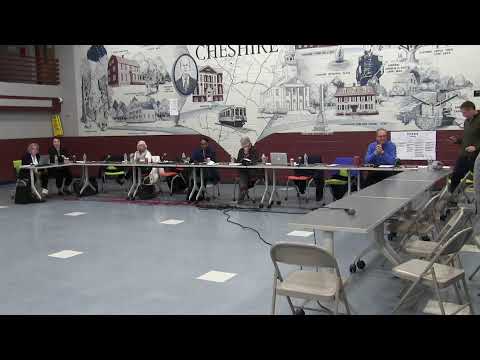
Board hears finance update after mixed referendum results; turf and parking projects fail, energy project grant timing raises concern
Summary
The Cheshire Board of Education received a finance committee update on Nov. 3 that described the district’s five‑year capital plan, noted a $1.7 million first‑year approval at referendum and reported that two high‑profile projects — a CHS parking configuration and synthetic turf replacement — failed at referendum.
The Cheshire Board of Education received a finance committee update on Nov. 3 that described the district’s approved capital plan and flagged several near‑term funding and timing risks, including a failed referendum on high‑visibility projects and the time‑sensitive nature of a state school construction grant tied to an energy performance contract.
Emily Taylor, finance staff, told the board that the district’s five‑year capital expenditure plan was submitted and ultimately approved in part: year‑one funding of $1.7 million was approved at referendum after town council and referendum actions. "Of the proposed projects, three were approved by the town council and did not need to go to referendum," Taylor said, noting playground upgrades, sprinkler replacements and electrical service work were approved; the fire alarm control system at Cheshire High School passed referendum with a $1.1 million allocation. Two projects did not pass the referendum: the CHS south parking lot configuration (including loading‑dock repairs) and synthetic turf field replacement.
Board members pressed for improved public communication about the scope of referendum items. "We maybe need to do a better job of letting and educating the public about some of our needs that are real needs," one member said, after noting the parking‑lot project included essential loading‑dock repairs that had not been emphasized.
Discussion also focused on an energy performance contract that relies in part on school construction grants and tax‑credit timing. The superintendent and board members said state grant acceptance was needed by early December to preserve the district’s bank rate lock and the financing commitment (a Bank of America rate lock that expires Dec. 31). Doctor Solon said technical issues remain with the Office of School Construction grants and that the district is working to resolve them; board members discussed contacting state legislators to urge timely review.
Board members also discussed the turf replacement as an ongoing local priority and suggested establishing a dedicated replacement reserve funded over time and using community outreach to build support. Several members said the district and town should coordinate more proactively on future referenda and public education about project components.
No board action was taken on new capital projects that evening; the report was informational and prompted direction to continue outreach and follow up on grant timing.