Get Full Government Meeting Transcripts, Videos, & Alerts Forever!
Get email alerts on the Federal Shutdown Snap Response topic
No spam. Unsubscribe anytime.
Cherokee Nation declares emergency, pledges SNAP replacements and health investments amid federal shutdown
Summary
Principal Chief Chuck Hoskin Jr. said the Cherokee Nation has declared a state of emergency tied to the federal government shutdown and will use tribal funds to replace SNAP payments, support food banks and sustain health and human services while warning some federally funded programs face longer-term pressure.
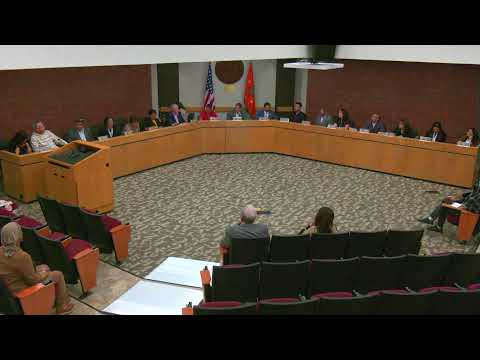
Principal Chief Chuck Hoskin Jr. told the Cherokee Nation Tribal Council that the nation has issued a state of emergency in response to the federal government shutdown and will use tribal resources to help residents affected by lapses in federal benefits.
"As we know, the supplemental nutrition assistance program, which millions of Americans rely on, thousands and thousands of Cherokees rely on, and thousands and thousands of our friends and neighbors just in this region rely on is coming to a halt in terms of funds," Principal Chief Chuck Hoskin Jr. said during the council's October meeting.
Chief Hoskin said the government will provide a one-time replacement SNAP payment of $185 per individual for Cherokee Nation citizens who live within the reservation and the contiguous counties and will deploy additional dollars to regional food banks and local pantries. He said a list of large regional food banks to receive funds would be announced and that the nation will solicit interest from smaller pantries that may not yet be known to tribal leadership.
The chief identified the Emergency Management Act and the Public Health and Wellness Fund Act as principal authorities the nation is relying on to finance immediate relief. He also noted the sovereign wealth fund is available for "a bridal situation" but cautioned that a protracted federal shutdown could force longer-term choices about programs that rely heavily on federal funding, including Head Start, WIC and Job Corps.
"Anyone who wonders whether we should be worried about the federal shutdown, we should, but we should be reassured that this government, this nation is in a strong financial position," Hoskin said, adding the nation can absorb short-term pressure but would reassess if the shutdown continues for months.
Health facility investments: Clamore Indian Hospital and a new facility
Hoskin announced that Clamore Indian Hospital, the last IHS facility within the Cherokee Nation reservation, is now under Cherokee Nation control. He said the council approved an immediate investment of $11,000,000 to bring the facility up to the nation's standards and that the nation plans to build a $244,000,000 state-of-the-art health facility in Clamore that will include a wellness center.
Cultural and language investments
The chief said the nation signed the Heritage Center Act and plans a $50,000,000 heritage center to replace an aging structure. He also said the nation signed a Historic Cemetery Act to catalog, survey and prioritize repairs at historic cemeteries across the Cherokee Nation; he described that work as "necessary" and likely to take years.
Hoskin said the Public Health and Wellness Fund will also allow the nation to increase language funding, add two home-visit CNA-type positions to serve vulnerable elder speakers, raise wages for fluent language speakers employed by the government and offer bonuses to language learners on a recently adopted policy.
Other facilities and community work
The chief noted the Indian Child Welfare headquarters has opened in a new 40,000-square-foot facility designed to accommodate more than 70 staff and include space for children and families. He also thanked council members for local infrastructure work, citing road repairs at Boland Springs and new housing in Ocheleta.
Announcements and program supports
Hoskin referenced recent elder summits and announced additional outreach events, including Families Are Sacred and veterans summits. He also said the Cherokee Nation will make $5,000 available to each at-large organization for direct relief work in their communities.
Why this matters: The nation's actions are intended to blunt immediate impacts on food security and health access while preserving tribal program continuity during federal funding interruptions. Chief Hoskin warned, however, that sustained federal disruptions would require further deliberation about long-term program support.