
Riverside reviews three schematic designs for combined public safety facility; trustees generally favor Scheme 2
Get AI-powered insights, summaries, and transcripts
Subscribe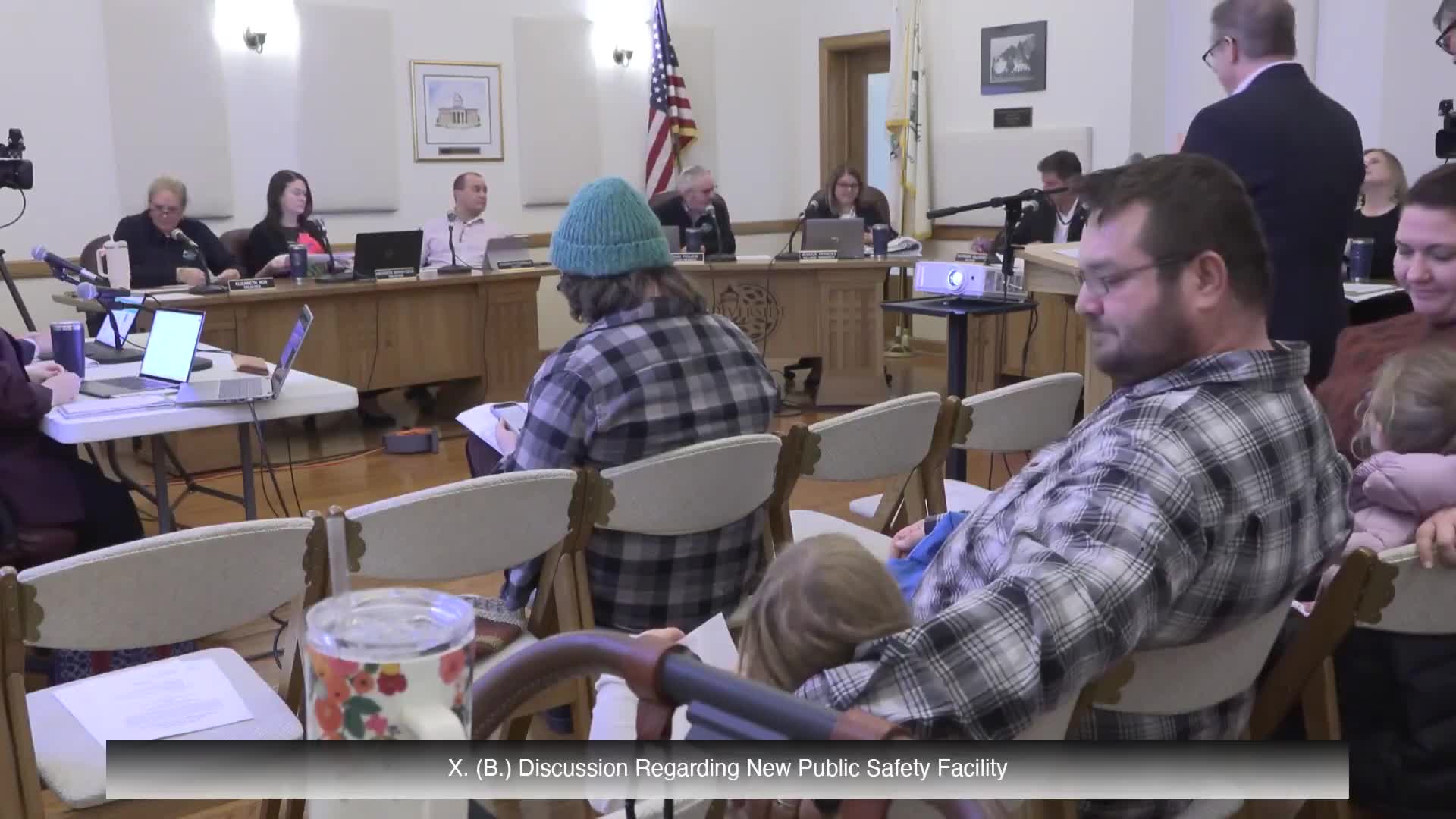
Summary
Williams Architects presented three schematic options for a new combined police-and-fire public safety facility with community rooms and river access. Trustees favored a version that isolates bunk rooms and places community spaces toward the river; staff and architects will refine exteriors and cost estimates and return in January.
Williams Architects presented three schematic design schemes for a proposed combined public safety facility at the Nov. 6 Village Board meeting. The presentation covered lower-level secured patrol parking, an apparatus bay with a mezzanine for fire bunk rooms, a 'warm zone' (decontamination and gear removal) between apparatus and clean areas, and public/community spaces oriented to the river.
Kim Nigro and the Williams team told trustees the current designs are schematic and intentionally emphasize program adjacencies and circulation before final exterior treatments. The team highlighted three shared objectives: preserve a visual corridor to the river, maximize community-use space, and fit required apparatus and police functions within a three-level plan. The architects said soil borings and topo-survey data are pending and will affect foundation and elevation decisions.
Design differences among the three schemes included the location of the main vestibule and stair, the placement of the apparatus support (east or west of the apparatus bay), and how the mezzanine and bunk rooms are arranged. The team described tradeoffs such as interior versus exterior connections through to a river-facing terrace (they recommended an exterior link to limit conditioned space and cost).
Trustees and department directors asked about site access from the riverwalk, visibility of the river from public and fitness spaces, safe separation of dirty gear, and the armory and evidence-storage locations. Director Buckley and fire leadership said all three layouts function for operations; trustees expressed a preference for Scheme 2 because it separates bunk rooms from high-traffic zones and places community spaces with river views.
Architects and staff said the next steps are to refine the schematic plans with survey and geotechnical data, develop exterior massing studies, and return to the board with exterior concepts and an updated cost picture (staff estimated a return in January). The presentation did not include a final cost estimate or a formal vote; the board provided direction to continue design work and return with exterior studies.