Get Full Government Meeting Transcripts, Videos, & Alerts Forever!
Get email alerts on the Municipal Budget topic
No spam. Unsubscribe anytime.
Abington proposes 0.25 mill tax increase, $125 refuse fee hike in lean FY2026 draft budget
Summary
Abington Township Manager Chris Christman presented the proposed FY2026 preliminary budget, recommending a 0.25 mill property-tax increase and a $125 rise in the refuse fee while keeping sewer rates flat and using about $1.3 million of fund balance to balance the draft.
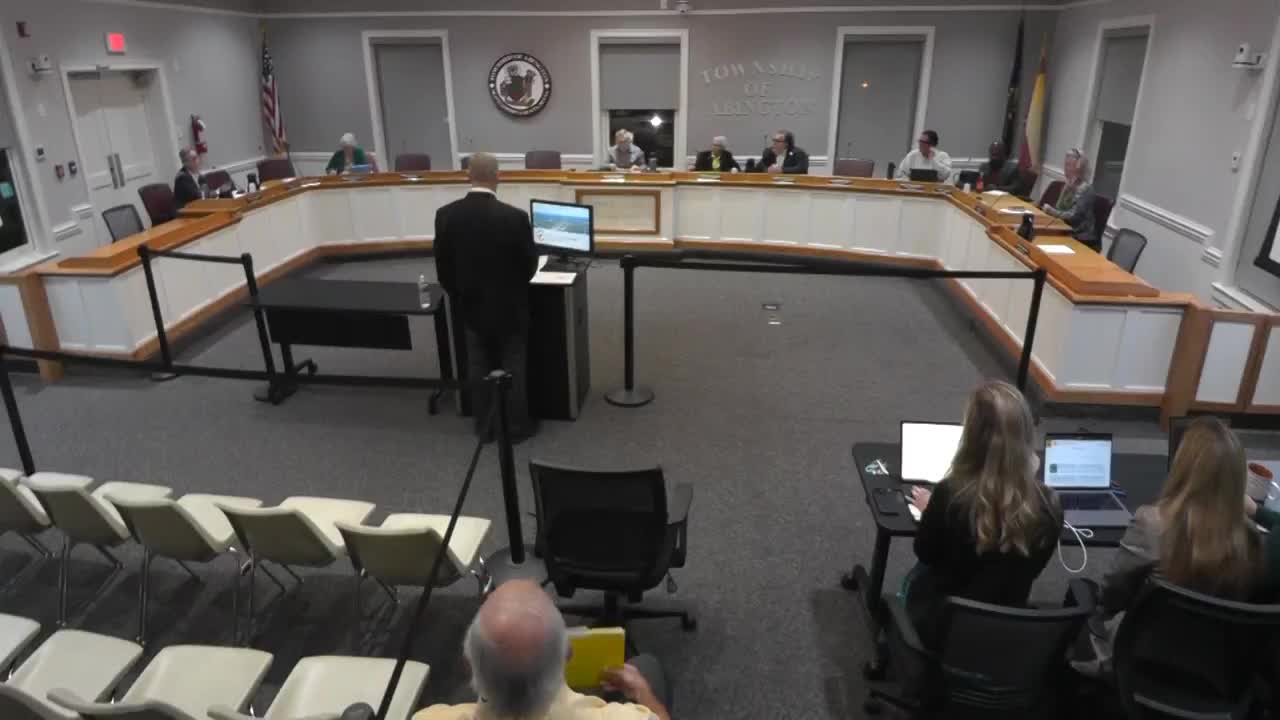
Abington Township Manager Chris Christman presented the proposed fiscal year 2026 preliminary budget and told the Board of Commissioners the plan is balanced and preserves current services while addressing several revenue pressures. "So the purpose of this evening's meeting is for the board to receive an introduction to and a presentation about the proposed fiscal year 2026 preliminary annual budget," President Hecker said as the session opened.
Christman said the draft relies on a combination of a 0.25 mill tax increase, one-time fund-balance uses and contract-related cost shifts. "We are presenting the 2026 proposed budget for Abington Township this evening," Christman said. Under the proposal the township's property-tax levy would rise by one quarter mill, bringing the township portion to 6.172 mills; Christman said that increase equates to about $38 on a $150,000 assessed home. The draft also incorporates a $125 increase to the township refuse fee that was awarded earlier this year via a transfer-station contract, which would raise the typical curbside rate to about $400.
Why it matters: Christman outlined four primary drivers of the 2026 pressure: (1) long-term declines in the value of a mill since a 2018 reassessment high-water mark, (2) a potential Willow Grove Mall reassessment that he estimated could reduce revenue by roughly $985,000 to $1,300,000, (3) a roughly $1.9 million increase in the township's Minimum Municipal Obligation (MMO) for the pension plan after an updated mortality table, and (4) higher solid-waste disposal and transfer costs in the regional market. Taken together, those items created an initial budget shortfall Christman said department heads trimmed from about $6 million to produce the presented, lean plan.
Budget and fund specifics: The all-funds spending plan in the presentation totaled about $85 million and showed a roughly 5% increase in combined spending. Christman said Abington's budget is organized into 10 funds (eight operating, two capital). He explained that several large percentage changes in line items reflect the use of previously accumulated fund balances rather than new recurring costs: a workers' compensation fund established when the township was previously self-insured will be drawn down now that Abington is in a pooled insurer (Delaware Valley Insurance Trust); the refuse capital line increases largely because the draft uses fund balance to acquire three replacement trash trucks (approximately $1.3 million); and the sewer capital schedule includes about $1.5 million of treatment-plant work paid from the sewer capital reserve.
Sewer and refuse rates: Christman said sewer fees will remain unchanged for 2026 and the sewer operating and capital programs are funded largely from existing reserves. On refuse he said the new contract and the $125 fee increase should stabilize rates for several years: "At the time we pulled these numbers ... that $400 puts us right in the middle of every other community in the area." Christman noted the township's refuse rate remains competitive compared with neighboring municipalities even after the increase.
Personnel and benefits: The proposed budget maintains the township's current complement of about 291 employees, with budgeted contractual salary increases Mr. Christman described as roughly 4% and overall personnel cost increases reflective of wage and benefit changes. Health-insurance costs were projected to rise by about 5.7% in 2026; Christman credited the township's pooled coverage with the Delaware Valley Insurance Trust (Divot) for moderating increases.
Fund-balance policy and reserve proposal: Christman reiterated the township's fund-balance policy of maintaining roughly three months of operating expense and recommended creating a new operating reserve (proposed Fund 96) to build a dedicated cash cushion over time. He said the draft budget uses several one-time items to limit recurring tax increases: a $580,000 Divot rate-stabilization dividend, transfers from the workers' compensation fund, and about $1.3 million in planned use of existing fund balance. He also noted that, under the current policy allocations, nearly $2.8 million would be directed to the OPEB allocation this year, and said that fund is substantially funded and that the board could reconsider the rigid percentages in the policy.
Process and schedule: Christman said the draft budget will be posted for public review on Oct. 17, will appear on the board's Nov. 13 agenda for authorization to advertise the proposed budget (statutory advertising requirement referenced), and would return for final adoption at the Dec. 11 meeting.
Public comment and transparency concerns: In the public-comment period, resident Laura Layman said many residents lacked access to the manager and raised concerns about the timing and transparency of budget documents and public input; she urged workshops and earlier release of materials. "We need workshops for this budget. The residents need to have an opportunity to have real input," Layman said. Another resident, Connie, thanked staff for the presentation and asked that future preliminary budgets and public comments be posted earlier so the public can review materials and give informed feedback.
What the board did not do tonight: The meeting was an informational presentation and discussion; no final vote on the budget or on any new tax ordinance was taken. Christman and staff asked for feedback and pledged to answer follow-up questions as the board reviews the posted draft ahead of the November agenda.
Looking forward: The manager recommended the board consider empowering the Economic Development Corporation to pursue appropriate redevelopment to help restore mill value over the long term, and flagged the fire fund as an item likely to require attention next year. The board and staff agreed to continue working through questions between the presentation and the November agenda.