Get Full Government Meeting Transcripts, Videos, & Alerts Forever!
Get email alerts on the Special Education topic
No spam. Unsubscribe anytime.
Perkiomen Valley staff lay out inclusion action plan; board presses for balance and metrics
Summary
District special‑education leaders presented an inclusion action plan focusing on co‑teaching, MTSS tiers and a continuum of supports. Board members urged caution about a one‑size‑fits‑all push to full inclusion, requested clearer scheduling flexibility and called for measurable indicators of success.
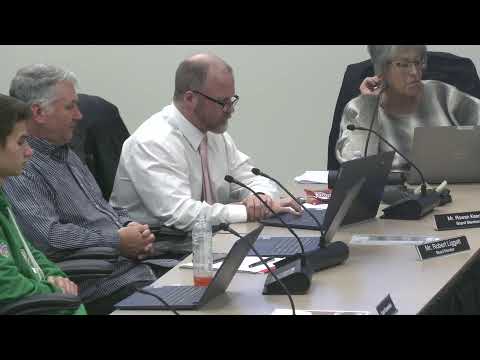
District special‑education staff presented an “inclusion action plan” to the Perkiomen Valley School District board on Nov. 3, describing work to align services across a continuum that ranges from universal supports to specialized, individualized instruction.
The presentation framed the plan around the district’s comprehensive goals and legal obligations, including Free Appropriate Public Education (FAPE) and Least Restrictive Environment (LRE). Administrators said key goals include building a robust continuum of supports (universal, targeted and individualized), expanding instructional models beyond co‑teaching to consultative and facilitated models, improving specially designed instruction (SDI) and creating district standard processes so decisions about placement and services are consistent.
Board members pressed administration for balance and detail. Dr. Kampley — a psychologist on the board — cautioned that “least restrictive environment doesn’t always mean that you’re in the gen‑ed classroom for your instruction,” and warned that some students make better progress in smaller pull‑out settings. Several board members asked for clearer metrics and products they could judge: administrators proposed tracking standard state data (attendance, graduation, assessment results, the December 1 special‑education count) alongside perceptual measures (staff and family feedback) and implementation products (schedules, standard procedures and professional‑development records).
Superintendent Russell and special‑education leaders said they will prioritize assessing where co‑teaching models are effective, where scheduling creates barriers to flexible supports, and where additional professional development is required. The district also plans targeted outreach to buildings experiencing behavioral acuity and to align curriculum‑instruction work (for example, the science‑of‑reading rollout) with supports for students who struggle.
Board members asked for follow‑up reporting to the education committee and to the full board that includes both quantitative metrics and staff perception data to ensure the plan is building capacity without unintentionally marginalizing students or overloading teachers.