Get Full Government Meeting Transcripts, Videos, & Alerts Forever!
Get email alerts on the Comprehensive Plan topic
No spam. Unsubscribe anytime.
Avon Grove outlines measurable targets for comprehensive plan; attendance and teacher retention top priorities
Summary
At the Oct. 14 Committee of the Whole meeting, district administrators reviewed the comprehensive-plan action teams’ first-year measurable goals — including a 90% portfolio proficiency target in grades 2 and 5, an 80% academic growth target, and an 85% attendance goal — and proposed modest budget items to support teams’ work.
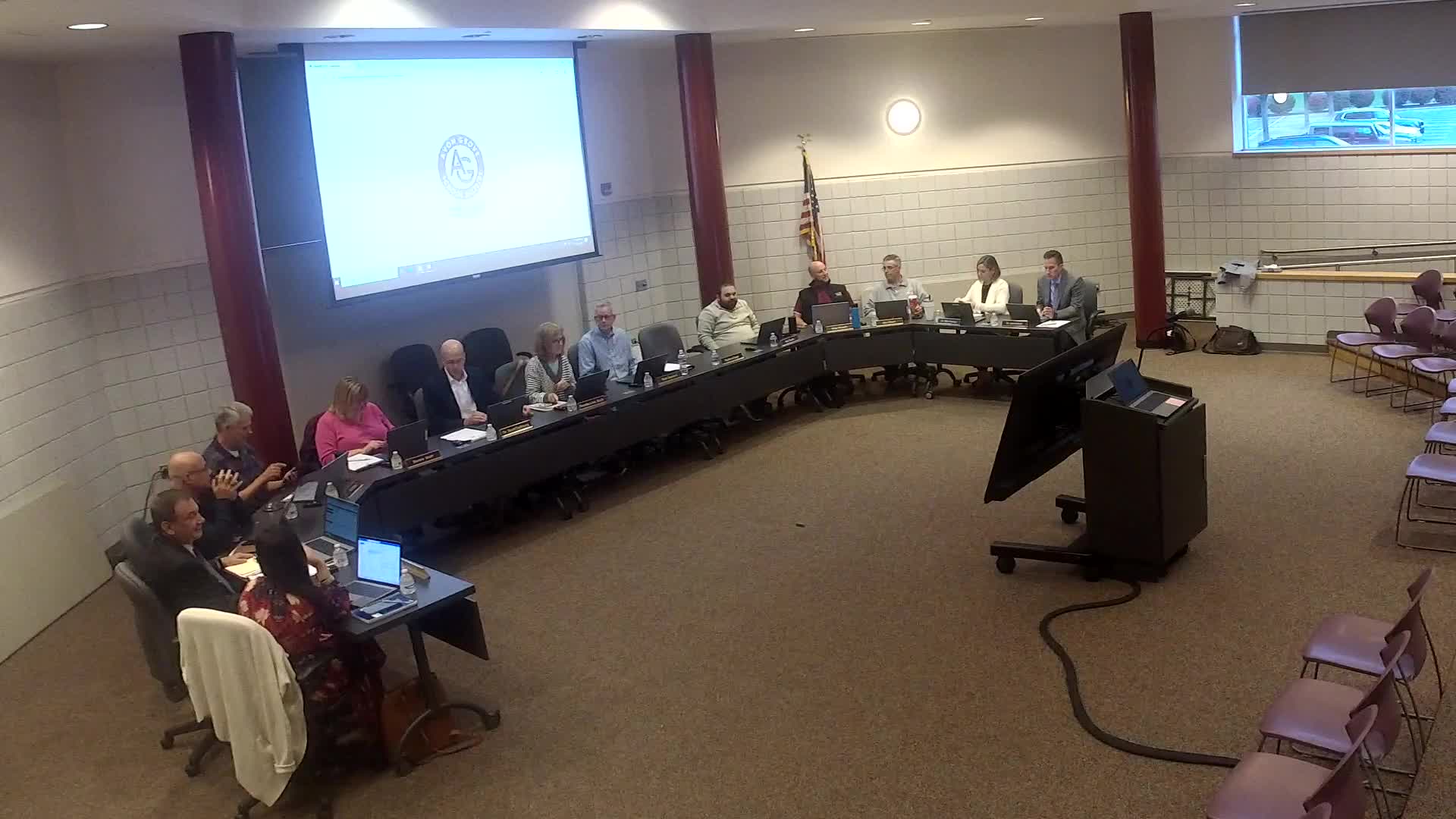
Avon Grove School District administrators presented the district’s comprehensive-plan update at the Committee of the Whole meeting Oct. 14, laying out first‑year targets and small-budget requests to support six action teams.
The update, led by Dr. Harvey and Dr. Koch, set specific measurable goals for teams: the Profile of a Future‑Ready Avon Grove Graduate team aims for 90% of future‑ready learners in grades 2 and 5 to demonstrate proficiency on student portfolios; the Future of Learning team set an 80% student academic‑growth target measured by building metrics (Exact Path and AIMSweb in elementary grades; IXL in middle school; high‑school measures still being finalized); and the Health & Advocacy team set an 85% district goal for students attending school at least 90% of the time (chronic absenteeism defined as missing 10% of school days, roughly 18 days a year).
Why it matters: the plan couples measurable short‑term targets with longer‑range steering‑team oversight. Administrators said teams will continue to refine measures and report progress publicly — steering‑team meetings are scheduled for Nov. 13, Feb. 12 and Apr. 30, with district overviews planned in February and May.
Key program details and methods
- Profile/portfolios: Dr. Harvey said the year will focus on portfolio development and alignment to career and education work standards from the Pennsylvania Department of Education; grade 2 will build and name portfolios, and grade 5 portfolios will be required to contain six artifacts aligned to the profile and PDE standards.
- Future of Learning: Dr. Koch said the team will use routine assessment systems as building‑level measures (Exact Path, AIMSweb, IXL) while continuing to determine specific measures for grades 9–12.
- Connected, Accepted, Valued: administrators said the district will administer the PACE student survey in grades 6, 8, 10 and 12. For grades 3 and 5 the district is developing a separate student survey; for K–2 the district is evaluating caregiver‑based approaches and age‑appropriate instruments.
- Health & Advocacy / chronic absenteeism: Dr. Snead and Mr. Burns — captains of the health and advocacy team — described a family‑focused strategy to reduce chronic absenteeism. Deliverables include a targeted multilingual communications plan (one‑page highlights for the website, brochures), weekly principal updates with attendance talking points, staff training to identify barriers, quarterly progress tracking and individualized attendance plans (SAPs) involving students, families and counselors. Mr. Burns said the team will emphasize learning each student’s story and tailoring supports rather than relying on punitive measures.
- Systems improvement and website: the systems team is reviewing options to streamline employee resources on a refreshed website. Administrators said the district’s current vendor has packages ranging from about $15,000 to $75,000 depending on customization; the district will determine stakeholder input needs after choosing an implementation level. The district also noted its chatbot already supplies real‑time usage analytics to inform redesign priorities.
- Workforce development: the workforce team set a target retention rate of 86% for classroom teachers and plans to use a mid‑June retention pull for reporting. The district has contracted with consultant Julia Skolnick for a three‑day retention “think tank” and budgeted funds for substitute coverage to allow educators to participate.
Budget requests described
Administrators summarized modest funding requests tied to team work: production of profile signage (many classrooms already display profile posters), roughly $5,000 for Future of Learning substitute coverage and publication costs, substitute coverage for Connected/Accepted/Valued professional learning days, funds for the workforce development consultant and substitutes, and an open range estimate for a website redesign ($15,000–$75,000) depending on customization. Administrators noted the high school makerspace has a vinyl printer/cutter and the district expects to produce many signs in‑house. Dr. Harvey said teams will refine and prioritize options before committing to larger expenditures.
Board and public questions
Board members requested historical PACE comparisons and educator‑survey data to measure change over time. Mr. Wood asked whether career and education work standards come from PDE; administrators confirmed they do. Mr. Dumont requested a demonstration portfolio; administrators agreed to present a sample when the team reports in February. Board members raised transportation and start‑time concerns for rural students; administrators said start times and targeted outreach will be considered as part of individualized plans. Multiple board members emphasized one‑on‑one mentoring and peer‑mentor programs as promising strategies.
Public comment: parent Alyssa Norman described her family’s experience when a child returned from inpatient mental‑health care and said the district had not clearly presented partial‑hospitalization (PHP) or other in‑school clinical options during the transition; administrators said virtual mental‑health services previously discussed were not pursued because of cost and that the district continues a continuum of supports ranging from school counselors to outside partners.
Next steps
Action teams will add members, continue implementation, and return for scheduled report outs; administrators will present progress updates in February and May. The district will continue vendor conversations for a website redesign and for possible data‑dashboard solutions to make progress public‑facing.
Ending note: no formal board action or votes were taken during the comprehensive‑plan review; the presentation focused on targets, deliverables and initial budget proposals.