Get Full Government Meeting Transcripts, Videos, & Alerts Forever!
Get email alerts on the Land Use Planning topic
No spam. Unsubscribe anytime.
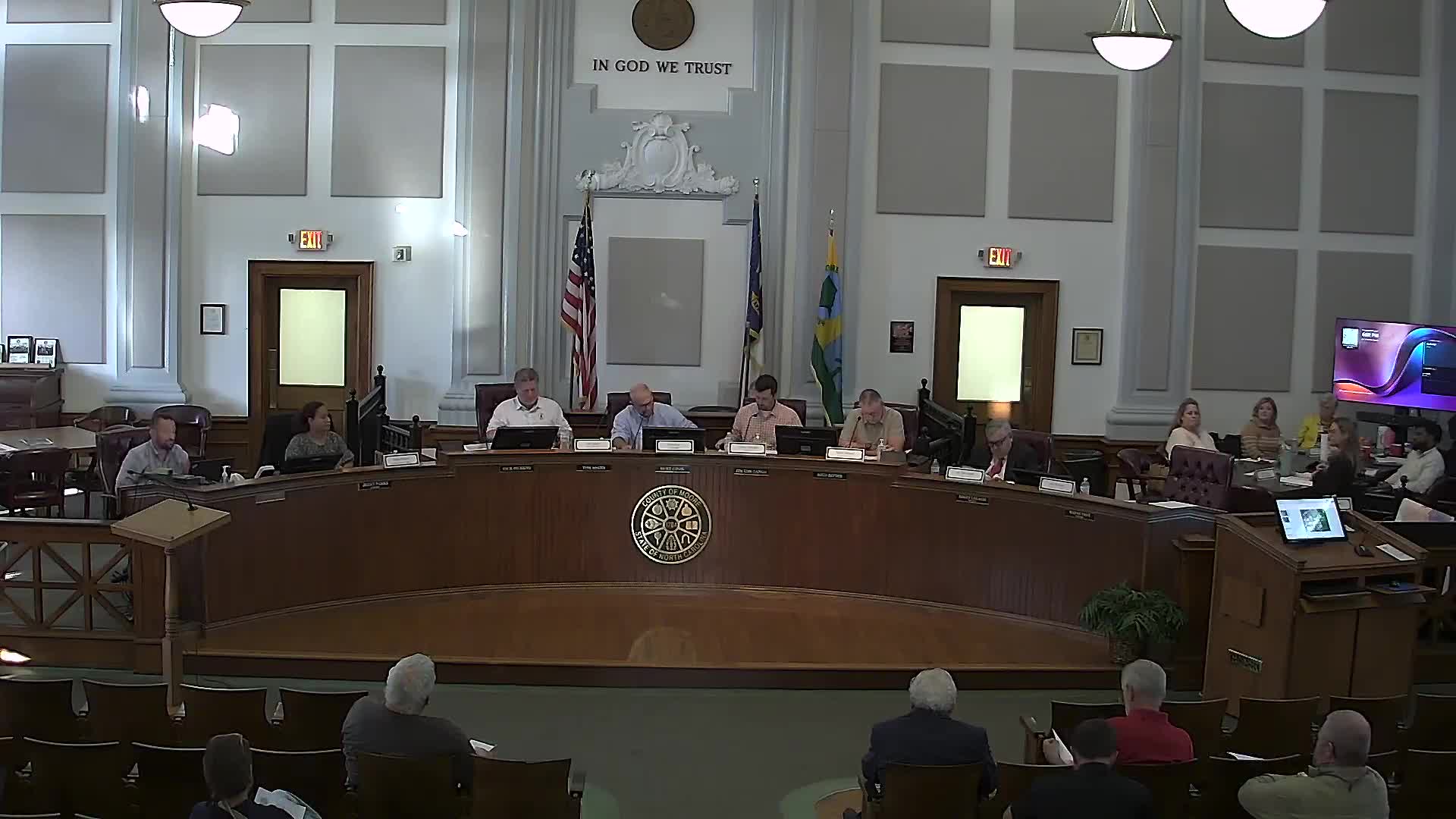
Moore County planning board recommends 2025 land use plan, asks commissioners to reconsider “low density” language
Summary
The Moore County Planning Board voted to recommend the Board of Commissioners adopt the 2025 Moore County Land Use Plan while asking commissioners to consider removing the plan's standalone definition of "low density" and to review proposed wording changes to the "Our Future" section.
The Moore County Planning Board voted to recommend that the Moore County Board of Commissioners adopt the 2025 Moore County Land Use Plan, with a formal request that commissioners consider removing the plan's definition of "low density" and review proposed rewording of the "Our Future" section. The board made the recommendation after a public hearing and extended discussion that included steering‑committee leaders, planning staff, farmers and developers.
Planning staff and the plan's process leaders presented the draft and described a multi‑month steering‑committee effort to update Moore County's guidance on growth. "I want you to think of it in the context of its content," process leader Robert Hyder said, adding that the plan should be seen as “an economic development document” if implemented. Larry Best, a co‑process leader, described the draft small‑town overlay as voluntary and focused on creating compact, walkable places rather than mandating specific lot sizes. "It's not about density, it's about design," Best said while outlining the 10‑minute walking scale and the proposed mix of parks, greenways and downtown cores.
Public commenters pushed back on several points. Nicholas LaSalla, a member of Moore Family Farms and a steering‑committee participant, said the plan's stated goal to "preserve and protect the heritage" should be read as protecting the ability of landowners to pass acreage to heirs, not as a solely historical or recreational designation. "The definition of heritage is land passed to heirs," LaSalla said. Michael Parker, owner of Terrace Ridge Farm and a steering‑committee member, flagged a sentence in the draft that says the steering committee "was tasked with updating the land use plan to align it with the Unified Development Ordinance." Parker called that wording “exactly opposite of the way the law is supposed to be,” arguing the UDO should be revised to implement the plan's vision rather than forcing the plan to mirror existing zoning.
Several commenters and board members described water and utility planning as the most powerful lever to manage where growth occurs. During Q&A a builder on the public record raised concerns about DEQ approvals for sewer plants and how municipalities use extraterritorial jurisdiction (ETJ) to block development; staff answered that the plan calls for a master utility plan to clarify where water and sewer will be extended and when, to guide investment and development decisions.
Other substantive concerns raised during public comment and work sessions included: the size and purpose of required open space, aggregation of small scattered open spaces into larger county parks or cash‑in‑lieu funds, use of buffer zones between farms and adjacent subdivisions, and how the future land use map should be presented — whether to show current zoning or an aspirational future land use vision. Steering‑committee and public commenters urged maps of high‑priority natural resources to be included in any implementation steps; one commenter recommended following the North Carolina Wildlife Resources Commission's buffer guidance in implementing riparian protections.
The planning board debated technical corrections and a specific inconsistency in the draft: the plan's standalone definition of "low density" stated a metric ("2 dwellings per acre") that conflicted with the county's zoning district dimensional standards referenced elsewhere in the document. Planning board members and staff agreed that the technical definition should live and be harmonized in the Unified Development Ordinance (UDO) to avoid contradictions. The planning board's motion asked commissioners to consider removing the single "low density" definition from the plan and to review suggested wording changes submitted during the hearing process.
Votes at a glance - Motion: "Recommend the Moore County Board of Commissioners adopt the 2025 Moore County Land Use Plan and consider removing the 'low density' definition from the document." Mover/second not recorded in the transcript; vote: motion carried (affirmative voice vote; no roll‑call tally recorded).
What happens next Planning staff told the board that the plan will be placed on the Board of Commissioners' calendar for a call on Oct. 7 and for a public hearing on Oct. 21. If commissioners adopt the plan they will direct implementation steps — including UDO text amendments on definitions, use tables and any small‑town overlay standards — in separate, subsequent ordinance‑level proceedings. The planning board and staff noted that some items omitted from the draft because of state statutory constraints could be revisited in future updates or returned to the commissioners for reconsideration if state law changes.
Why it matters The update is the county's principal document for directing where and how growth should happen. Steering‑committee participants and local farmers emphasized that the plan's treatment of agricultural lands, utilities and decision rubrics will materially affect which parcels are likely to be developed and what protections landowners may expect going forward. The board's recommendation and the public record from the hearing will be forwarded to the Board of Commissioners for their decision.
Sources: Moore County Planning Board public hearing transcript; planning staff presentation and steering committee remarks.