Yuma County weighs sharing interest costs from ADOR valuation-driven tax refunds; board requests impact chart
Loading...
Summary
Yuma County Chief Financial Officer Humberto del Castillo presented board members with two options for allocating interest on property-tax refunds tied to Arizona Department of Revenue valuation adjustments and asked the board for direction.
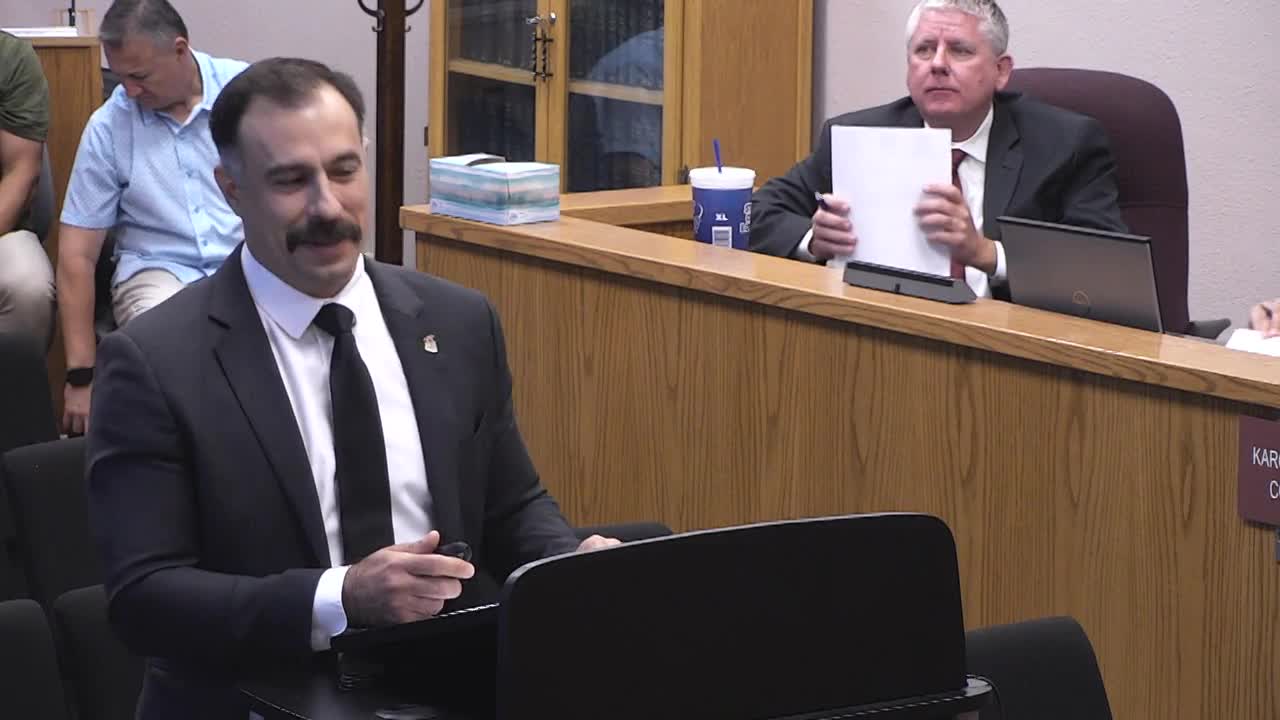
Humberto del Castillo, Yuma County chief financial officer, told the Board of Supervisors on Nov. 3 that the county has absorbed interest on property-tax refunds tied to valuation reductions ordered by the Arizona Department of Revenue (ADOR) and asked the board whether those interest costs should instead be shared proportionally across affected taxing jurisdictions.
Del Castillo said recent ADOR valuation reductions affecting large centrally assessed properties (noted examples included Agua Caliente Solar, with adjustments dating back to 2016, and San Diego Gas & Electric adjustments back to 2020) generated multi-year refunds and associated interest obligations. Under current county practice the general fund retains delinquent-interest collections and has paid interest on refunds regardless of whether the valuation correction originated at the county or at the state level.
He presented two options: continue the current practice (general fund absorbs all interest) or adopt a proportional allocation model in which each taxing jurisdiction would pay interest pro rata (the principal is already distributed proportionally). Using the San Diego Gas & Electric example, Del Castillo said the total interest obligation would be about $195,000 if the general fund paid all interest, versus a $41,000 general-fund share and $153,000 distributed pro rata among other taxing jurisdictions under the proportional model.
Board members voiced concern about the possible burden on smaller districts and some school districts already facing fiscal stress. Supervisors asked staff to produce a detailed allocation chart showing the dollar impact on each taxing jurisdiction, particularly smaller special districts and eastern-area school districts, before making a policy change. The item was left for return with additional data; no final allocation decision was made at the Nov. 3 meeting.
Del Castillo recommended applying proportional sharing only to valuation corrections originating with ADOR or other state determinations; he said corrections for county-initiated errors or delinquent-account adjustments would continue to follow current general-fund practice.
"This is a different situation," Del Castillo said, noting that the county's prior practice grew from times when interest obligations were minor and most corrections were local. Supervisors directed staff to provide an itemized chart showing each taxing jurisdiction's potential share.