Get Full Government Meeting Transcripts, Videos, & Alerts Forever!
Get email alerts on the Budget topic
No spam. Unsubscribe anytime.
Yuma County reports roughly $2.5 million in excess reserves in unaudited fiscal‑year results
Summary
The county's Office of Management and Budget reported unaudited FY results showing approximately $2.2–$2.5 million more in reserves than projected, driven by higher revenues in several categories and lower-than-budgeted expenses. The presentation prompted extended discussion about vacancies, compensation, and long‑term staffing strategy.
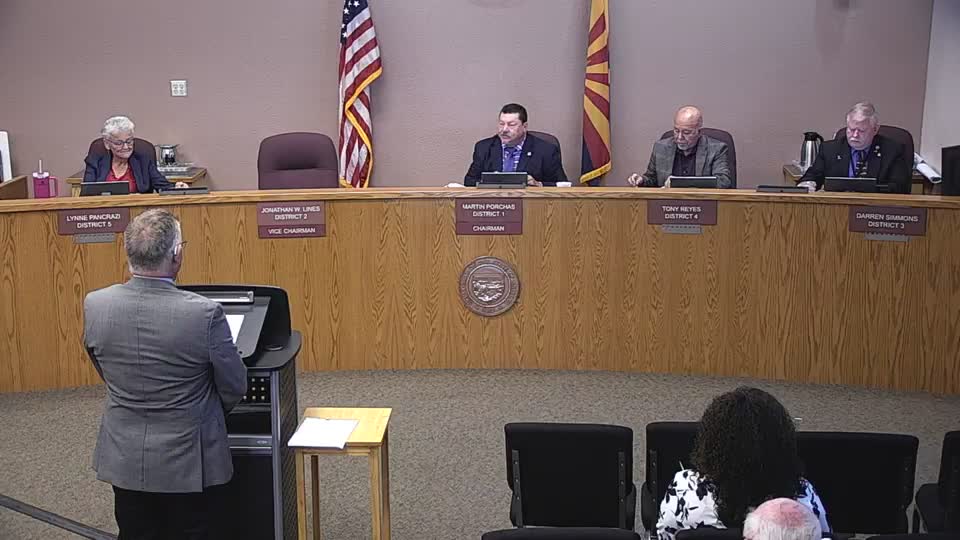
Tony Strzok, budget director in Yuma County's Office of Management and Budget, told the Board of Supervisors the county finished the fiscal year roughly $2.2 million to $2.5 million above projections after accounting for revenue and expense variances.
Strzok said the county ended the year with higher recurring revenues and lower expenditures than were budgeted. "We finished ... $2,200,000 $2,500,000 above where we projected," he said during his presentation. He described about $287,000 under projected expenses and other category shifts that produced the net positive variance.
The presentation broke down several drivers: one‑time refunds and adjustments (including a prior Altex payment and an Agua Caliente property tax refund) reduced the headline comparison to the prior year, but excluding those items recurring revenues were higher by an estimated $3.9 million. Vehicle license tax and county sales tax receipts finished above expectations, and building permit revenues rebounded late in the year after a low second quarter.
Strzok also cautioned that some accounting items are noncash: "investment income, accounting has to book unrealized gains and losses at the end of the year," he said, and explained he adjusted for unrealized investment gains to show cash impacts.
On spending, total expenditures were about 9.9% higher year over year, driven in part by a full year of market compensation increases from a recent pay study and a net increase of approximately 5.69 FTEs in the general fund. Offsetting that, the county reported personnel savings relative to budget because vacancies persisted through the end of the year.
Board members spent substantial time discussing the fiscal implications of unfilled positions. Several supervisors said long‑term vacancies produced one‑time savings that complicate decisions about recurring salary increases; others noted that some job classes are unusually difficult to recruit, including engineers, attorneys and probation officers. County staff said vacancy rates have improved compared with prior years and that leadership is pursuing long‑range planning and process improvements.
Strzok told the board he will return with a first‑quarter update in December with more clarity on sales tax receipts and any effects from the federal government shutdown. "At that time, I'll maybe have some thoughts on how we're doing on sales taxes and with the shutdown," he said.
The board did not take any formal budget actions at the meeting; the figures reported were described as unaudited and subject to final reconciliation.