Get Full Government Meeting Transcripts, Videos, & Alerts Forever!
Get email alerts on the Board Of Review topic
No spam. Unsubscribe anytime.
Muskego Board of Review hears dozens of objections; several assessments reduced after site‑specific evidence
Summary
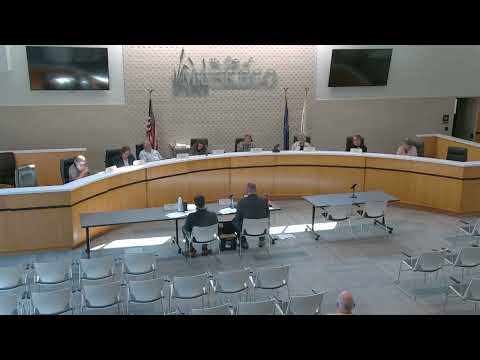
The Muskego Board of Review heard dozens of owner objections Sept. 4–5 and decided to sustain some assessments and reduce others after owners proved site constraints or deferred maintenance.
The Muskego Board of Review spent Sept. 4–5 hearing property owners who appealed their 2025 assessments. The board followed statutory BOR procedure: owners presented testimony and evidence, the assessor defended the roll, and the board deliberated in open session before making findings. Two themes recurred in hearings: (1) how assessors choose and adjust comparables when a property is atypical, and (2) whether unusual site conditions (easements, culverts, wetlands, long private drives) should lower land values or require removal costs to be reflected in value.
Who spoke: property owners and their agents described site conditions and deferred maintenance; the assessor, Sam Monroe, explained comparable selection, adjustments and why staff sometimes use the cost approach rather than the market approach.
Notable outcomes (examples): - Treebee Property Holdings (agent Cal Evans): the board upheld the assessor—s valuation after hearing both sides (roll‑call 5–0 to uphold). (Hearing: Sept. 4, morning.) - Daniel Zernicki (S.110 W.20968): after testimony and review of an insurance appraisal and seller—s evidence, the board set a new full value at $810,000 (motion carried). (Sept. 4, midday.) - Eileen Glazier (W.186 S.7588 Kingston Dr.): the board considered neighborhood nuisances (an adjacent property with trash, police calls and poor upkeep); the board reduced the full value to $985,000 after deliberation. (Sept. 4 afternoon.) - Other hearings: multiple owners of older lake cottages and duplex‑style properties questioned the use of Harbor Circle waterfront condominium comps; the board repeatedly discussed whether to default to the cost approach when comparables were scarce or inconsistent. In several cases the board sustained the assessor; in others the board lowered assessments when owners provided evidence of restricted frontage or substantial deferred maintenance.
Board—s method: the panel applied Wisconsin statutory standards and the city—s procedures for waivers, telephone testimony and agent authorizations; when property owners failed to provide timely written objections or missed the in‑person hearing, the board noted procedural limits and preserved owners— appeal rights under state law.
Why it matters: Board of Review decisions alter the taxable value that determines a property owner—s tax bill. The hearings highlighted both the limits of model‑based assessments (when properties are unique) and the practical need for owners to bring clear, documentary evidence for exceptions, such as legal easements, abandoned culverts, or large deferred repairs.
What owners should know: evidence matters. The board frequently asked for documentation — recent valid sales, written agent authorizations, photos, contractor estimates for remediation — and deferred decisions when owners provided missing or late supporting material.
Sources: public testimony at Muskego Board of Review hearings, assessor presentation and roll‑call votes on outcomes at the Sept. 4–5 sessions.