Get Full Government Meeting Transcripts, Videos, & Alerts Forever!
Get email alerts on the Evidence Based Literacy topic
No spam. Unsubscribe anytime.
House advances bill requiring evidence‑based K–3 literacy instruction, approves several implementation amendments
Summary
Representative Gordon of Bedford described H.4672 as an effort to restore evidence‑based reading instruction statewide and to require DESE to implement screening, professional development, and approved curricula for K–3 literacy.
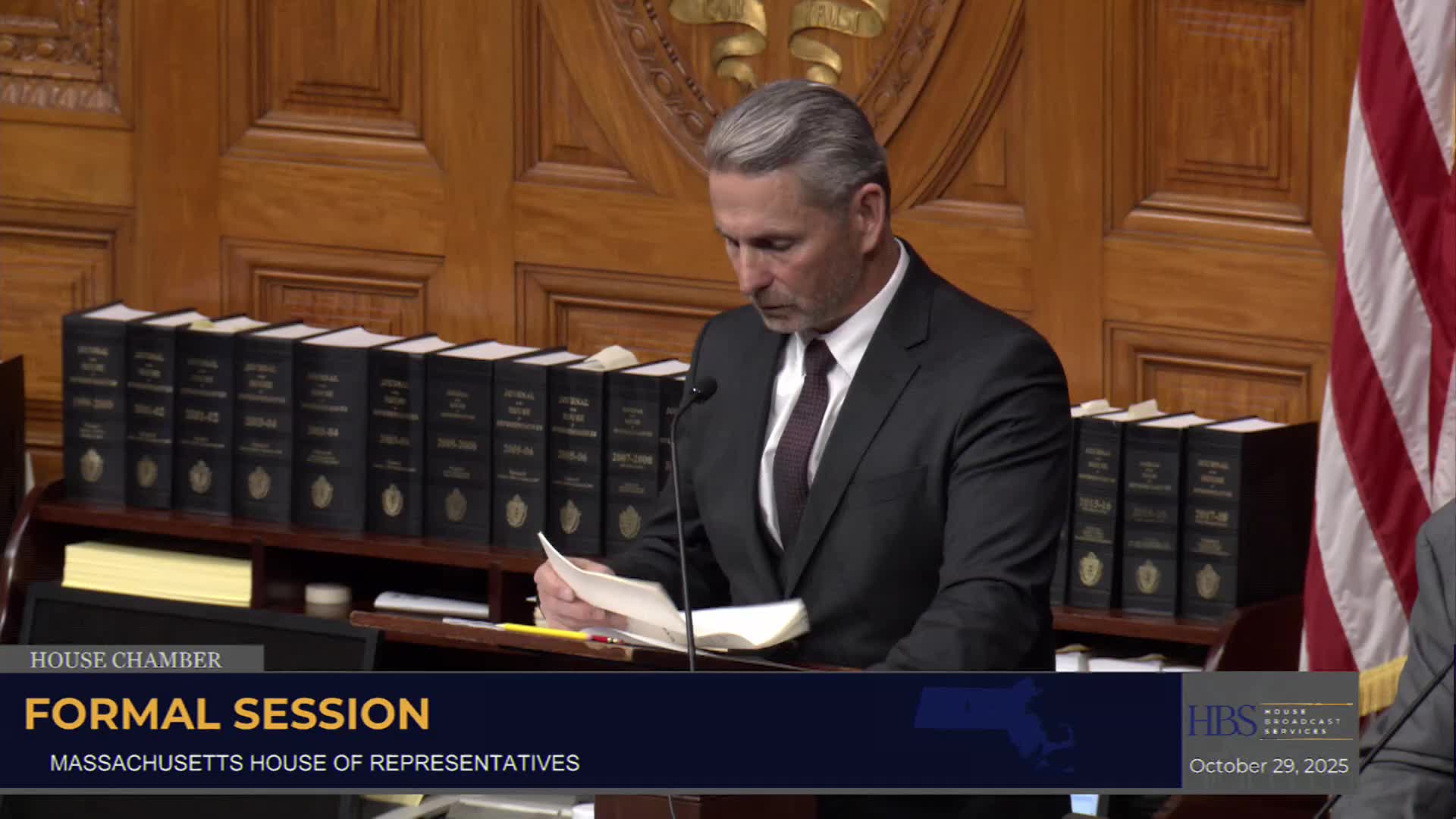
Representative Gordon of Bedford opened extended floor debate on H.4672, describing a statewide decline in fourth grade reading scores and urging adoption of evidence‑based literacy instruction to reverse the trend. Gordon summarized the bill’s framework: define evidence‑based literacy around the five research areas (phonemic awareness, phonics, fluency, vocabulary and comprehension), provide DESE a prescreened list of approved curricula or allow district submissions, require screening assessments for K–3 and provide professional development and pilot programs.
During floor debate, Representative Sullivan Almeida of Abington proposed amendment 6 to change the threshold language from "significantly" below grade level to "at risk of falling" below grade level to force earlier intervention. Sullivan Almeida argued earlier intervention could prevent long‑term reading failure and cited dyslexia prevalence. Representative Gordon opposed amendment 6 on the grounds that the bill’s precise language was needed to provide a workable standard for DESE; the amendment was rejected on a roll call (23 yeas, 130 nays).
Representative Piazza moved amendment 1 to require DESE to provide funding, subject to appropriation, to cover district costs for required screening and progress monitoring; supporters described it as guarding against an unfunded mandate. The amendment was debated and not adopted.
Other amendments offered by Representatives Decker/Decca and Connolly were adopted after debate and roll calls. Adopted changes include requirements for DESE collaboration with stakeholders, use of literacy launch funds for additional staffing (reading specialists, paraprofessionals, librarians), and a clarification that curricula may use pictures as a supplement so long as the curriculum complies with the evidence‑based framework (Connolly amendment). The clerk displayed varied roll call tallies for adopted amendments (examples recorded in the transcript: 140–15, 132–22, 133–22 on different amendment motions).
After amendment votes and final debate, the clerk displayed the recorded vote on passage to be engrossed: 155 yeas, 0 nays. The House passed H.4672 to be engrossed. Debate and amendment activity emphasized implementation supports (training, screening, report frameworks) and retained DESE’s role in approving curricula or pilots.