Get Full Government Meeting Transcripts, Videos, & Alerts Forever!
Get email alerts on the Alcohol Policy Public Health topic
No spam. Unsubscribe anytime.
Public-health advocates urge 10¢-per-drink excise increase to fund prevention and treatment
Summary
Public-health and advocacy witnesses urged the Joint Committee on Revenue to support S.2029, saying a roughly 10¢ increase in the alcohol excise tax would reduce harmful consumption and provide a dedicated funding stream for prevention and treatment programs.
Multiple public-health experts and advocacy organizations told the Joint Committee on Revenue that S.2029—an increase in the alcohol excise tax the witnesses described as roughly 10¢ per drink—would reduce alcohol consumption and generate new revenue for prevention, treatment and community services.
An early witness identified himself as a "PhD level neuroscientist and public health advocate" and cited World Health Organization and International Agency for Research on Cancer findings, saying "alcohol is a toxic, psychoactive and dependence producing substance." He and other witnesses cited Massachusetts estimates for 2020–21 that placed annual average alcohol-attributable deaths at about 3,098 and tens of thousands of years of potential life lost.
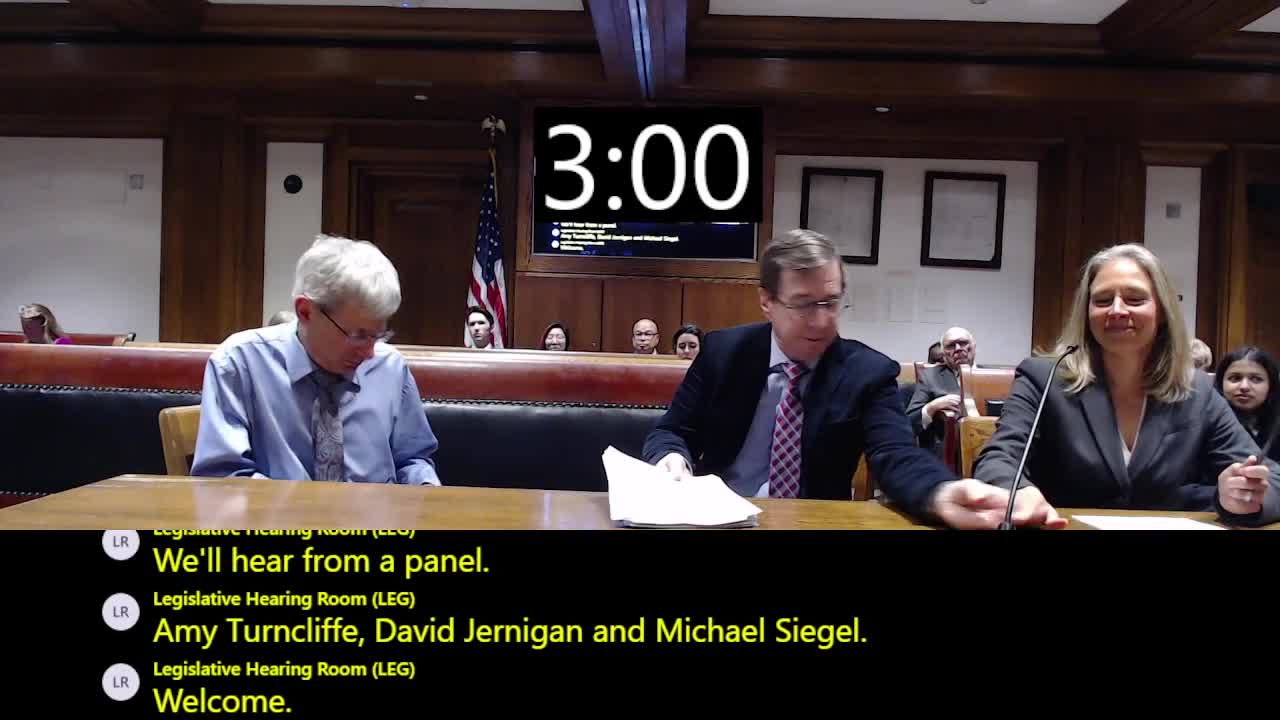
David Jernigan, a public-health researcher from Boston University, said higher excise taxes are an evidence-based strategy to reduce harms. He testified the proposed tax would raise about $300 million in new revenue and highlighted polling showing public support for dedicating the increase to prevention and treatment programs. Dr. Michael Siegel, a Tufts researcher, said raising alcohol taxes is "the single most effective method to reduce alcohol consumption and the harms associated with it."
Representatives of Jane Doe Inc., the Massachusetts coalition against sexual and domestic violence, asked that revenue allocations include dedicated funding for domestic-violence prevention. Testimony summarized proponents' allocation framing: about 23% to the general fund and roughly 76% to public-health initiatives; proponents estimated that 10% of the revenue (approximately $30 million under their estimates) would go directly to domestic-violence prevention programs.
Community-school evaluators, prevention coalitions and youth speakers described local harms tied to cheap and accessible alcohol and urged passage to sustain prevention programming, fund community schools and bolster treatment capacity. Witnesses called out a recent FY26 legislative budget cut to the domestic-violence services line item as evidence of the need for a new, dedicated funding source.
No formal committee votes or amendments were recorded in the transcript segment provided.