Get Full Government Meeting Transcripts, Videos, & Alerts Forever!
Get email alerts on the Personal Financial Literacy topic
No spam. Unsubscribe anytime.
House approves bill to require personal financial literacy education, creates trust fund
Summary
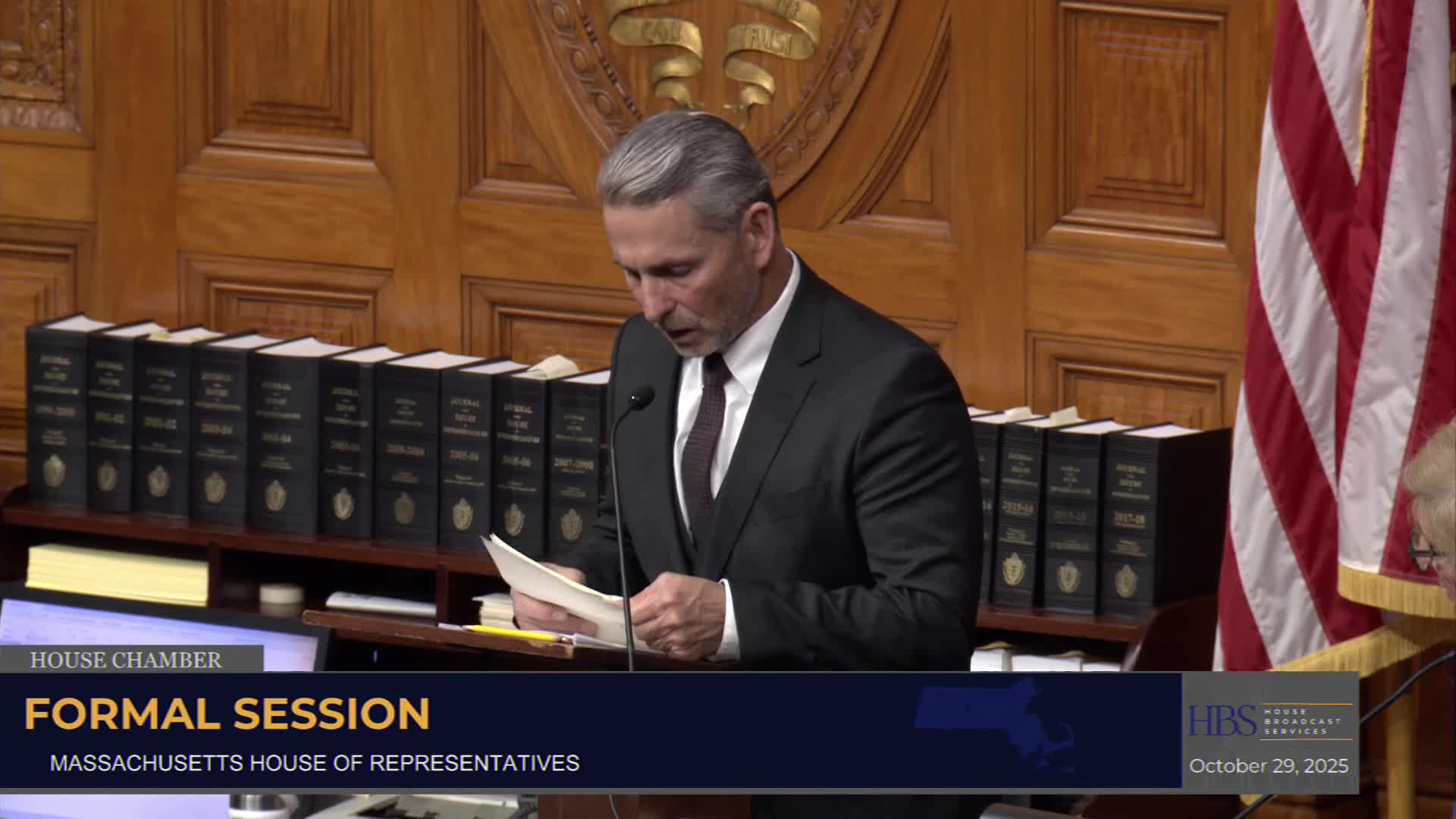
Representative Gordon of Bedford led floor debate saying the bill would require middle and high school students to receive instruction in budgeting, credit, taxes and other practical financial topics and would create a financial literacy trust administered by DESE.
Representative Gordon of Bedford, speaking on the House floor during third reading, said H.4670 would ensure “middle and high school students will, through this bill, learn about important topics such as earning and spending income, local state and federal taxes, charitable giving, how to balance ledgers and checkbooks, how to budget appropriately, the importance of long term savings, the role of banks and financial institutions, simple and compound interest using credit and making investments, emerging tech in the financial industry and the rights and responsibilities of renting or buying a home.”
Supporters described the bill as creating a statewide framework to require personal financial literacy in middle and high schools and establishing a financial literacy trust administered by DESE to fund curriculum development and professional development. Representative Kearney of Scituate said the measure would help students “be ready for financial independence and stability,” and that it prioritizes equity so that “every student in Massachusetts, no matter what their background is, has access to financial education.”
The bill directs DESE to administer a financial literacy trust fund to develop curriculum and provide professional development for teachers. Sponsors emphasized practical classroom outcomes, including instruction on budgeting, credit and loans, saving and investing, identifying scams and predatory lending, and hands‑on skills such as reading a paycheck stub and filing taxes. Floor remarks repeatedly framed the measure as a life‑skills course rather than a test requirement.
A recorded roll call produced 154 yeas and 0 nays; the clerk announced that H.4670 was passed to be engrossed.
The bill text assigns DESE administrative responsibility for the trust and curricula; financial details, appropriation language, and implementation timelines were discussed in floor remarks but are set by the bill and subject to later appropriation actions. No amendment that changed the bill’s core requirements was adopted on the floor prior to passage.