Get Full Government Meeting Transcripts, Videos, & Alerts Forever!
Get email alerts on the Transgender Rights topic
No spam. Unsubscribe anytime.
Supporters urge creation of state commission on the status of transgender people
Summary
Advocates, civic groups and faith leaders told the committee a permanent commission would collect data, recommend policy, and center transgender voices in state decision-making; witnesses described harassment, barriers to care, and the need for state-level coordination.
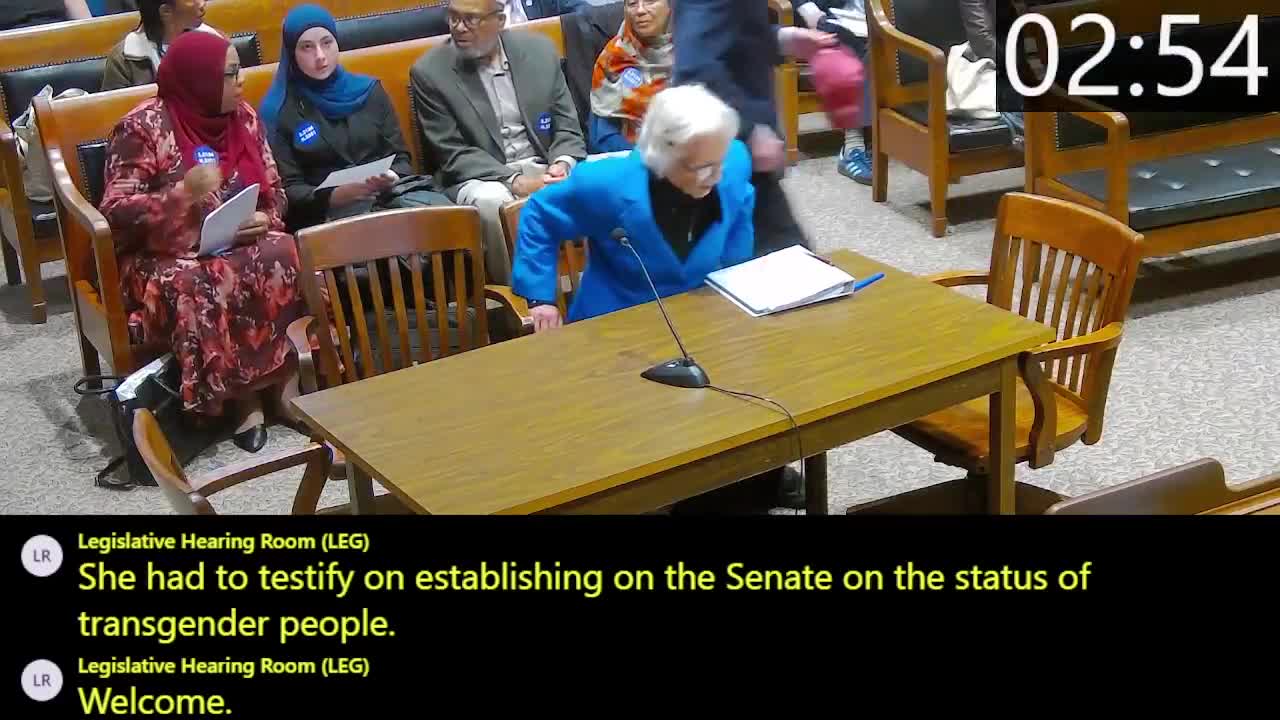
Lawmakers heard broad testimony Oct. 29 in support of S.2155, a bill to establish a permanent Massachusetts Commission on the Status of Transgender People.
A bill filer described the proposal as modeled on existing commissions such as the Commission on the Status of Women and the state's LGBTQ youth and aging commissions, saying it would "have the power to request information and recommend legislation" and include transgender people in leadership: "at least half the members would have to be transgender themselves," the sponsor said.
Kelsey Grunster, deputy director of the Massachusetts Transgender Political Coalition, told the committee "trans people in America are facing an extreme crisis right now" and asked the committee to "strengthen and codify" a statewide response. Finn Gardner, MTPC's advocacy and organizing manager, described receiving multiple complaints each month about discrimination, harassment and denial of care, and said the small MTPC staff cannot track all incidents alone. "A commission would help us track that information so it doesn't just fall on the shoulders of a six-person organization," Gardner said.
Representatives of the League of Women Voters, Greater Boston PFLAG, the Theater Offensive, and Outstanding Life (a virtual senior center for LGBTQ older adults) joined other witnesses and clergy in describing the policy and human-services benefits of a commission that could collect data, identify gaps in services, and recommend legislative fixes.
Speakers described harms ranging from routine harassment in schools and workplaces to barriers to gender-affirming medical care. Witnesses emphasized that a commission could expand data collection, support community-led policy development, and build a pipeline for transgender civic leadership.
Committee members accepted written testimony and did not take a vote on the bill during the session.