
Higher‑education officials describe chapter suspensions, expulsions and prevention strategies; lawmakers press for permanence on certain bans
Get AI-powered insights, summaries, and transcripts
Subscribe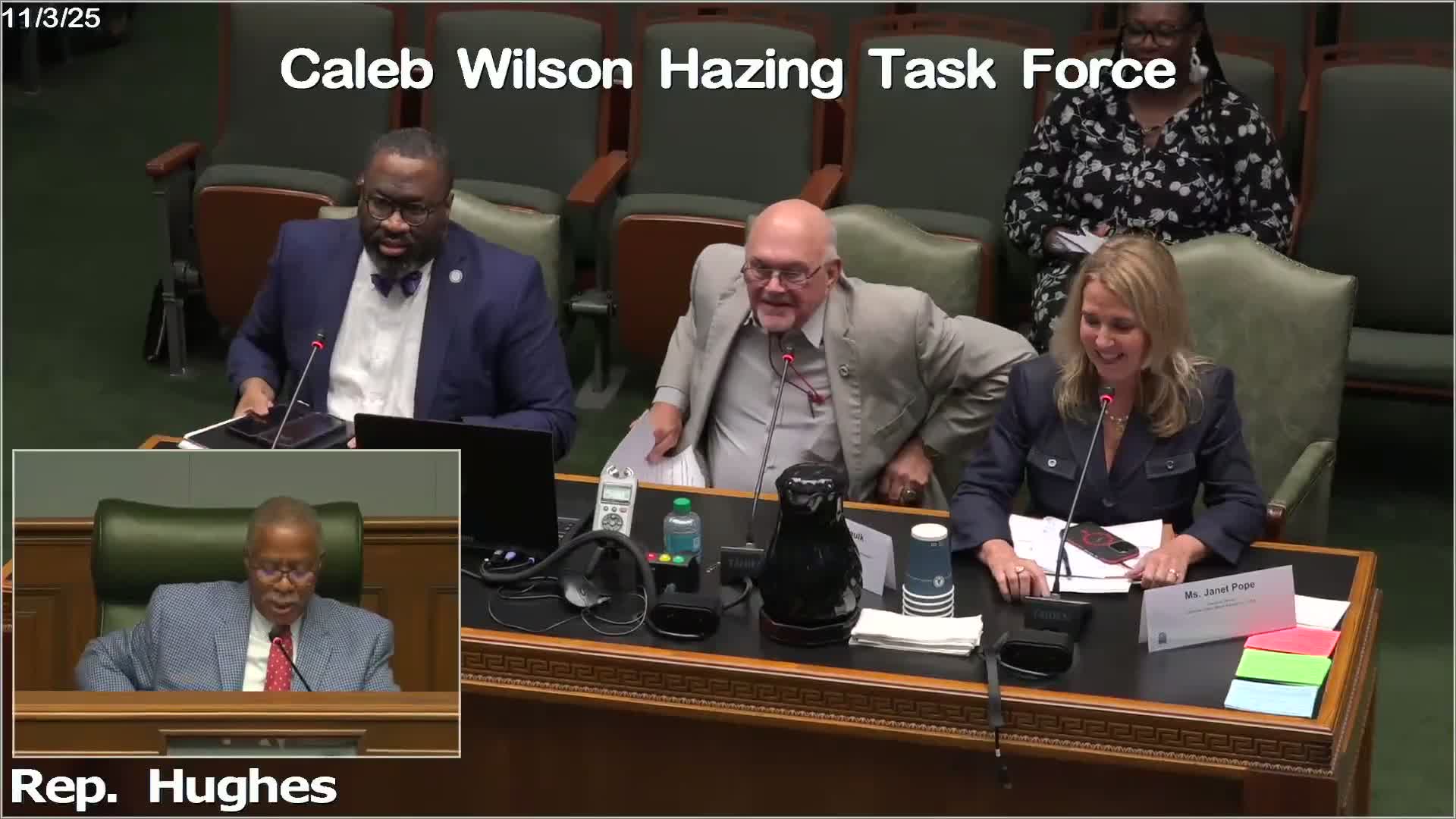
Summary
Higher‑education representatives at the Nov. 3 task force meeting described how colleges and university systems handle hazing allegations, noting that many chapters receive multiyear suspensions while expulsion is described as permanent loss of charter.
Higher‑education representatives at the Nov. 3 task force meeting described how colleges and university systems handle hazing allegations, the difference between suspension and expulsion and recommended prevention work that starts before college.
Dr. Patrick Biddick, associate vice provost at the University of Tennessee, Knoxville and a Piazza Center researcher, reviewed national findings and prevention approaches. He summarized research showing that hazing ‘‘often begins early’’ and that ‘‘the biggest predictor [of college hazing] is having been hazed or being a hazer in high school.’’ Biddick emphasized that hazing is a power dynamic, that ‘‘consent … doesn't have to be consented’’ and that adult presence is often perceived as approval. He recommended leadership training for youth, clear expectations for adult advisors, skill‑building for students on how to intervene, and multifaceted prevention programming.
System officials described disciplinary practice. LCTCS representatives said suspension and expulsion are distinct: suspensions are temporary removals while expulsion is ‘‘permanent dismissal without the privilege of readmission’’ at that college; system‑level holds typically prevent immediate transfer to another campus until institutions confer. LSU described a common practice of multiyear chapter suspensions (often four years) followed by a structured return plan with national organizations, trained advisors and live‑in consultants; LSU uses an escalating rubric culminating in removal after repeated violations.
Southern University counsel told the task force that chapter expulsion is ‘‘the permanent termination and loss of the charter’’ and that the institution is drafting policy updates to define sanction ranges and panel guidance. Legislators pressed for written clarification on whether a national organization expelled under one chapter designation could, years later, seek reinstatement on the same campus under a different name. Counsel said the institution is preparing written answers and suggested system and board processes could be determinative.
Representative Jason Hughes, who chairs the task force, stated his view plainly: ‘‘Omega Psi Phi should never be allowed to return to the campus of Southern University,’’ and he said that if systems could not provide a written assurance of perpetual exclusion he would pursue statutory measures.
Why it matters: Campus procedures for addressing hazing — including how long chapters remain suspended, what conditions govern return, and whether expulsion is truly permanent — determine whether organizations with histories of severe misconduct can re‑establish a campus presence. The task force asked systems to provide clear, written explanations of who decides on reinstatement, the length and conditions of sanctions, and the composition of university hearing panels.
Authorities and practice notes: Officials cited internal system policies and university handbooks. Julie Ralph (Office of the Attorney General) said Louisiana’s change in evidentiary standard (Act 416) raised the investigatory burden; most institutions nationally still use preponderance of the evidence, though a few universities have adopted higher thresholds.
Ending note: Systems agreed to send written clarifications and to return for follow‑up; legislators signaled willingness to pursue statute if systems cannot provide clear, durable restrictions on chapter returns.