Get Full Government Meeting Transcripts, Videos, & Alerts Forever!
Get email alerts on the Procurement topic
No spam. Unsubscribe anytime.
Bill would raise municipal procurement thresholds, expand cooperative purchasing and ease COMMBUYS posting
Summary
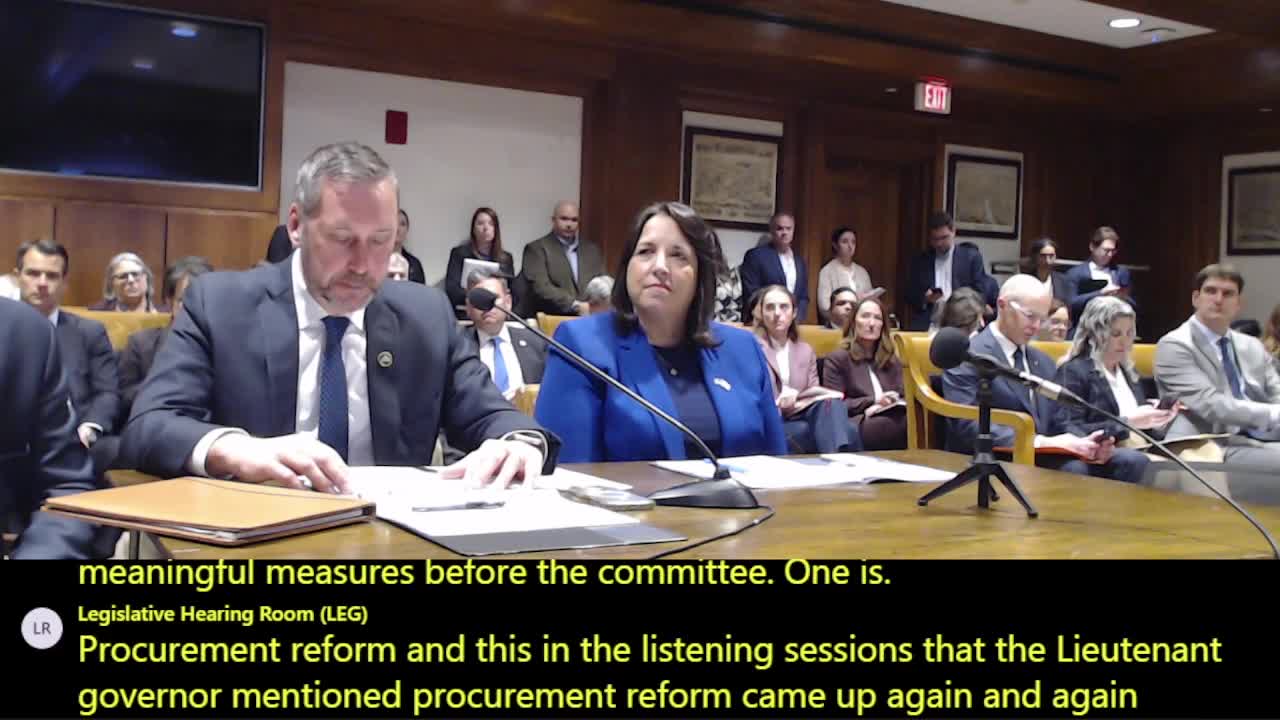
The Healy‑Driscoll administration and municipal procurement officials told a joint legislative committee that the Municipal Empowerment Act would modernize Chapter 30B procurement rules to make local government purchasing faster and less administratively burdensome.
The Healy‑Driscoll administration and municipal procurement officials told a joint legislative committee that the Municipal Empowerment Act would modernize Chapter 30B procurement rules to make local government purchasing faster and less administratively burdensome.
“This bill will equalize Chapter 30B thresholds for advertising procurements from $50,000 to $100,000 for all municipal purchasing, not just for schools,” Secretary of Administration and Finance Matt Gorkowitz said, adding the change would reduce confusion where school departments and municipalities jointly procure supplies or services.
Proponents said other provisions would clarify that cooperative purchasing arrangements may award multiple contracts and may include both supplies and services — language they said reflects modern contracting where distinctions between goods and services can be blurred (for example in cloud‑based software). “Cooperatives provide options to communities with vetted vendors, pre‑agreed terms and often real discounts when spending is aggregated,” Mark Fine, chief procurement officer for the Operational Services Division, testified.
The bill would also eliminate a requirement that municipalities post certain procurement notices on COMMBUYS, a change the administration said is optional and intended to remove duplication where local notice practices better reach prospective bidders. “If it works for a municipality, they can continue to use COMMBUYS,” Gorkowitz said; if not, they may post equivalent notice on a municipal website or other channels.
Procurement associations and the state inspector general voiced support for the package. Inspector General Jeff Shapiro said the measures address “consistent pain points” he heard across hundreds of municipal conversations and recommended further technical tweaks, including reconsidering the very lowest threshold to reflect today’s prices.
Officials also urged a narrow technical fix regarding school transportation: an older statutory restriction (chapter 71, section 7C) can limit a district’s ability to operate its own school buses when a private contractor exists; the bill would clarify school flexibility to consider in‑house options.
Supporters said the reforms would save municipal staff time and allow procurement teams to focus on vetting vendors rather than procedural paperwork. Critics were few in this area; procurement leaders urged the committee to adopt the changes quickly so municipalities can use the tools this fiscal year.
The administration and procurement officials said additional technical amendments may be offered as the bill proceeds through formal markup.