
FHSAA tells Florida Senate sportsmanship, transfer rules and mental health are top challenges for high school athletics
Get AI-powered insights, summaries, and transcripts
Sign Up Free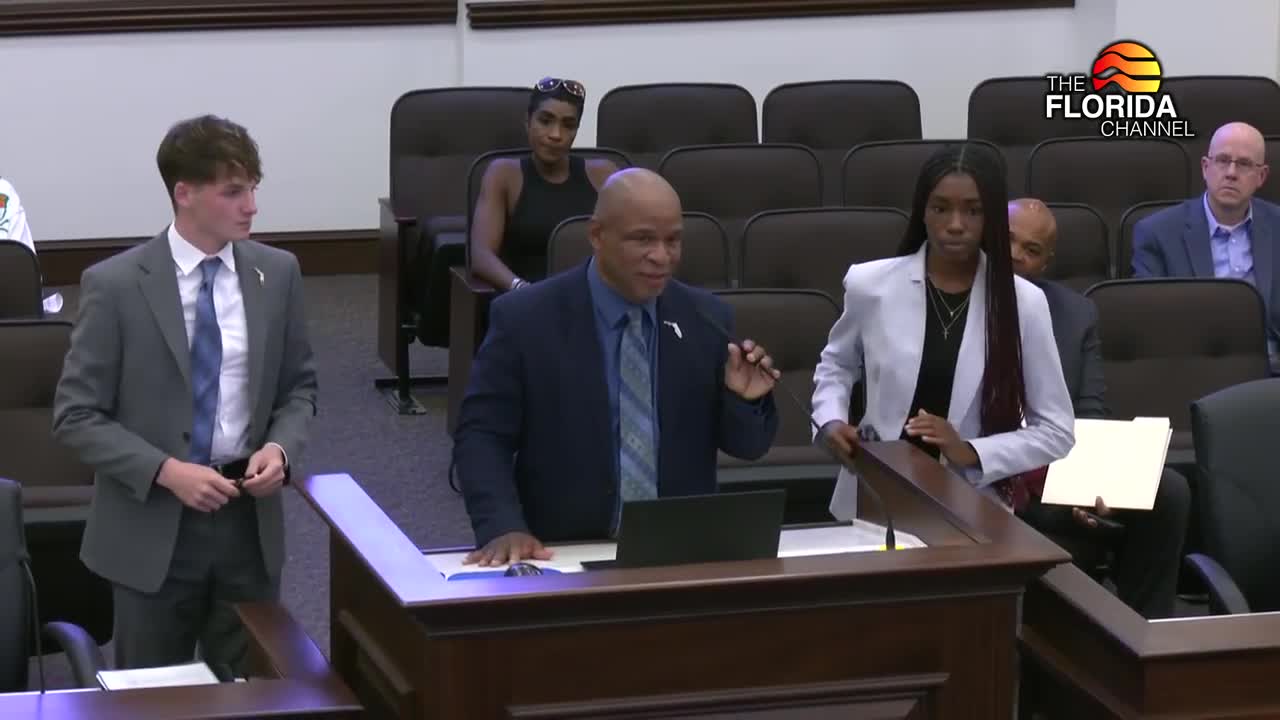
Summary
Craig Damon, executive director of the Florida High School Athletic Association, told the Florida Senate Education Pre K–12 Committee that sportsmanship, transfers and mental health are among the association’s most urgent problems.
Craig Damon, executive director of the Florida High School Athletic Association, told the Florida Senate Education Pre K–12 Committee that sportsmanship, transfers and mental health are among the association’s most urgent problems.
Damon opened his presentation by noting the association receives hundreds of complaints each year: “Understand that you have a couple of students with you,” he said as he introduced student representatives, and later said the office logged 309 allegations this year, 113 of which involved recruiting. He emphasized enforcement is selective: “There was only 2 coaches that received any type of penalty out of a 113 allegations on rec for recruiting violations,” he said, and added those two suspensions were self‑reported by their schools.
Student advisors who accompanied Damon described the student perspective. Sydney Daniel, a junior at Lincoln Park Academy, said she serves on both the FHSAA student‑athlete advisory committee and the National Federation student council and urged access to “safe, equitable, and inspiring athletic opportunities.” Taylor White said the association serves more than 300,000 student athletes and 19,000 coaches and highlighted transfers and unequal equipment access as recurring equity problems.
Why it matters: Damon told senators that unsportsmanlike conduct and violent incidents have increased statewide. He cited last year’s totals of 2,059 ejections — including 1,550 students, 433 coaches and eight other officials — and said 55 of those were level‑three offenses that carry a one‑year suspension. He described the association’s preference for proactive, education‑first remedies and local collaboration before imposing penalties.
On transfers Damon explained four statutory exceptions that can grant immediate eligibility — active‑duty military moves, foster‑care relocations, court‑ordered custody changes and local “good cause” policies — and warned that inconsistent district‑level good‑cause rules and unfettered movement have led to frequent late‑season team changes. “Kids are switching schools up 5, 6, 7, sometimes 8, 9 times over a 4 year career,” he said, describing how late transfers can displace existing players and affect competitive balance.
Mental health was raised repeatedly by the student advisors and Damon. Taylor White said one of the advisory council’s top priorities is to normalize seeking help and to expand access to on‑campus counselors; Damon said FHSAA offers grant programs and literacy assistance and urged schools to pair resources with outreach so students will use them.
Damon and the students also discussed coach qualifications and on‑campus presence. Damon said a smaller share of coaches are on campus during the school day than in earlier eras, and he and the students argued increased on‑campus time from qualified coaches improves oversight and student support.
Committee response and follow‑up: Senators pressed for specifics about mental‑health gaps and asked how the transfer portal works and how rules might be adjusted without undermining school choice. Damon urged guardrails crafted to respect parental choice and local needs. He provided his contact information to the committee for follow‑up.
Provenance: First related comments begin at 00:01:04 (student remarks) and the presentation segment ends at 00:23:46 (Q&A on transfers and mental health).