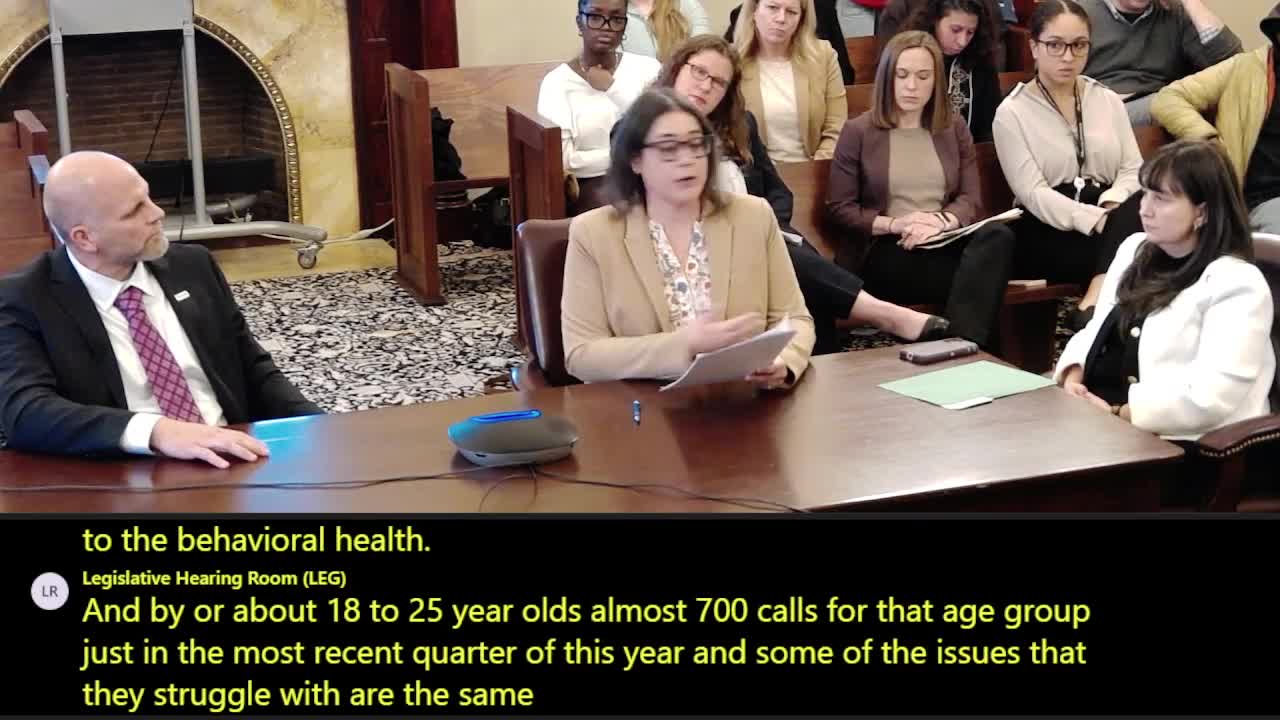
Children's League and providers tell Senate the state must expand housing and transition supports for youth leaving foster care
Loading...
Summary
Service providers told the Senate Committee on Juvenile and Emerging Adult Justice that transition‑age youth (18–23) face high rates of homelessness, poor educational and employment outcomes, and a shortage of youth‑specific shelters and housing. Advocates urged expansion of community family resource centers and proven programs such as Lifeset.
Advocates and service providers told the Senate Committee on Juvenile and Emerging Adult Justice that transition‑age youth — especially those exiting foster care — face critical gaps in housing, health care and employment supports that increase the risk of justice system involvement.
"We only have a few youth shelters across the state and they're always full," Joshua Grant of Home for Little Wonders said, describing a wait list of roughly 80 young adults for youth‑specific shelter beds. Grant said half of young people who enter youth shelters have previously been in foster care and warned that lack of stable housing increases exposure to exploitation, trafficking and criminalization.
The nut graf: witnesses urged lawmakers to treat transition‑age supports as preventive investments. They recommended better cross‑agency coordination among DCF, DYS, DMH and EOHHS, more youth‑specific housing options, and expanded evidence‑based transition programs.
Service providers described existing programs and outcomes. Dora Keith of Youth Villages described Lifeset, an evidence‑based program serving transition‑age youth: one year after services ended, 88 percent of former Lifeset participants were living independently or with family, 91 percent were in school or had graduated, 60 percent were employed at least part time, 94 percent avoided further legal trouble, and 97 percent reported satisfaction with the supports they received. Witnesses also said about 700 youth age out of DCF custody each year and nearly 2,000 have voluntary open cases ages 18–22, creating recurrent demand for stable housing and supports.
Panelists told the committee that many funding streams are fragmented across state agencies and philanthropic sources; speakers urged a blended funding approach so small, specialized youth programs can scale. Committee members asked about Medicaid and public‑benefits eligibility and how recent federal and administrative changes could affect already unstable youth.
The hearing closed with members inviting ongoing engagement, site visits and further data to inform the committee’s 2026 agenda.