Witnesses tell Senate committee Black and Latino youth are more likely to be arrested than issued summonses, widening disparities
Loading...
Summary
Advocates and state officials told the Senate Committee on Juvenile and Emerging Adult Justice that rising arrest rates for low‑level offenses, combined with uneven local practices, are driving more youths into the juvenile justice system and deepening racial disparities.
Advocates and state officials told the Senate Committee on Juvenile and Emerging Adult Justice that rising arrest rates for low‑level offenses, combined with uneven local practices, are driving more youths into the juvenile justice system and deepening racial disparities.
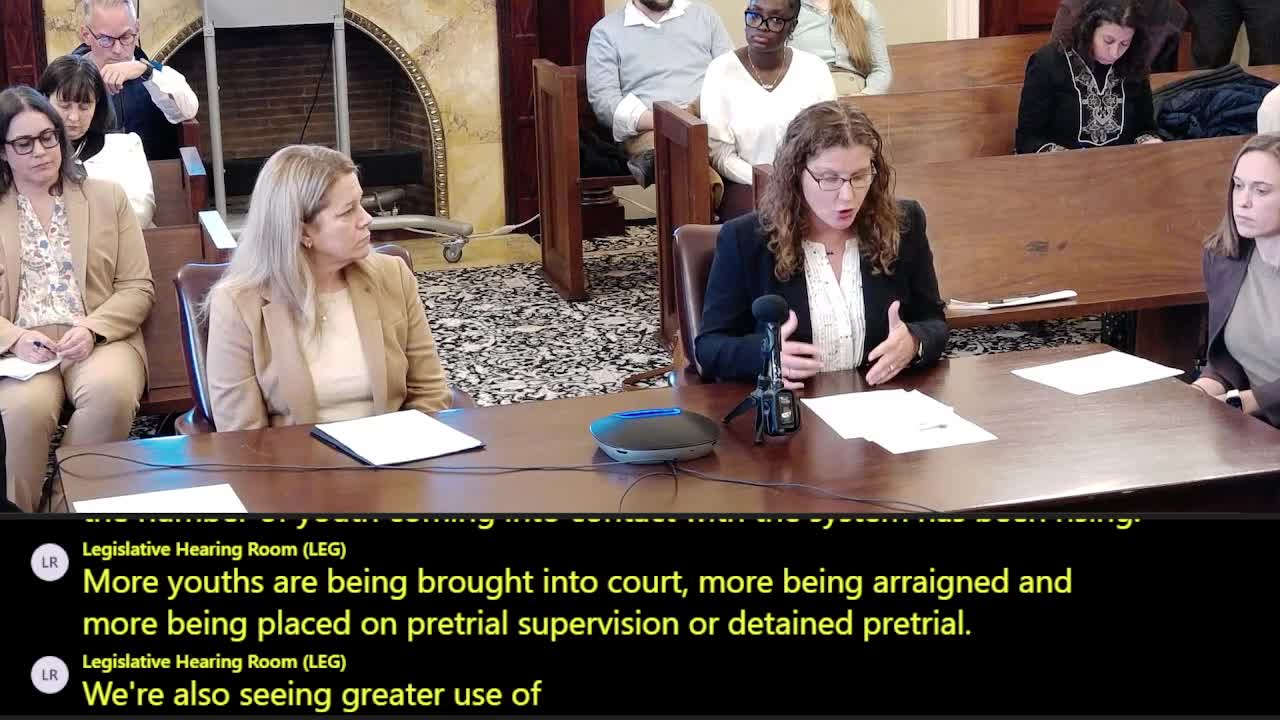
"To put it simply, Black and Latino youth are being arrested in situations where white youth are more likely to get a court summons," Melissa Threadgill of the Office of the Child Advocate said. Threadgill and other witnesses said that the shift toward arrests — particularly for misdemeanors that historically produced summonses — has increased arraignments, pretrial supervision and custodial control in recent years.
The nut graf: witnesses described disparities at the "front door" of the system (police contact, school incidents and prosecutor/judicial charging decisions) and recommended clearer statutory language and local policy to expand diversion at earlier decision points.
Citizens for Juvenile Justice presented data showing stark disproportionality for detained and committed youth with child‑welfare involvement: one witness cited that youth in the custody of the Department of Children and Families make up about 0.6 percent of the child population but accounted for 47 percent of young people detained pretrial by the Department of Youth Services and 37 percent of commitments. Leon Smith and Sana Fadell said the growth in juvenile system use has been concentrated in misdemeanors and in DCF‑involved youth.
Panelists listed several contributing factors: local policy differences across hundreds of municipal police departments; confusion among some officers about whether pre‑arrest diversion is permitted; inconsistent prosecutor/diversion policies across counties; and information‑sharing practices that can channel local arrest records into federal systems or databases. Witnesses recommended statutory clarification to make pre‑arrest diversion clearer, targeted training for officers, and local law‑enforcement policies with presumptions in favor of summons for low‑level incidents.
Committee members asked about remedies. Witnesses noted that district attorneys are locally elected and have discretion over diversion policies, clerk magistrates can offer pre‑arraignment alternatives, and some jurisdictions already use written local policies and training to reduce arrests. Several witnesses urged better county and town–level data reporting to identify where disparities are highest.