
Special commission debates IHRA, Jerusalem Declaration and tone of prefatory statement for final report
Get AI-powered insights, summaries, and transcripts
Subscribe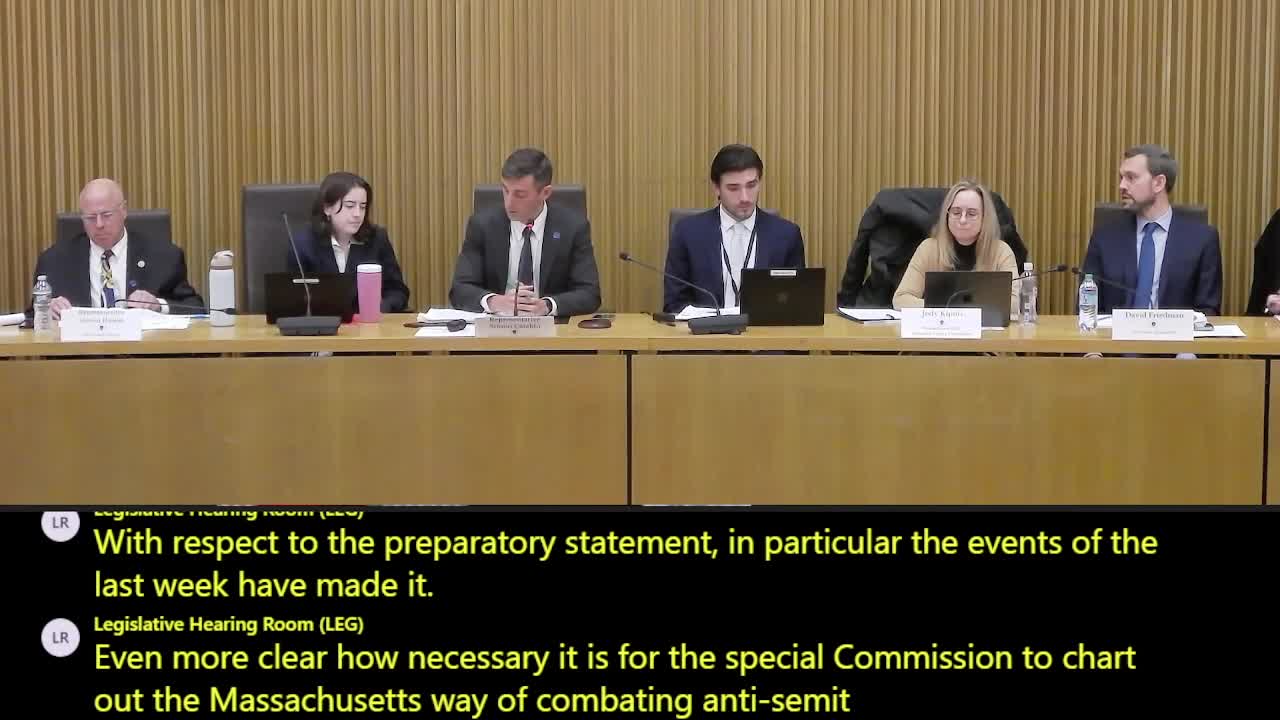
Summary
The commission spent a substantial portion of the meeting focused on the draft report's prefatory statement, including whether to anchor the document to the IHRA working definition of antisemitism and how (or whether) to note alternative definitions such as the Jerusalem Declaration.
The commission spent a substantial portion of the meeting focused on the draft report's prefatory statement, including whether to anchor the document to the IHRA working definition of antisemitism and how (or whether) to note alternative definitions such as the Jerusalem Declaration.
"I would suggest that we remove the final sentence that refers to definitions that are not included in The US National Strategy to Counter Anti Semitism," Commissioner David Friedman said, urging caution about naming alternative definitions that could be used in bad faith. Friedman and others argued IHRA serves as a non-legally binding, educational reference that the Commonwealth and the national strategy have adopted.
Others, including Mayor Ruth Ann Fuller and Commissioner Jody Kipnis, said the report should state clearly that the Commonwealth has endorsed IHRA but also acknowledge the existence of other definitional efforts. "I think acknowledging the existence of alternatives, just really, is an important element of this," Mayor Fuller said, arguing that the prefatory statement should explain the commission's basis for using IHRA while noting other efforts exist.
Why it matters: The definition language shapes how educators, law-enforcement trainers and institutions interpret and implement the report's recommendations. Commissioners warned that overly broad or politicized phrasing could undercut the report's credibility; others warned that omitting reference to other efforts could frustrate constituencies who have advocated alternate formulations.
Process and next steps: Chairs said they will solicit substantive edits at this meeting and circulate a revised draft; proposed changes will be subject to motions and recorded votes on the next draft. Chair Cataldo outlined a two-principle approach for future edits: strengthen fidelity to the commission's meetings and reflect the views of commissioners. The chairs explained procedural rules for making amendments at the next meeting and urged commissioners to surface substantive changes early so staff can incorporate them.
Ending: Commissioners also discussed tone and specificity across the prefatory section'for example, whether to replace qualitative phrasing ("many Jews") with citations to testimony or data. Staff will circulate instructions and deadlines for edits and aim to publish a subsequent draft before the commission's scheduled Nov. 20 vote.