
Proposals would align non-alcohol drug incapacitation towing rules with DUI hold time; multiple bills seek antique-vehicle and roadway-safety changes
Get AI-powered insights, summaries, and transcripts
Sign Up Free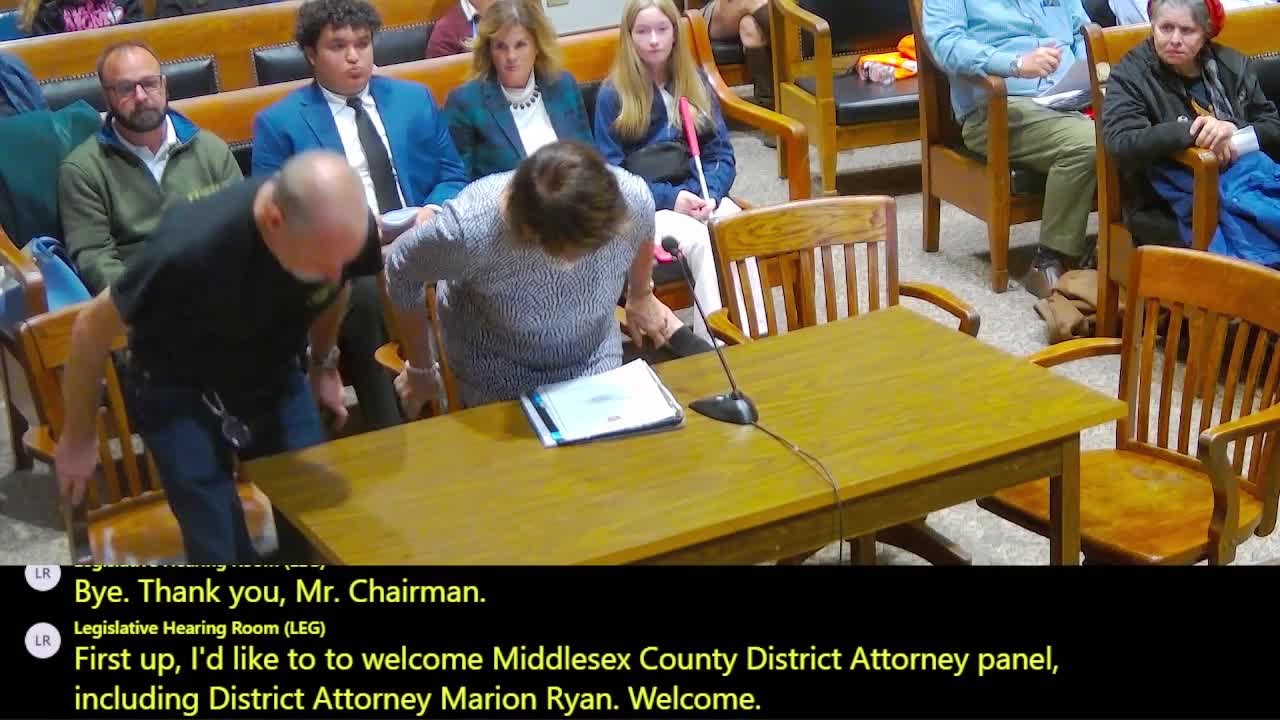
Summary
Committee witnesses urged a statutory 12-hour tow-hold after drug-related incapacitation and sponsors outlined bills to improve roadway visibility and to ease licensing and inspection rules for antique vehicles.
Two different sets of witnesses appeared on related transportation topics: Middlesex County prosecutors and tow-lot operators asked the committee to require that vehicles driven by people incapacitated by non-alcohol substances be held 12 hours, and several sponsors and trade groups described bills affecting antique-vehicle licensing, historic route signage and road-restoration standards.
District Attorney Marion Ryan told the committee that under current Massachusetts practice, vehicles are held 12 hours when a driver is detained for an alcohol-related offense, but that no similar statutory 12-hour hold applies when someone is incapacitated by other substances and is later released. "Right now, in the Commonwealth, if someone is detained or arrested for a defense involving alcohol while driving, they then cannot, regardless of what happens with that case, they cannot retrieve their car from the tow lot for 12 hours," Ryan said. Chris Nolan, a tow-lot operator, described repeatedly releasing vehicles to people he believed to be impaired after they returned from hospital care following a Narcan reversal and said he keeps cars 12 hours when he can but lacks a statutory backstop.
Separately, a sponsor described a package of bills: H.3684 would require reflective tape on temporary non-reducible loads such as dumpsters and shipping containers to improve nighttime visibility; H.3691 would require contractors and utilities to redraw road markings such as crosswalks and bike lanes within 30 days and permit municipal penalties for noncompliance; H.3699 would create a single rear vehicle collector plate with a fee cap of $50; H.3702 would require excavators to restore public ways to original condition (matching material where feasible); and H.3687 would adjust antique-vehicle inspection thresholds from 45 to 50 years and authorize a one-time $100 sticker.
Supporters from the Massachusetts Association of Automobile Clubs and affiliated hobbyist groups testified in favor of restoring "year-of-manufacture" plates and single rear plates and said those changes could produce modest revenue while reducing front-bumper damage to vintage cars. John Buchanan, representing auto clubs, also supported legislation to permit historic-route signage for U.S. Routes and noted model programs in other states.
Committee members asked clarifying questions but did not vote on any of the proposals during the hearing.