Oregon task force adopts recommendations to reduce provider burdens and increase public-facing behavioral-health transparency
Loading...
Summary
The Joint Task Force on Regional Behavioral Health Accountability adopted a set of recommendations asking the Oregon Health Authority to reduce administrative barriers that impede residential treatment access, make CFAA-linked reporting public-facing, and use updated reporting to track financial health and accountability of the state behavioral-health system.
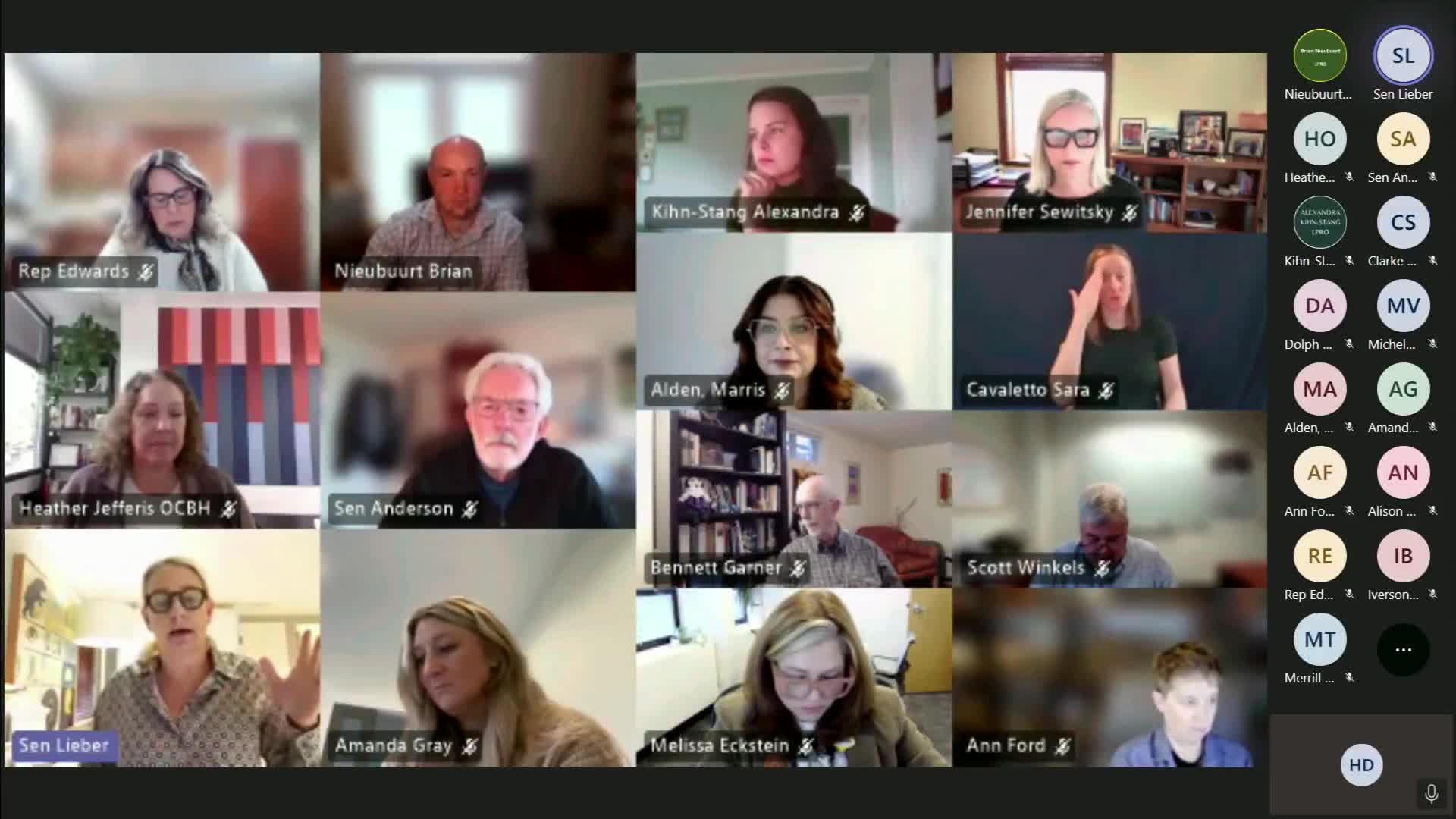
The Joint Task Force on Regional Behavioral Health Accountability adopted a set of near- and long-term recommendations on Nov. 10 asking the Oregon Health Authority to reduce administrative barriers to residential treatment, make CFAA-linked reporting public-facing, and use updated reporting to track the financial health of the state’s behavioral-health system.
Co-chair Senator Laurie Lieber said at the outset that “it appears that we have a quorum.” ElPro staff then reviewed edits to draft recommendations, explaining the package split into near-term actions that complement current work and longer-term, nonprescriptive recommendations intended to support a shared vision for the system.
The task force approved language asking the House Bill 2015 work group to “look at how to minimize administrative burden and other barriers, including screening requirements,” and members agreed to add wording that directs particular attention to barriers “impacting providers’ ability to provide the appropriate level of treatment to individuals with severe mental illness or subject to court-ordered treatment.” Judge Nan Waller said the change matters because “there are special barriers for the forensic population” that can be overlooked unless called out.
Members also adopted a near-term recommendation asking the Oregon Health Authority to provide regular reporting on implementation of updated County Financial Assistance Agreements (CFAAs) during the initial term; the staff text will not specify a year in the final submission, and OHA staff said the length of the initial CFAA term will be confirmed before filing. OHA staff emphasized the reporting pathway will be iterative: “the ultimate goal is to then have a public facing dashboard with information,” said Ebony Clark of the Oregon Health Authority, while noting provider access to ROADS data and phased implementation will be necessary.
The report folds deleted and reprioritized items into the transparency and accountability recommendations. Staff removed three earlier draft proposals — expanding guidelines already covered by House Bill 2059, creating a youth-specific managed-care organization, and a stand-alone requirement for conduit-funding reporting — and folded relevant elements into the long-term transparency work.
Data accuracy and usability were a recurring concern. Task force member Bennett Garner flagged a discrepancy between counts shown on OHA’s capacity dashboard and county figures: “there’s a discrepancy here of 256 beds,” he said after noting county data listed 305 secure residential treatment facility beds while the dashboard item showed 561. Members asked staff to prioritize clearer public-facing presentation, clearer breakdowns of bed types or licensing categories, and date stamps on dashboards so users can understand what a point-in-time figure represents.
Long-term recommendations instruct OHA to leverage CFAA-required reporting — and other funding-stream reporting — to create transparency into behavioral-health expenditures and to use that reporting to efficiently track the system’s financial health and hold partners accountable for outcomes. Task force members emphasized that transparency should cover all funding streams that materially affect services, including CFAA funds, Coordinated Care Organization (CCO) payments, state general-fund allocations and other settlement or grant sources.
A voting member moved to adopt the recommendations as revised in the meeting; Heather Jeffries made the motion and Michelle Vowell seconded. The roll call recorded a majority of voting members in favor and the motion carried. The task force then voted to submit the final report to interim legislative committees related to health; Jennifer Sawitski moved that submission and Holly Harris seconded. Staff told members they expect to file the report well ahead of the Dec. 15 statutory deadline and will incorporate a small set of technical edits identified during the meeting (including final confirmation of the CFAA initial term length).
Why it matters: the package asks OHA to reduce administrative friction that can hinder movement into appropriate levels of care — an issue members said is especially acute for individuals involved with the justice system and those with severe mental illness — and to make implementation reporting available in a public-facing form. Those two aims are intended to improve accountability for how behavioral-health dollars are spent and to help potential providers and counties make informed decisions.
Votes at a glance: - Adopt recommendations as revised in meeting — Motion: “I move to adopt the task force recommendations as revised in this meeting.” Mover: Heather Jeffries (Task force member). Second: Michelle Vowell (Task force member). Outcome: approved. Recorded votes: Maris Alden (Aye), Ebony Clark (Aye), Melissa Eckstein (Aye), Anne Ford (Aye), Bennett Garner (Aye), Amanda Gray (Aye), Holly Harris (Aye), Heather Jeffries (Aye), Kimberly Lindsay (Aye), Lisonbee Noyce (Aye), Orin Richardson (Aye), Jennifer Sawitski (Aye), Michelle Vowell (Aye), Nan Waller (Aye), Scott Winkles (Aye), Lamar Wise (Aye). Several members were recorded as excused during the roll call (e.g., Dee Butler, Andrew Cherry, Annalise Dolph). - Submit final report to the legislature — Motion: “I move that the Joint Task Force on Regional Behavioral Health Accountability submit its final report to the legislature.” Mover: Jennifer Sawitski (Task force member). Second: Holly Harris (Task force member). Outcome: approved (roll call recorded a majority of voting members in favor).
What to watch next: staff will finalize technical edits requested during the meeting, confirm the CFAA initial-term length used in near-term recommendation language, and submit the finalized report to interim legislative committees related to health. OHA staff indicated they will continue iterating toward a public-facing dashboard while ensuring providers have appropriate access to ROADS and related reporting systems.
Sources: meeting transcript and staff presentations to the Joint Task Force on Regional Behavioral Health Accountability (Nov. 10 meeting).