Get Full Government Meeting Transcripts, Videos, & Alerts Forever!
Get email alerts on the Fire Suppression topic
No spam. Unsubscribe anytime.
Rep. Hogan, fire chiefs push statewide cistern fund to shore up water supplies for fire suppression
Summary
Representative Kate Hogan and municipal fire chiefs asked the committee to support H.4112, establishing a statewide cistern program and a fire-suppression water resource fund funded by an insurance surcharge. Speakers described 30,000-gallon buried cisterns that provide drafting water independent of municipal supply and drought, and said siting,
Representative Kate Hogan and municipal fire chiefs testified in support of H.4112, which would create a statewide cistern program and establish a fire-suppression water resource fund financed in part by an insurance surcharge.
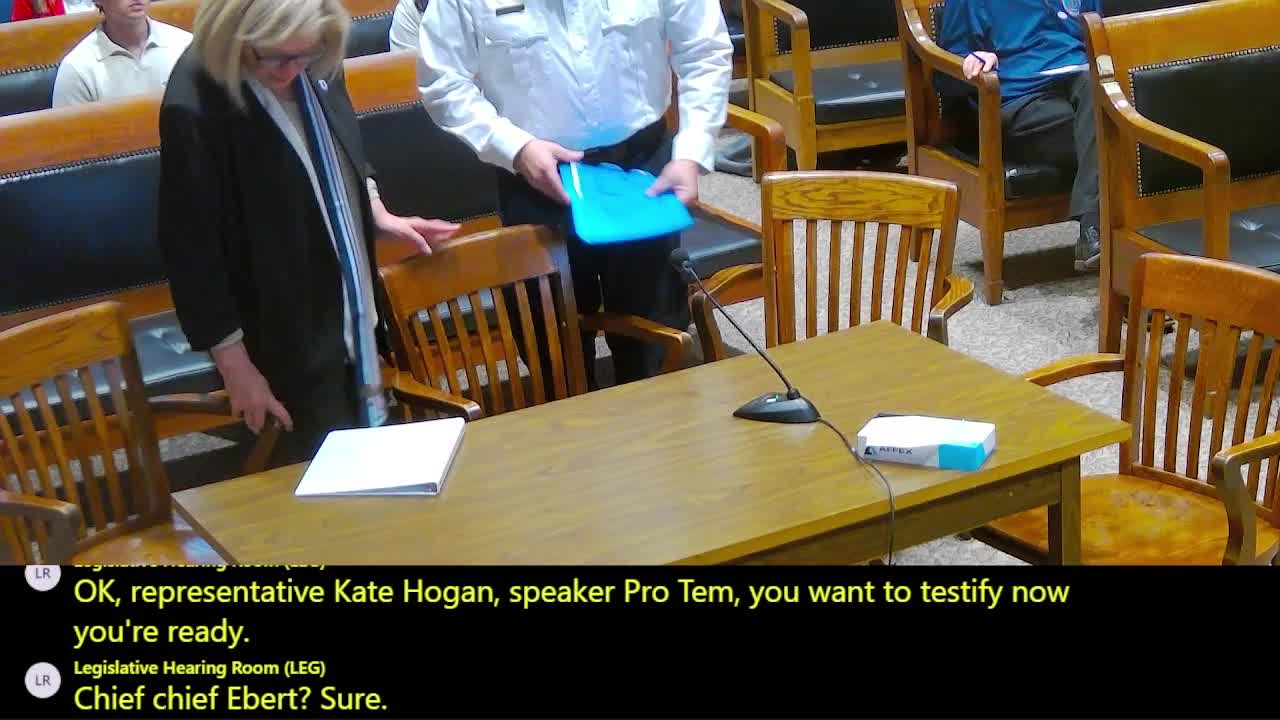
Representative Hogan said climate change and persistent drought have reduced available drafting water in many towns and that cisterns can provide a reliable, on-site supply for departments that lack municipal hydrants. "When water supplies fail us during a fire emergency, lives can be lost and homes can be destroyed," she said, urging a fund dedicated to installation, repair and maintenance of cisterns and a task force to set siting and technical standards.
Chief Barry Evers (Stow) described installed cisterns: 30,000-gallon underground tanks with surface access for hydrant connections, minimal aboveground footprint, and the capacity to supply 250 gallons per minute for two hours as required by NFPA drafting standards. He said siting on town-owned land (public works yards, parks) avoids complex easements and land acquisition costs and lowers project costs.
Why it matters: Supporters said cisterns are a low-tech, durable solution for communities without municipal water and can be critical during drought or brush-fire events. Funding and maintenance are the biggest barriers; proponents urged state assistance via a dedicated fund and technical task force.
Process: Proponents requested a favorable report; no committee vote on H.4112 is recorded in the transcript.
Ending: Fire chiefs and municipal leaders framed the program as a targeted investment in life-safety infrastructure for communities that lack hydrant service.