Judges, bar groups urge committee to strengthen protections for judicial privacy and safety
Loading...
Summary
Presiding and first justices, together with the Massachusetts Bar Association, testified in strong support of H1766, saying judges, clerk magistrates and court staff face increasing threats that justify limited privacy protections.
Presiding and first justices, together with the Massachusetts Bar Association, testified in strong support of H1766, telling the Joint Committee on the Judiciary that judges, clerk magistrates and court staff face a significant and growing risk of threats and harassment both in person and online.
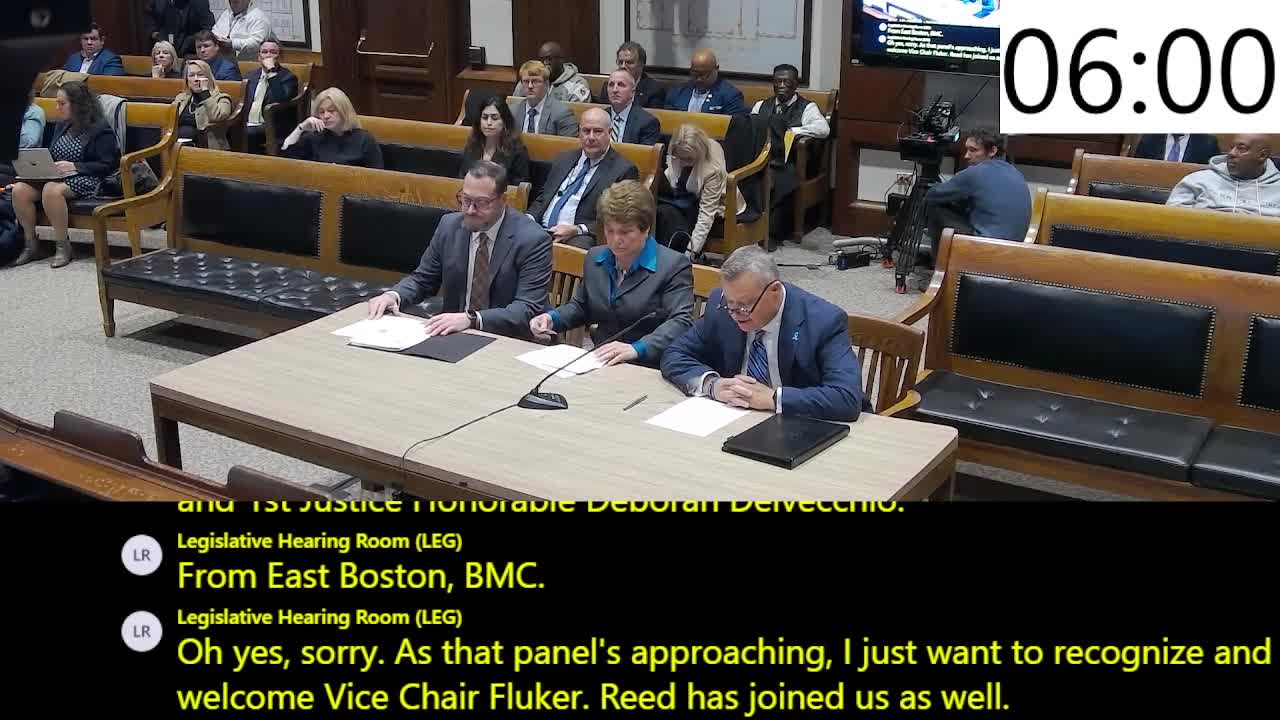
"By protecting the privacy and security of judges and their families, this legislation strengthens one of the cornerstones of our democracy, an independent judiciary, free from intimidation and improper influence," said Matthew Mascara, presiding justice of the Chelsea District Court. Mascara described public posting of personal information and cited national incidents of violence against judges and their families as a reason to act.
First Justice Deborah Del Vecchio of the Boston Municipal Court and Michael Hayden, president of the Massachusetts Bar Association, echoed those concerns, saying that the bill would not shield judges from accountability but would reduce opportunities for malicious actors to weaponize private information. Hayden described recent incidents such as doxxing, ‘‘swatting’’ and other targeted harassment as evidence the problem is immediate and not theoretical.
Committee members asked about the bill’s scope, including whether retired judges or federal judges are covered. Testifiers responded that prior versions of similar proposals focused on sitting state judges but the current iteration has been broadened in other jurisdictions; the panel explained that retirement can present ongoing risks if retired judges continue to participate in public programming or recall assignments.
Witnesses also described technical mitigation steps the courts have taken, such as "delete pages" and online content removal efforts, but acknowledged those measures are imperfect and cannot fully suppress duplicate copies of personal information once published.
Supporters urged the committee to move the bill forward as a measured, targeted adjustment to protect judicial independence and safety without impairing public accountability.