Get Full Government Meeting Transcripts, Videos, & Alerts Forever!
Get email alerts on the Defamation Survivor Protections topic
No spam. Unsubscribe anytime.
Lawmakers hear survivors, advocates in support of bill shielding speakers from retaliatory defamation suits
Summary
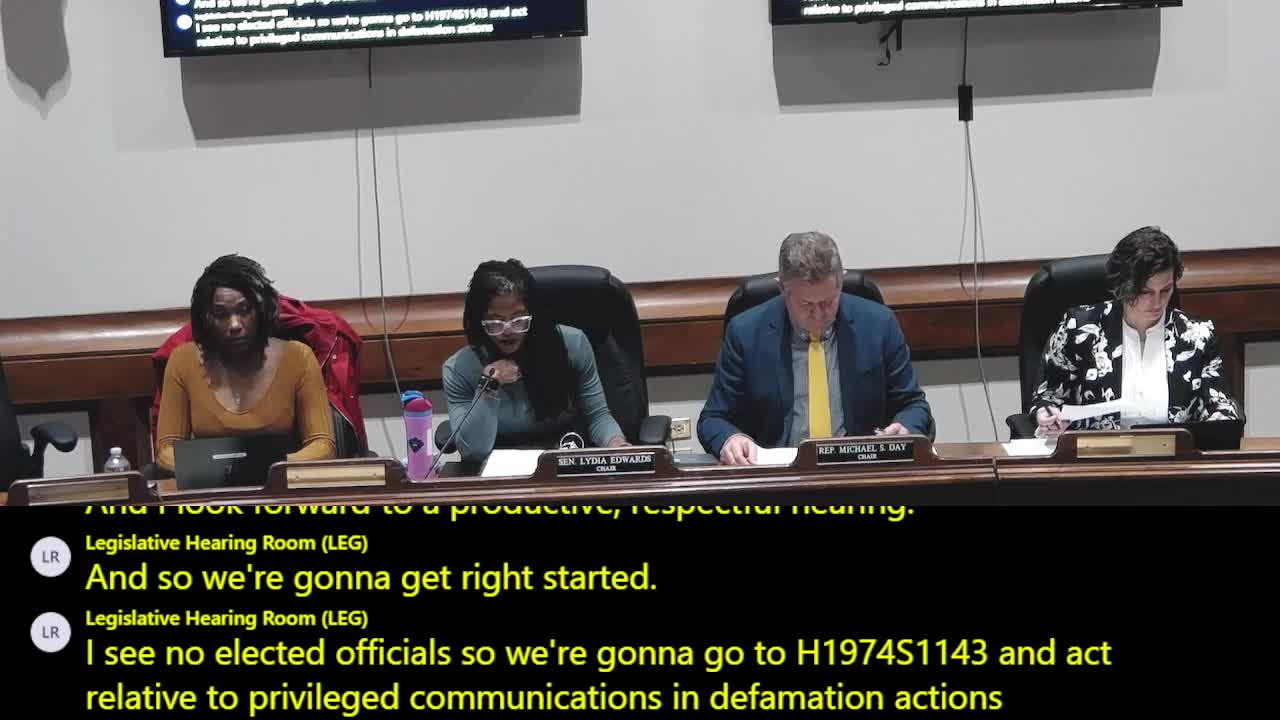
Survivors, advocates and legal scholars urged the Joint Committee on the Judiciary on Nov. 2 to advance H1974/S1143, legislation that would make it harder for plaintiffs to use defamation lawsuits as a tool to intimidate people who speak about sexual misconduct or other abuses.
Survivors, advocates and legal scholars urged the Joint Committee on the Judiciary on Nov. 2 to advance H1974/S1143, legislation that would make it harder for plaintiffs to use defamation lawsuits as a tool to intimidate people who speak about sexual misconduct or other abuses.
The bill would shift the burden by requiring a plaintiff who sues a speaker about alleged misconduct to prove actual malice — that the speaker either knew a statement was false or acted with reckless disregard for the truth — and to pay the defendant’s fees and actual damages if the defendant prevails. Supporters said that fee-shifting is necessary to make representation realistically available to survivors and to deter meritless suits brought to silence victims.
"Survivors shouldn't have to fear financial ruin or abuse of the legal system for sharing their personal lived experiences," said Anne Marie Halbin, who testified she was sexually assaulted and later feared being sued for speaking out. She described paying more than $6,000 in legal fees just to clear the way to speak publicly during a municipal election and urged the committee to provide broader protection so others will not face the same barriers.
Victoria Burke, who described herself as the architect of the draft legislation, said similar laws have been adopted in California, Connecticut, Maine and Oregon and have helped to discourage retaliatory suits and encourage counsel to represent survivors. "These lawsuits typically take between five- and seven-figures to defend," she said. "It’s cheaper for a survivor to just go silent." RAIN (Rape, Abuse & Incest National Network), the Victim Rights Law Center, and individual survivors testified in support.
Advocates described several practical impacts of the bill: fee-shifting can make private counsel more willing to take these cases on contingency or under paid-fee arrangements; an award of attorneys’ fees helps survivors avoid bankruptcy after multi-year litigation; and a clear statutory standard gives courts a defined early-stage basis to dismiss frivolous suits.
Opponents were not recorded in the hearing. Committee members questioned witnesses about scope — whether the bill would unduly chill legitimate defamation claims — and supporters said the measure is narrowly tailored to preserve remedies for those who can show actual malice.
The testimony illustrated a range of concrete harms survivors seek to avoid: prolonged litigation, forced disclosure of confidential complainants and the loss of employment or educational opportunities. "MeToo started a movement," said Susanna Akbar, who described years of litigation and personal harm after she was sued; "these suits have nothing to do with defamation and everything to do with punishing women for telling the truth."
Supporters asked the committee to report the bill favorably so that survivors would have access to counsel and not be priced out of defending truthfully stated accounts of abuse.