Get Full Government Meeting Transcripts, Videos, & Alerts Forever!
Get email alerts on the Judicial Confirmation topic
No spam. Unsubscribe anytime.
Judicial confirmation committee moves into closed session to question appointee under Open and Public Meetings Act
Summary
Sen. Todd Weiler, chair of the Judicial Confirmation Committee, said the panel voted to enter a closed session under sections 204 and 205 of the Open and Public Meetings Act to privately examine the character, competence and health of a judicial appointee.
Sen. Todd Weiler, chair of the Judicial Confirmation Committee, said the panel voted to enter a closed session under sections 204 and 205 of the Open and Public Meetings Act to privately examine the character, competence and health of a judicial appointee.
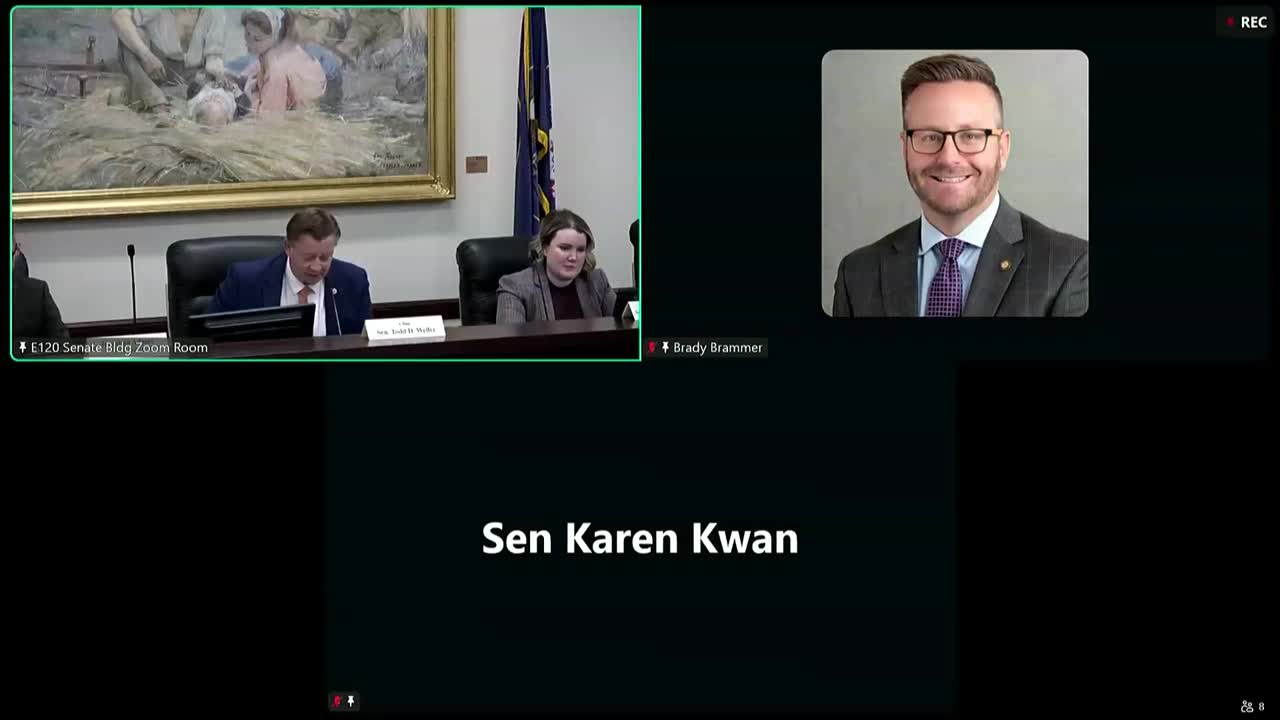
Weiler announced a quorum with Sen. Ipsen present in the room and Sens. Brammer and Kwan participating online, and asked Sen. Ipsen to make the motion to close the meeting. According to the record, Sen. Ipsen moved "so moved" and Weiler confirmed the motion on the public record.
"As permitted by sections 204 and 205 of the Open and Public Meetings Act, this committee may close a portion of the meeting . . . to privately discuss the appointee's character, competence, and or health," Weiler said, adding that the appointee would be invited into the closed room to answer questions under oath and that the closed portion was expected to last about 10 minutes. The committee then took a voice vote; Weiler said all in favor said "aye" and ruled the motion passed unanimously.
The transcript records numeric tallies inconsistently: the chair first says the motion "passes 5 to 0" and shortly thereafter says "6 to 0," while also stating the motion passed unanimously. The record does not include a roll-call vote or named vote tally in the public portion of the transcript.
After the voice vote was recorded, the committee proceeded into the closed meeting. The transcript identifies an individual joining in person for the closed portion but does not provide a clear name for that person in the public record; the article therefore refers to that participant as "the appointee" to avoid misidentification.
The committee indicated it would resume the public hearing after the closed-session questioning.