Get Full Government Meeting Transcripts, Videos, & Alerts Forever!
Designated crisis responders say involuntary commitment and placement processes are failing in parts of Washington
Summary
Designated crisis responders told the Community Safety Committee that DCR staffing has fallen sharply, hospitals and other facilities increasingly decline substance‑use placements, and local policy fragmentation leaves DCRs unable to complete involuntary holds even when assessors judge them necessary.
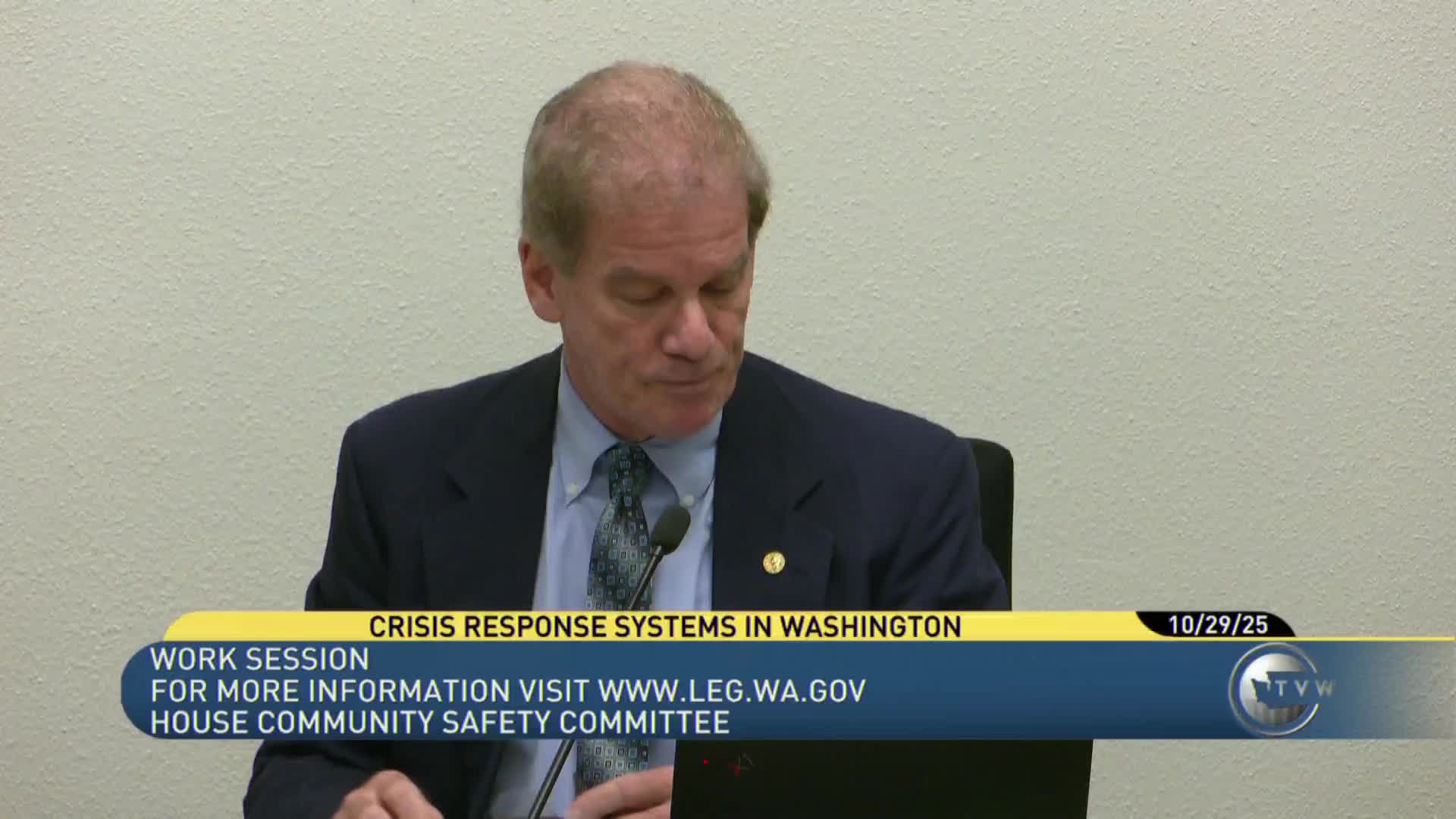
Designated crisis responders (DCRs) told a Washington State House Community Safety Committee work session on Oct. 29 that the state’s involuntary‑treatment pathway is often blocked by lack of accepting facilities, inconsistent local practices, and insufficient DCR staffing.
"Since we've left the regional sort of port network and moved to the BHASOs, we used to have 800 DCRs across the state, and now we're down below 350," Laura Pippen, a designated crisis responder, told the committee. Pippen said DCRs are assessors who can determine that a person meets criteria for involuntary commitment but…
Already have an account? Log in
Subscribe to keep reading
Unlock the rest of this article — and every article on Citizen Portal.
- Unlimited articles
- AI-powered breakdowns of topics, speakers, decisions, and budgets
- Instant alerts when your location has a new meeting
- Follow topics and more locations
- 1,000 AI Insights / month, plus AI Chat