Get Full Government Meeting Transcripts, Videos, & Alerts Forever!
Washington lawmakers hear plans to integrate 911 and 988, expand co‑response and mobile crisis teams
Summary
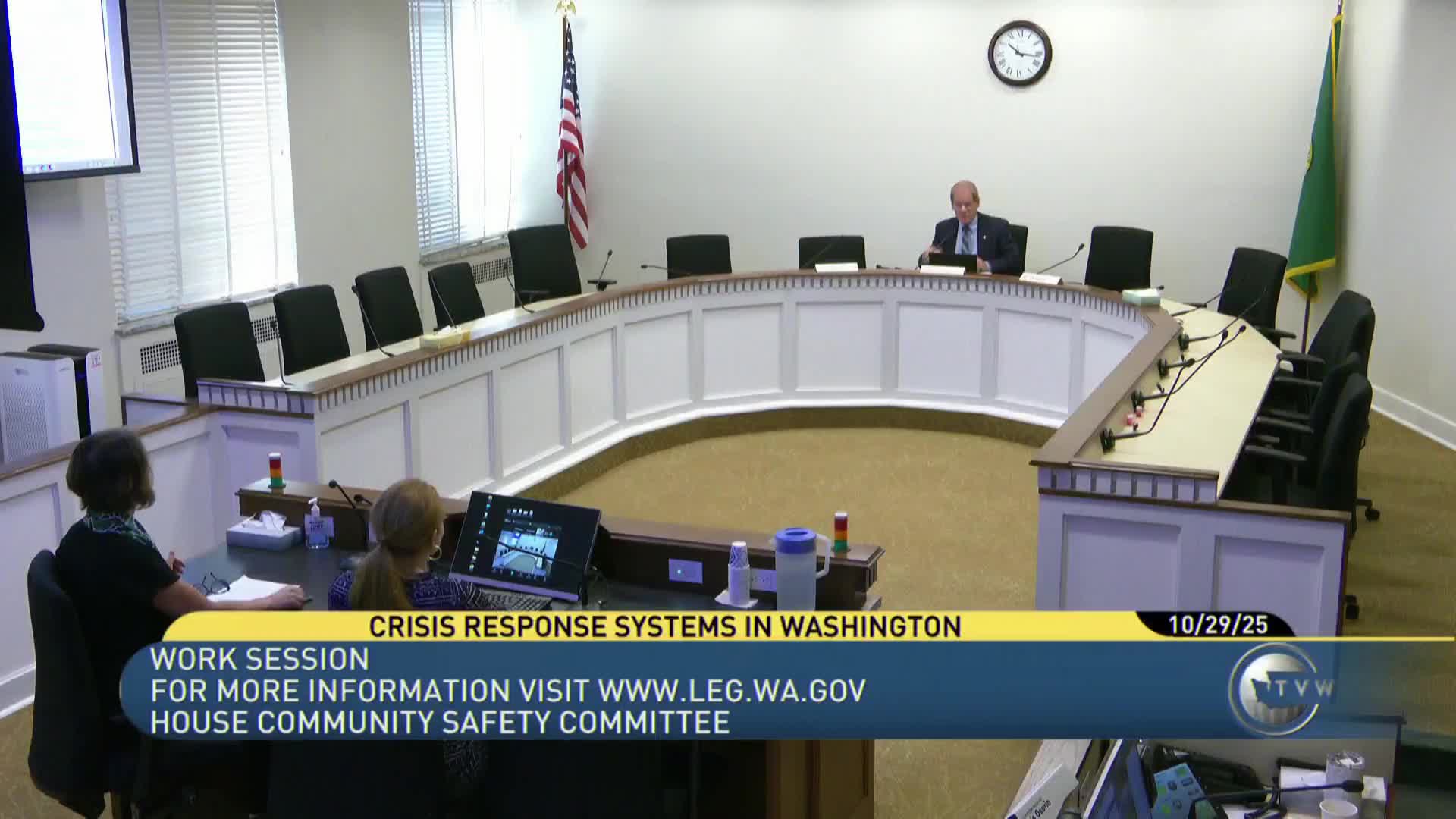
A Washington State House Community Safety Committee work session on Oct. 29 heard extensive testimony on how to get people in behavioral‑health crisis the right response at the right time, whether that response is a 9‑1‑1 co‑responder, a 9‑8‑8 mobile rapid response team, or in‑person follow up by a community provider.
A Washington State House Community Safety Committee work session on Oct. 29 heard extensive testimony on how to get people in behavioral‑health crisis the right response at the right time, whether that response is a 9‑1‑1 co‑responder, a 9‑8‑8 mobile rapid response team, or in‑person follow up by a community provider.
The session brought dispatchers, city and county officials, nonprofit providers and researchers to the same table to describe models that are already operating in Washington and elsewhere and to press for coordinated funding, training and data systems.
"Washington is the first state to have done that," said Brooke Bittner, executive director of the Regional Crisis Response Agency and board president of the Co‑Responder Outreach Alliance, referring to the legislative framework that defines co‑response teams under last session's House Bill 1811. Bittner told the committee the state now has more than 60 co‑response programs and needs sustained support for the 9‑1‑1 side of the ecosystem as 9‑8‑8 services mature.
Why it matters: witnesses described a continuum of options — telephone‑based crisis lines, mobile clinical teams, co‑responder units embedded…
Already have an account? Log in
Subscribe to keep reading
Unlock the rest of this article — and every article on Citizen Portal.
- Unlimited articles
- AI-powered breakdowns of topics, speakers, decisions, and budgets
- Instant alerts when your location has a new meeting
- Follow topics and more locations
- 1,000 AI Insights / month, plus AI Chat