Lifetime Citizen Portal Access — AI Briefings, Alerts & Unlimited Follows
MMIWP task force reports cold‑case progress and gaps in law enforcement data and coordination
Loading...
Summary
The state's MMIWP Task Force reported to the House committee that it has identified dozens of unsolved Indigenous homicides, advanced forensic genetic genealogy testing on unidentified remains, and documented gaps in law‑enforcement data collection and coordination.
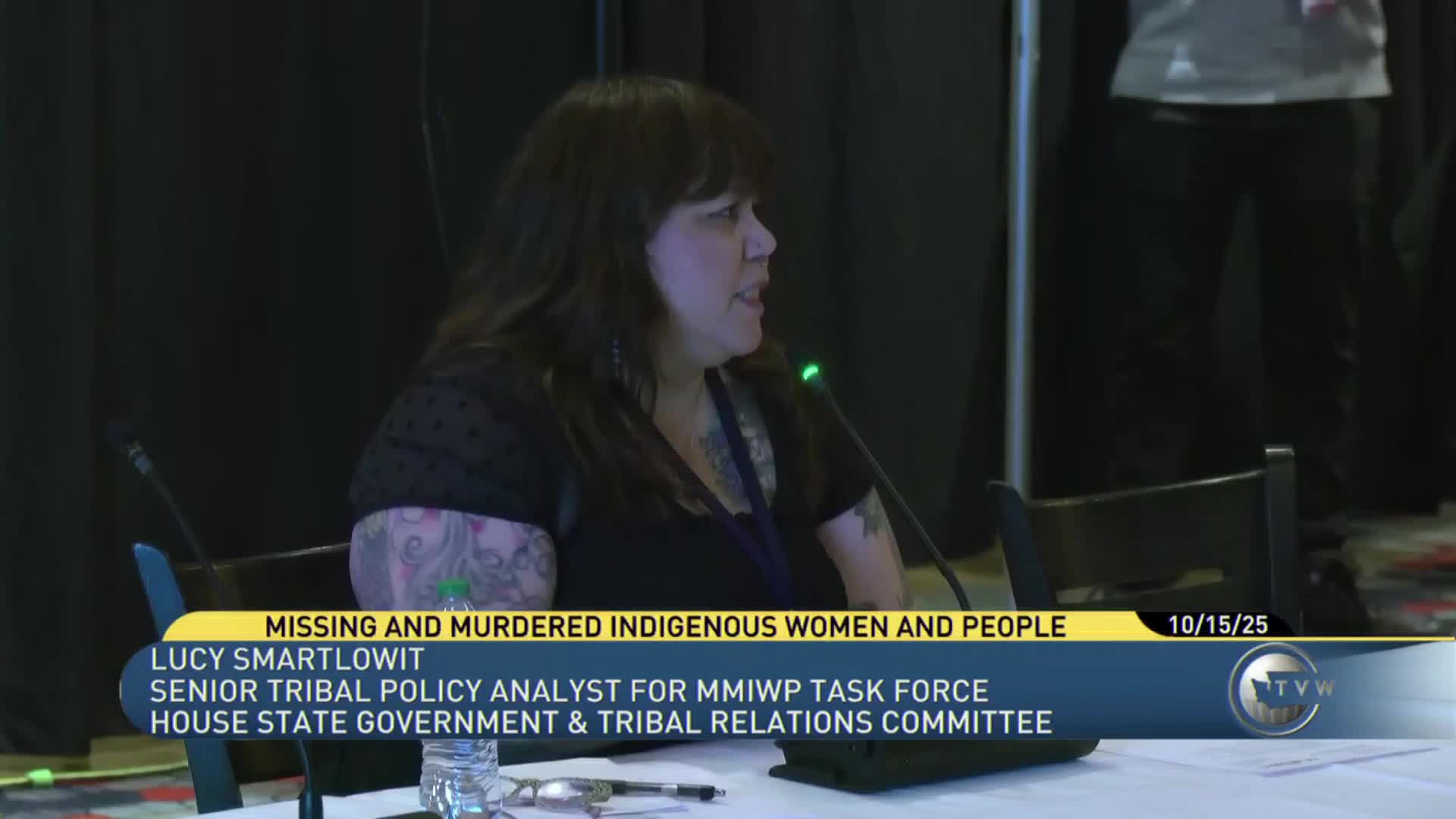
Lucy Smartlett, senior tribal policy analyst at the Washington Attorney General's Office and an appointed member of the state's Missing and Murdered Indigenous Women and People Task Force, gave the committee a status report on the task force's investigations, data work and recommendations.
Smartlett said the task force's homicide investigative tracking system shows 470 homicide investigations out of 11,580 overall and that 117 to 122 of those involve Indigenous victims; she reported the most recent cold‑case accounting indicates 122 unsolved homicides of Indigenous people in Washington and that number is believed to be underreported. "We actually have a 122 unsolved homicides of indigenous people and they believe that is underreported for a variety of reasons," she said.
The task force helped secure a one‑time forensic genetic genealogy (FGG) proviso. Smartlett said 45 unidentified‑remains cases were submitted for FGG analysis: three have been identified, eight have tentative identifications forwarded to investigating agencies, and 13 remain in testing. King County Medical Examiner prioritized cases for the project; Othram Labs performed the outsourced analysis. Smartlett said the FGG results required careful handling because most commercial genealogical databases have small Indigenous reference samples, slowing or complicating matches.
The AGO also established and fully funded a cold‑case unit; Smartlett said the unit has 25 active investigations and has assisted in locating at least 20 missing Indigenous people. The unit reported one arrest out of a cold case in Clallam County with a trial pending.
The task force conducted a statewide law‑enforcement survey and received 74 responses from 191 agencies contacted. Survey findings included: 63 percent of responding agencies reported informal relationships with at least one tribe; 18 percent reported they work with tribal law enforcement often; 34 percent of agencies reported they never collect tribal affiliation during arrests; and many agencies rely on officer observation to record race and ethnicity in records. Smartlett said inconsistent classification practices and limited consultation contribute to undercounting and misclassification of Indigenous victims and missing persons.
The task force also completed 53 interviews with families and survivors (32 of which were recorded and shared with the task force) to gather qualitative information and recommendations for law enforcement, agencies and communities. Smartlett said many family members were grateful to be heard and that qualitative accounts informed recommendations on training and victim services.
Smartlett told the committee the task force is moving to strategic planning, continued interagency partnerships, and expanded training and prevention work. She asked for sustained state support and said the task force has no immediate legislative ask but may bring proposals later. "Sustainability" and additional resources for staffing and forensics were listed as immediate needs by the task force.