Get Full Government Meeting Transcripts, Videos, & Alerts Forever!
State auditors: no clear underidentification but Washington districts face funding, data and staffing challenges in special education
Summary
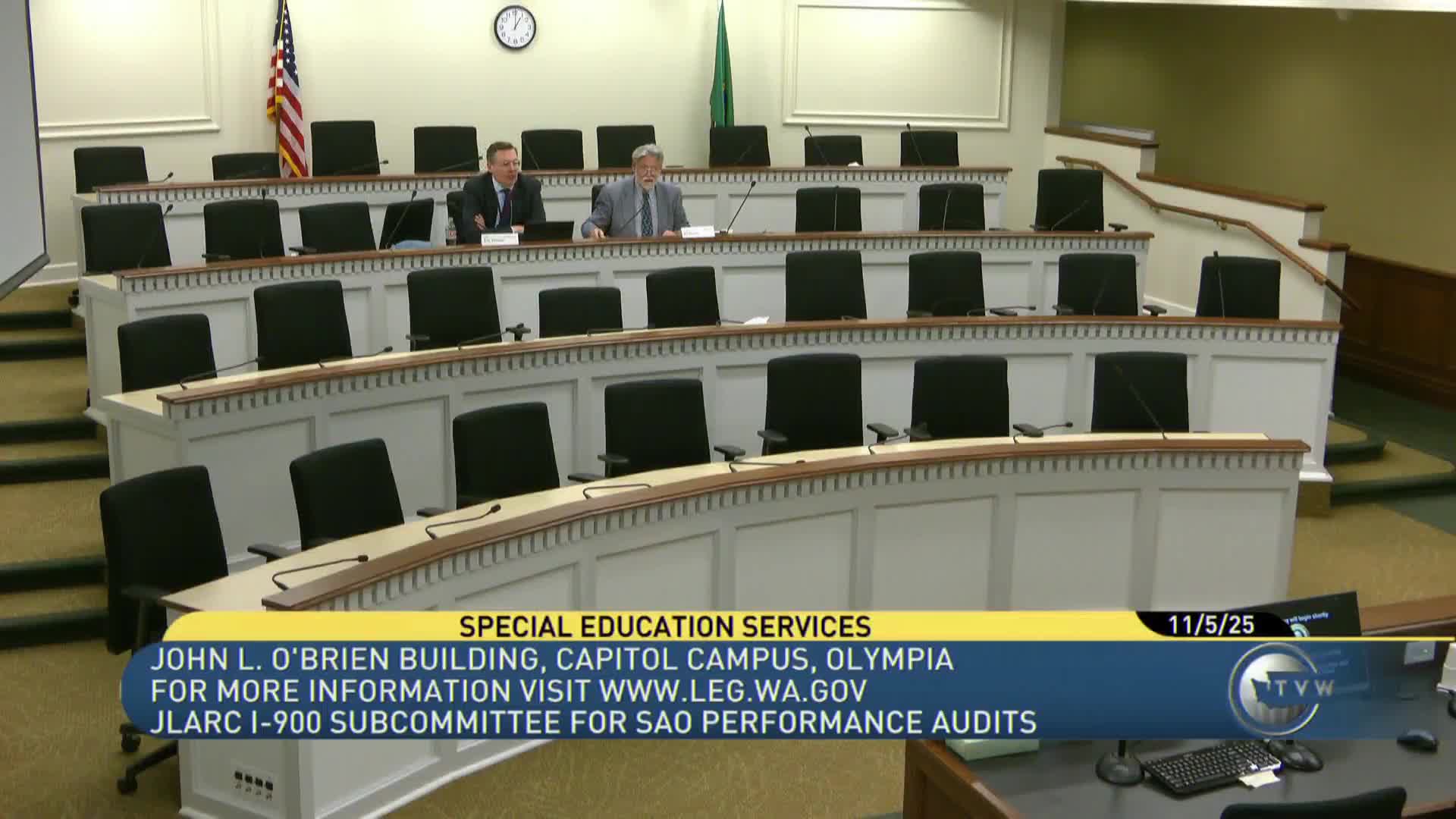
The Washington State Auditor's Office told a JLARC Initiative 900 subcommittee on Nov. 10 that its performance audit found little evidence that any particular population in Washington is being systematically underidentified for special education, but it also documented persistent funding gaps, inconsistent documentation and reporting across districts, and workforce shortages that constrain services.
The Washington State Auditor's Office told a JLARC Initiative 900 subcommittee on Nov. 10 that its performance audit found little evidence that any particular population in Washington is being systematically underidentified for special education, but it also documented persistent funding gaps, inconsistent documentation and reporting across districts, and workforce shortages that constrain services.
"We are here today to discuss the results of our performance audit comparing student needs to district funding for special education," Emily Simber, lead auditor on the project, said as she opened the presentation. Auditors conducted the work under authority granted by Initiative 900 and at the request of House Bill 2180, Simber said.
The audit addressed two primary questions: whether any populations appear to be underevaluated or underserved by Washington school districts, and whether districts receive sufficient funding to evaluate students and provide services consistent with need. To estimate prevalence where a definitive baseline does not exist, auditors used two statistical models (a national model and a state model) that applied demographic risk variables — including foster care share, percentage of English language learners and the share of private school students living in a district — to estimate expected rates and compare them to actual identification rates.
The models showed Washington districts clustered near national trends but slightly below the national trend line when…
Already have an account? Log in
Subscribe to keep reading
Unlock the rest of this article — and every article on Citizen Portal.
- Unlimited articles
- AI-powered breakdowns of topics, speakers, decisions, and budgets
- Instant alerts when your location has a new meeting
- Follow topics and more locations
- 1,000 AI Insights / month, plus AI Chat