Senate committee recommends John Nielsen to Utah Supreme Court after questioning on standing, recusal and diversity
Loading...
Summary
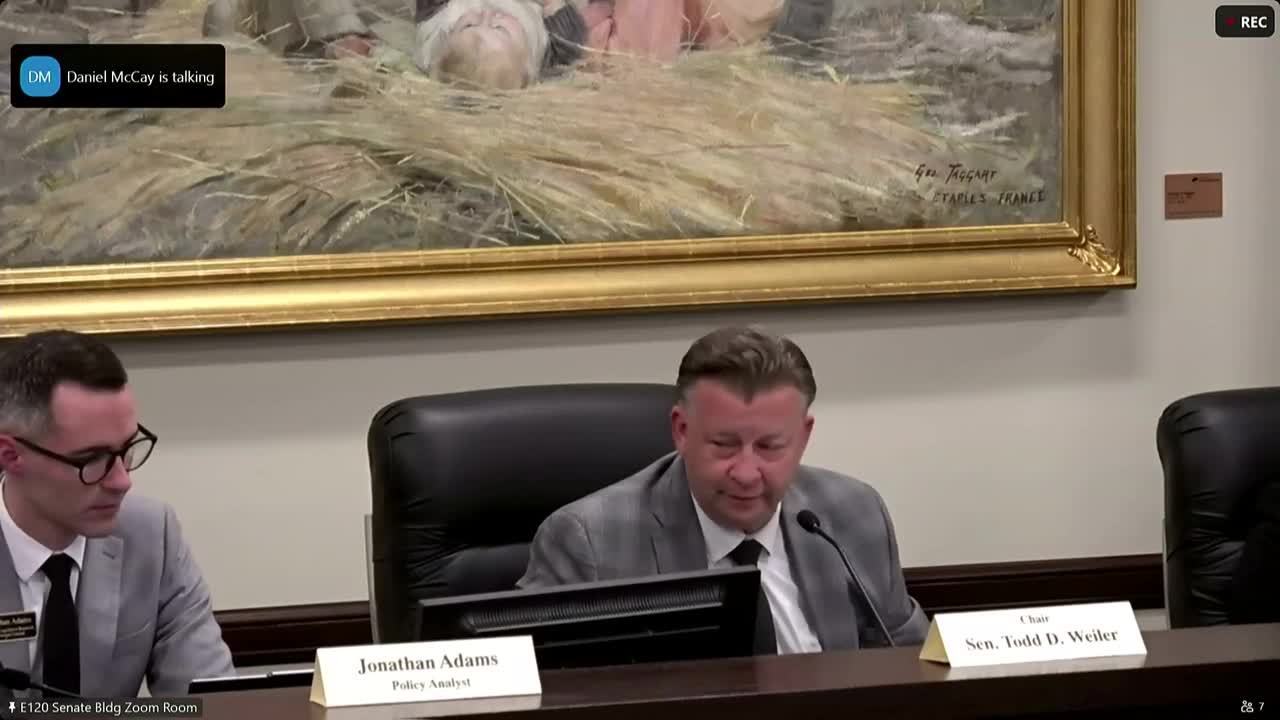
After a two-hour confirmation hearing focused on standing, constitutional interpretation, recusal practices and bench diversity, the Senate Judicial Confirmation Committee voted 5–2 to recommend Judge John Nielsen for appointment to the Utah Supreme Court. Senators Kwan and Pitcher voted against the recommendation.
The Senate Judicial Confirmation Committee voted 5–2 to recommend Judge John Nielsen for appointment to the Utah Supreme Court following a confirmation hearing that centered on jurisdictional limits, interpretive philosophy and potential conflicts of interest.
Committee members questioned Nielsen at length about when courts may act without jurisdiction and how he approaches constitutional interpretation. "No. There is no exception to standing," Nielsen said when asked whether courts should sometimes overlook standing or jurisdictional defects to correct perceived injustice. He described several types of standing — traditional (redressability and a concrete interest), associational, prudential and public‑interest standing — and said the legislature may create causes of action and therefore influence the bounds of standing so long as it does not violate constitutional limits.
Senators also pressed Nielsen on his interpretive approach. Nielsen said he is a textualist and an originalist and that, when interpreting provisions such as the Utah Constitution, he looks to what the framers and ratifiers meant at the time of enactment. "The interpretation that matters is what the people meant when they said it," he told the committee.
Questions about recusal and past private‑practice work took up a substantial portion of the hearing. Nielsen said recusal has arisen rarely during his roughly one year on the district court bench; he described one instance in which he recused from a civil stalking case in Tooele after encountering extrajudicial information he felt made it inappropriate to continue. On other potential conflicts — for example, a former college roommate who appears as defense counsel — Nielsen said he notifies the parties and allows them to move to recuse; he said he did not automatically list potential conflicts when he first took the bench because he did not expect those people to appear before him.
The committee addressed concerns about Nielsen's private practice, including participation in high‑profile or politically charged matters. Nielsen said attorneys represent client positions and that filing a brief on a client's behalf does not necessarily reflect a lawyer's personal views. He acknowledged that firms solicit clients but declined to discuss client development in detail, citing attorney‑client confidentiality.
Diversity on the bench and community outreach were recurring themes. Nielsen described past experience working with diverse communities as a prosecutor and appellate lawyer — including a case involving members of a Karen refugee community in South Salt Lake — and discussed speaking to students and offering externships to increase interest in appellate work. Senators urged more outreach and recruitment to expand the pool of applicants from underrepresented groups.
Nielsen said he would prioritize access to justice as a justice, urging law firms to provide pro bono opportunities and externships to train younger attorneys, particularly as technological changes alter traditional associate training.
Senator John Brammer moved the recommendation. After discussion, the committee chair announced the motion passed 5–2 with Senators Kwan and Pitcher voting no. The committee’s favorable recommendation now goes to the full Senate for consideration.
The hearing closed with a brief discussion of court collegiality, stare decisis, and the proper institutional role of the Supreme Court in resolving state constitutional questions. Nielsen repeatedly emphasized judicial restraint, collegial tone, and following established methods of statutory and constitutional analysis.