Tulsa officials consider using revolving retail loan funds to secure HUD match for 36th North/Peoria revitalization
Loading...
Summary
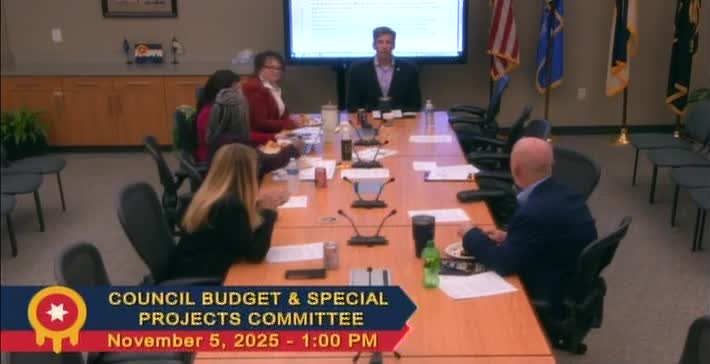
Tulsa City Council members spent an extended portion of the meeting discussing an ordinance that would appropriate city loan funds to match a HUD Choice Neighborhoods award focused on the 36th Street North/Peoria corridor.
Tulsa City Council members spent an extended portion of the meeting discussing an ordinance that would appropriate city loan funds to match a HUD Choice Neighborhoods award focused on the 36th Street North/Peoria corridor.
Staff said the city would put $1.5 million of city funds into a retail revitalization loan program for that corridor and that HUD’s Choice Neighborhoods grant would match roughly $1.1 million. Rose, a city economic-development staff member, described how the program would operate: “It would be a part of a revolving loan.” She said the loan repayments and interest from earlier COVID-era business resilience loans have been returned to the city and could be revolved into the retail revitalization fund.
The program is designed as place-based economic development: staff described recruiting residents from the Phoenix District interested in launching businesses, supporting them to build business plans and, in some cases, matching them with franchises. “We help them build a business plan … we would match them up with a franchise that aligns with their business plan,” Rose said.
Councilors pressed staff on whether money originally designated for Route 66 beautification or other voter-intended purposes was being repurposed. Staff explained those earlier loans were repaid and, once returned as program income, are no longer legally restricted to the original subproject and become a policy decision for redeployment. Staff pointed to the broader funding context: a portion of an approximately $11 million economic-development bucket from a prior tax is divided into three sub-buckets of roughly $3.6–$3.7 million each, one of which is the retail revitalization pool.
Councilors also sought clarity about HUD’s expectations and restrictions. Staff said the HUD contract looked narrowly tied to the 36th Street North area and that HUD-funded matching dollars would be expected to benefit businesses in that geographic area during HUD’s performance period; loans made under the city program would typically amortize over seven to ten years. Staff cautioned that the contract did not clearly specify long-term program-income language, but added that the housing authority, as the HUD partner, would expect match funds to be available to businesses in the targeted area while the HUD program remained active.
Councilors asked staff to codify the intended use and any return-to-fund language in the budget amendment and in contract backup materials so the long-term policy intent would be clear if council approves the appropriation on later readings. Staff agreed to update the backup materials for the council to review before second reading.
Discussion points included the degree to which the proposal would focus funds on creating new businesses in an under-served corridor versus using funds to revitalize existing businesses elsewhere in the city, and how much of the retail revitalization bucket would be temporarily designated for the HUD-matched project. No formal vote was recorded during this discussion; staff were directed to update the ordinance backup materials and return the item for further consideration on second reading.
Ending: Councilors asked that policy language clarifying the long-term handling of program income be added to the backup materials before the item returns for second reading.