Get Full Government Meeting Transcripts, Videos, & Alerts Forever!
Get email alerts on the Medicaid Hr1 Impacts topic
No spam. Unsubscribe anytime.
Committee warns HR 1 could shrink Medicaid coverage and cost Washington billions
Summary
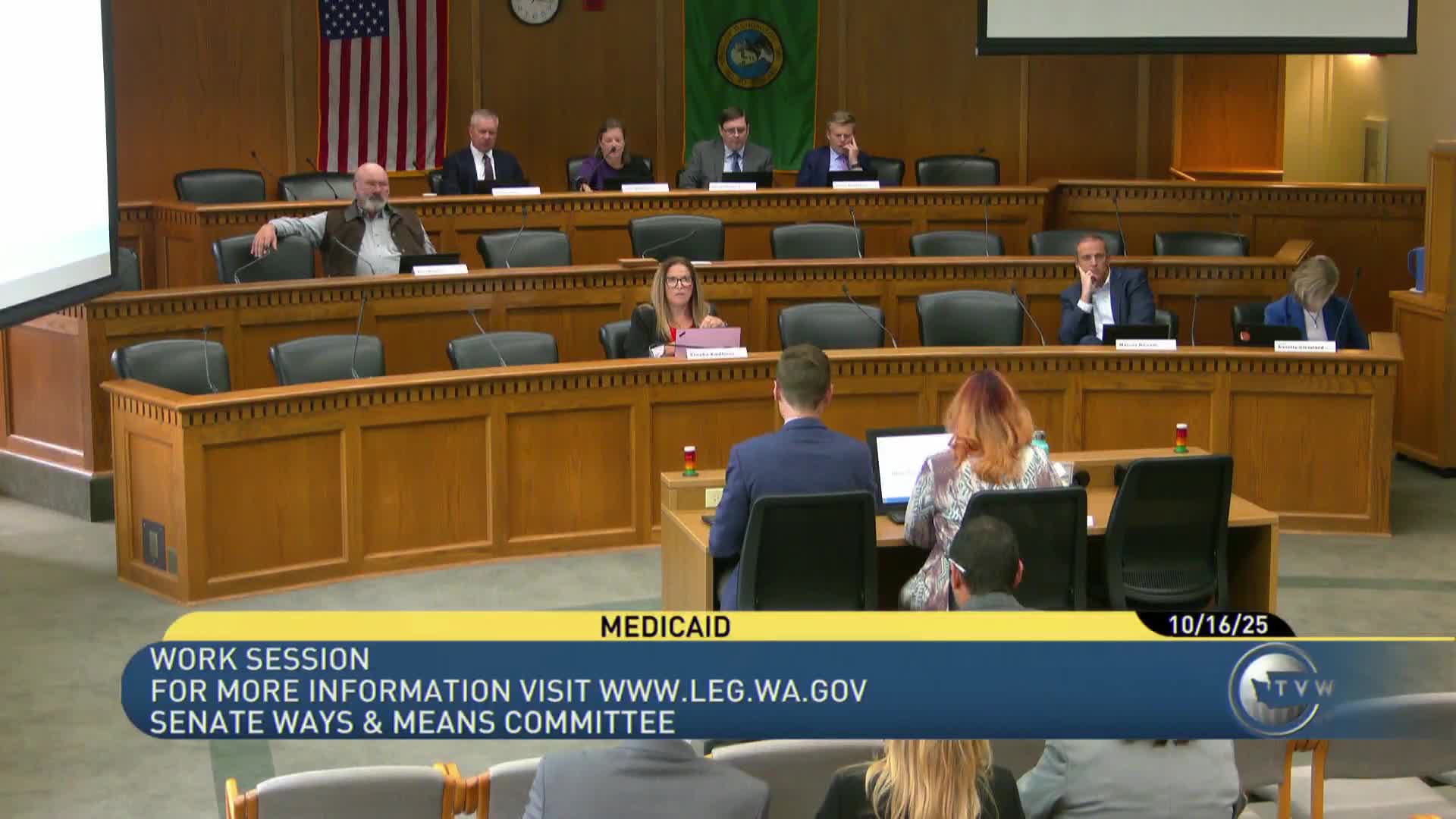
Washington State Senate Ways and Means Committee members heard detailed warnings on October 16 about the reach and fiscal consequences of HR 1 for the state’s Medicaid program.
Washington State Senate Ways and Means Committee members heard detailed warnings on October 16 about the reach and fiscal consequences of HR 1 for the state’s Medicaid program.
Health Care Authority Director Ryan Moran told the committee HCA and partner agencies face large technology upgrades and staffing needs to implement multiple new eligibility and verification requirements “to try to preserve and mitigate as much coverage impact to participants as possible.” He said agencies are simultaneously preparing for CMS guidance expected in mid‑2026 and must plan now for phased implementation through 2029.
The nut of the change, HCA’s eligibility staff said, centers on two provisions that will most affect expansion adults who gained coverage after the Affordable Care Act: a new definition of who counts as a fully federally funded “qualified alien” effective October 1, 2026, and a new community‑engagement work requirement. Trinity Wilson, Assistant Director for Medicaid Eligibility, estimated the qualified‑alien change could affect “as many as 30,000 individuals” in Washington and said roughly 620,000 adults are currently enrolled in the expansion population who would be subject to the work and six‑month redetermination rules.
Under HR 1, expansion adults must meet 80 hours per month of work, community service, job training or school to retain coverage, with defined exemptions for tribal members, caregivers of children under 13, foster‑care alumni and people already meeting SNAP/TANF work requirements. “We automatically renew between 80 and 85 percent of our Apple Health enrollees,” Trinity Wilson said; the remaining 15–20 percent will require twice‑yearly active engagement under the six‑month review schedule.
Medical leadership framed those operational rules as clinical risks. Charissa Fotinos, the Medicaid and behavioral health medical director, used patient examples to underline the stakes: “I’m sad that we have to think about going back there,” she said, describing patients who went without timely care. Fotinos said the state expects billions in lost federal revenue over the 10‑year implementation window in part because fewer people will be enrolled and because financing tools states use — notably state‑directed payments and provider‑level assessments — are limited under HR 1.
HCA’s financial analysis cited a near‑term fiscal lever: HR 1 prohibits many new provider taxes, phases down provider taxes above 3.5% of net revenue starting in 2028, and restricts state‑directed payments over Medicare rates. “We anticipate by the time this unwind is done the impact to the state will be about $1,500,000,000,” HCA staff said, and they named hospitals (including University of Washington‑affiliated hospitals) among the most affected providers.
Agencies also warned about implementation costs and timing. Staff reviewed a GAO sample of other states’ experience implementing work requirements (Kentucky’s implementation cost was cited at about $271 million; New Hampshire at about $50 million) and said Washington is scoping IT verification work that could cost upward of $30 million for a dedicated solution — costs that may be eligible for an enhanced federal match if CMS approves advanced planning documents.
Workload and systems constraints on ACES, the statewide integrated eligibility platform administered by DSHS, are a central bottleneck. Christy Frederiksen, DSHS chief information officer, said ACES supports hundreds of data exchanges, dozens of programs and quarterly releases that are already at capacity. “We are evaluating which HR 1 changes we can fit into upcoming releases,” she said, and warned that some items will need to be scheduled later because of limited release capacity.
Committee members pressed for clarifications on exemptions, operational waivers and whether states can delay implementation. Staff said CMS may allow a good‑faith waiver to delay the work requirement until as late as December 2028 if the state demonstrates active efforts, but cautioned national conversations suggest waivers will be rarely granted and that Washington should prepare for a 2027 start date.
What’s next: agencies said they will continue to refine models with the Caseload Forecast Council, circulate working reports on the composition and employment status of Medicaid enrollees, and follow CMS guidance when it arrives. The committee did not take formal action at the work session; it used the meeting to gather agency estimates and operational constraints ahead of the upcoming legislative session.