Get Full Government Meeting Transcripts, Videos, & Alerts Forever!
Get email alerts on the Definition Of Antisemitism topic
No spam. Unsubscribe anytime.
Mass. commission hears wide public opposition to IHRA guiding K–12 recommendations; some urge adoption
Summary
The Massachusetts Special Commission on Combating Antisemitism heard a string of public comments urging the panel not to adopt the International Holocaust Remembrance Alliance (IHRA) working definition to guide K–12 curriculum and school responses, while other speakers supported stronger protections and use of IHRA examples.
The Massachusetts Special Commission on Combating Antisemitism heard more than two dozen public comments on its preliminary K–12 recommendations, with a majority of speakers urging the panel not to adopt the International Holocaust Remembrance Alliance (IHRA) working definition of antisemitism for school guidance.
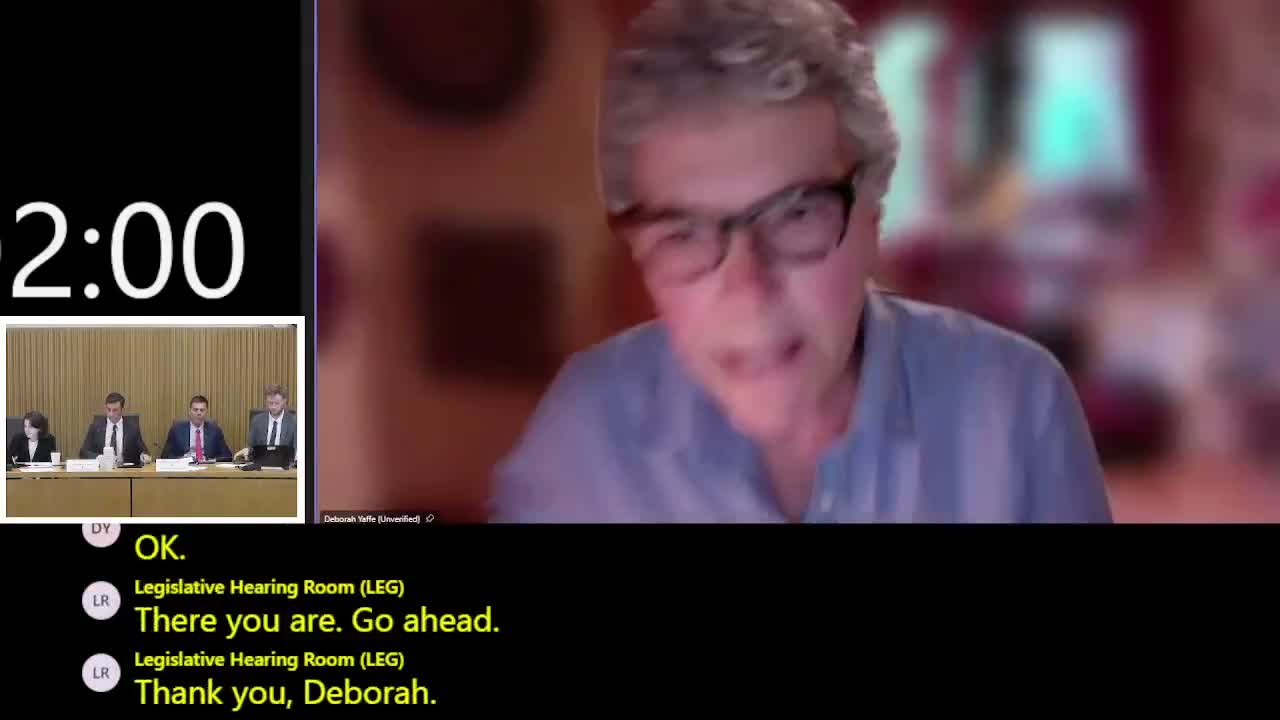
Deborah Yaffe, a Jewish retired psychotherapist, told the commission the panel "represents just one part of the Jewish community" and lacks non‑ and anti‑Zionist Jewish representation. "By advocating the IHRA definition of antisemitism, you are conflating criticism of Israel with antisemitism," Yaffe said, urging the commission to withdraw its recommendations.
Several other speakers described personal or local school incidents they characterized as antisemitic and said the commission’s K–12 proposals — including mandatory anti‑bias education, clearer superintendent/principal communications following incidents, and bystander training — could improve safety. A Watertown parent recounted two incidents affecting her daughter, including a student giving a Heil Hitler salute and a later classroom projection of an explicit slur; she said school officials took action but did not notify the broader school community.
Teachers, librarians and school leaders offered divergent views. Lisa Geisbond, identified as executive director of Citizens Republic Schools, cautioned that the recommendations could "suppress discussion of Israeli government actions in Gaza and the West Bank" and asked that any substantial policy changes go through the Legislature. Michael Denning, a career teacher and Holocaust scholar, praised the commission’s practical recommendations and urged swift implementation to protect students and educators.
Legal and policy concerns surfaced repeatedly. Several commenters argued IHRA’s examples can be read to label legitimate criticism of Israel as antisemitic; Jim Recht, a community psychiatrist, and multiple other speakers urged the commission to adopt the Jerusalem Declaration on Antisemitism or to decline IHRA adoption. A former Massachusetts Commission Against Discrimination official urged the panel to set clear, practicable criteria so that First Amendment–protected criticism of government policy would not be treated as religion‑ or ethnicity‑based discrimination.
Not all testimony opposed IHRA. Alice Pressman, of the Massachusetts Antisemitism Synagogue Task Force, thanked the commission and supported using the IHRA working definition and its 11 examples to inform mandatory anti‑bias education, citing what she said was an elevated rate of antisemitic incidents in the state.
Speakers also raised process and representation questions: multiple commenters said the commission relies on a limited set of expert witnesses and organizations, which they said does not reflect the diversity of Jewish opinion in Massachusetts (e.g., SEG 185–SEG 229, SEG 443–SEG 488). Several speakers urged that the commission explicitly protect teachers who teach about Gaza and recommend that the state’s genocide education mandate be implemented in a manner that does not exclude discussion of Palestinian experiences.
The session produced no formal motions or votes; the hearing served as a public comment period on the commission’s preliminary recommendations. The commission did not announce a timetable for final action during the remarks cited in the record. The full written testimony and additional submissions were offered by speakers for the commission’s consideration.
Who spoke (selected): Deborah Yaffe; Lisa Geisbond (Citizens Republic Schools); Aliza Barnett; Anna (public commenter); a Watertown parent; Nancy Stenberg (elementary school librarian); Jim Recht; Michael Denning; Akiva Leibowitz; Alice Pressman; Jordan Corgood. Quotations in this story are taken from public comments provided to the commission.
Next steps: The commission will consider written testimony and its preliminary findings; no vote or formal adoption of the K–12 guidance was recorded during the public comments summarized here.