Get Full Government Meeting Transcripts, Videos, & Alerts Forever!
Get email alerts on the Governance topic
No spam. Unsubscribe anytime.
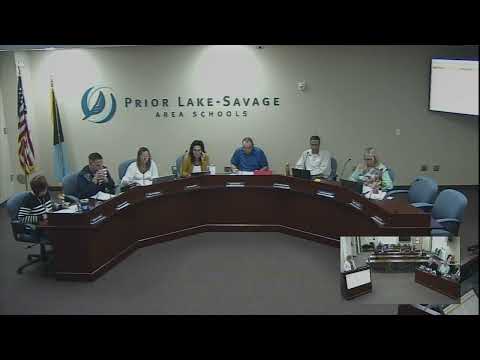
Board provides feedback on superintendent’s 2025–26 draft goals, presses for measurable finance and equity language
Summary
The superintendent presented MSBA‑formatted draft goals centered on academic excellence, finances, and community partnerships; board members requested clearer reading proficiency measures, a curricular resource listing, measurable finance indicators tied to fund-balance guardrails and monthly monitoring, and stronger equity language.
Michael (Speaker 4) presented draft superintendent goals for 2025–26 aligned to MSBA standards, organized under three primary areas: teaching and learning (academic excellence), district finances, and communications/community relationships. He said goals include SMART progress indicators, examples of evidence and a rubric for evaluation.
Board members pressed for a reading proficiency measure in goal performance indicators in addition to math, and for a public curricular mapping (a listing of curriculum by grade with links) to increase transparency. Michael replied that math is in year 3 where district-level evidence is expected, but every building will have both reading and math goals, and he agreed to add curricular mapping as a deliverable.
On finances, several board members asked for explicit targets tied to maintaining fund balance policy and regular monitoring; one member proposed that presenting a 3–5 year financial forecast to the board include language that the forecast maintain a fund balance within policy. Michael agreed to incorporate monthly monitoring and the fund-balance guardrail language into the examples of evidence and progress indicators.
Board members also asked Michael to add more explicit equity language to the goals and to document plans for students who are below benchmark. Michael said success coaches will focus on students identified in gap analyses and those artifacts can be added as evidence.
For partnerships and advocacy, Michael proposed securing at least two external collaborations aligned to strategic priorities and holding a broader community touchpoint event; board members asked for clearer measurable expectations and for staff to capture advocacy impacts when they occur. Michael also proposed board/executive-team development sessions in fall and spring to strengthen governance and alignment.