Get Full Government Meeting Transcripts, Videos, & Alerts Forever!
Get email alerts on the Elementary Boundaries topic
No spam. Unsubscribe anytime.
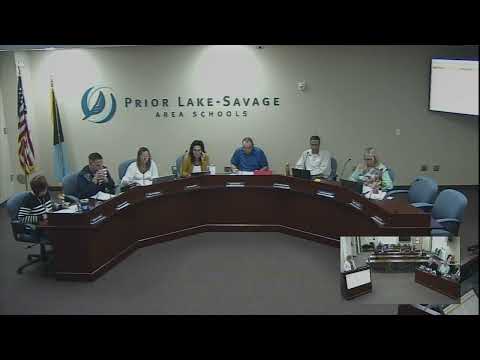
Board reviews five elementary-boundary scenarios; staff to bring maps and busing analysis
Summary
District staff presented five labeled scenarios (A–E) to rebalance elementary enrollments after site consolidation, explained key assumptions and said staff will provide maps, bus-company analysis and pros/cons to committees before recommending boundaries; board members asked about open enrollment, capacity, drive times and future housing growth.
Dan (Speaker 10), the staff lead on boundary work, told the board the elementary-boundary review is designed to align attendance boundaries with board-approved site consolidation and to present options that meet minimal criteria. He said staff intentionally pulled choice students (open-enrolled and academy students) out of resident counts for initial scenario comparisons and will include them later in the preference/open-enrollment process.
Dan summarized assumptions and high-level results from five scenarios labeled A–E. Scenario A was described as lower-impact for resident students (example numbers were provided) but left one school over 80% capacity and another around 52%. Dan said the scenarios trade off number of students moved against operational impacts such as bus drive times and cost. "We're really gonna be presenting a lot of that stuff to our committee so that they get all that stuff thrown at them, and then they can see how those maps change for each one of those options," he said.
Board members asked whether the district can close open enrollment for specific schools or grades; staff confirmed that practice is used and may be applied. Members asked for maps and grade-level breakdowns well in advance; staff committed to providing the maps and more detailed analyses to the committee and board. Busing was a frequent concern: one board member asked whether a scenario that produces a 40-minute bus ride for some students had been modeled; staff said busing criteria and the bus-company analysis remain to be completed.
Staff said they had consulted the cities of Prior Lake and Savage about growth areas and reported the municipalities expect modest housing starts (staff cited roughly fewer than 50 and 75 starts per year respectively) and used a planning estimate of about 0.7 students per new housing start. Dan said some scenarios were intentionally future-proofed to accommodate five to ten years of growth, and he expects the final boundary action to hold for up to a decade under current growth assumptions.
Next steps: staff will meet with finance/operations and the bus company, bring maps and grade-level breakdowns to the board and present two recommended options to the board on Oct. 27 with a recommendation expected for board action on Nov. 10.