Get Full Government Meeting Transcripts, Videos, & Alerts Forever!
Get email alerts on the First Amendment topic
No spam. Unsubscribe anytime.
Appeals court grills both sides on "true threat" standard, authentication and phone searches in paired Hayes appeals
Summary
In paired appeals captioned Commonwealth v. Hayes, defense counsel urged that harassing emails and mailed materials did not constitute constitutionally unprotected true threats and attacked jury instructions and authentication standards; the Commonwealth argued a swastika and targeted mailing were threatening and that the warrant and instructions
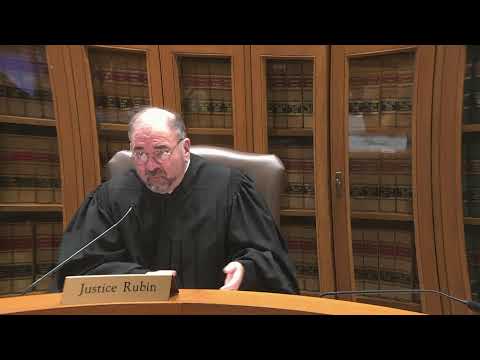
The panel heard argument in two consolidated appeals captioned Commonwealth v. Hayes, focused on criminal intimidation and related counts arising from disturbing mailings and electronic communications.
Appellant counsel Christopher DeMaio argued the evidence (including Exhibit 20 and certain mailings) did not amount to a "true threat" under Virginia v. Black and related First Amendment precedent and that the jury could not reasonably find the communications were a serious expression of intent to commit violence. He pressed the court to apply the Virginia v. Black standard for a true threat and to construe Massachusetts statutes constraining criminal punishment for communications narrowly so as not to chill protected speech.
DeMaio also challenged the authenticity and jury instructions used to determine authorship of emails and electronic communications, urging the panel that the judge's instruction allowing a preponderance finding for authentication but beyond a reasonable doubt for guilt created confusion and possible reversible error. He noted the Alden and Purdy lines of cases and argued the mixed instructions might be structurally erroneous or at least require careful harmless‑error review.
On search and seizure, defense counsel argued that the warrant's scope permitted forensic examination for specific data but that a broad review of every photograph and document on a phone invaded privacy without particularity; the court asked how Cellebrite/GrayKey tools are used and whether screenshots could be located without reading every image.
Commonwealth counsel responded that the mailed swastika and doctored materials were properly characterized as threatening to the victim, that the mailing was integral to criminal conduct because it encouraged harassment, and that evidence showed the victim was frightened. The Commonwealth also defended the trial judge's instructions and the search as consistent with SJC precedent (citing Snow and authorities allowing photo review when communications are searched because people create screenshots of communications).
Judges queried whether the jury could have been misled by mixed standards, whether some alleged errors could be harmless given admissions or concessions, and whether any structural error required reversal. Counsel debated whether certain post‑trial documents affected sentencing or were appropriately considered on review.
The arguments spanned threats doctrine, evidentiary authentication, warrant particularity for digital devices, and sentencing challenges; the panel submitted the appeals for decision after extensive questioning.