Get Full Government Meeting Transcripts, Videos, & Alerts Forever!
Get email alerts on the Second Amendment topic
No spam. Unsubscribe anytime.
Appeals court probes whether Second Amendment bars duty to retreat from cohabitant in home
Summary
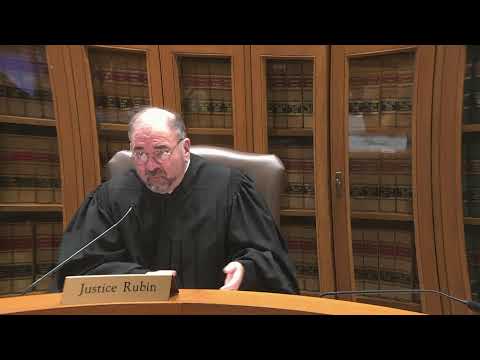
Justice Rubin convened the session and opened argument in Commonwealth v. Tehachdil, a challenge to a jury instruction that the defendant had a duty to retreat before using deadly force in self‑defense.
Justice Rubin convened the session and opened argument in Commonwealth v. Tehachdil, a challenge to a jury instruction that the defendant had a duty to retreat before using deadly force in self‑defense.
Defense attorney Jessica LeClaire told the three‑justice panel that Bruen, Heller and McDonald make clear the Second Amendment protects self‑defense in the home and therefore precludes a rule requiring a person to flee from a cohabitant before using force. "At the time of the founding what the universal rule was, there's no duty to retreat in one's home," LeClaire said, citing People v. Tomlin and federal decisions she described as surveying the common law.
The court repeatedly questioned whether a person who could safely retreat nonetheless could claim lawful self‑defense. Justice Shin asked whether a defendant who was "way down the hall" and could have left the house but instead used deadly force would have a valid self‑defense claim. LeClaire said that necessity is a jury question and that the national tradition the Supreme Court recognizes supports no duty to retreat inside the home.
On rebuttal, Assistant District Attorney Sarah Lewis urged the panel to view the jury instruction as a limitation on when deadly force is lawful, not as a restriction on possession or ownership of arms under the Second Amendment. Lewis told the court the instruction requires the Commonwealth to prove a defendant "did not use or attempt to use all proper and reasonable means under the circumstances to avoid physical combat before resorting to the use of deadly force." She argued that the instruction, when read with the model language and the trial judge's framing, allowed the jury to consider the circumstances (relative size, weapons, room to maneuver and location of the assault).
The justices pressed both sides on whether the instruction conflated when the duty to retreat arises (moment of deadly force versus earlier) and on whether the Commonwealth bore a historical burden to show a national tradition of a duty to retreat inside the home. LeClaire suggested that an instruction requiring proof that the defendant could have retreated "in complete safety" would better reflect the law; Lewis said the model instruction properly focused the inquiry on the circumstances and necessity.
The court heard extended questioning about whether the jury could fairly apply differing standards (what must be proven beyond a reasonable doubt versus preliminary authenticity findings) but limited argument time and submitted the case.
The appeals court did not announce a decision from the bench; the case was submitted for decision following oral argument.