Get Full Government Meeting Transcripts, Videos, & Alerts Forever!
Get email alerts on the Discipline topic
No spam. Unsubscribe anytime.
SBEC issues default judgment in one case and imposes five‑year suspension in another
Summary
The State Board for Educator Certification on Nov. 11 denied good cause and issued an SOA default judgment in the case of Alan Manzo and modified an administrative law judge’s recommendation to suspend Maurice Walker’s educator certificate for five years.
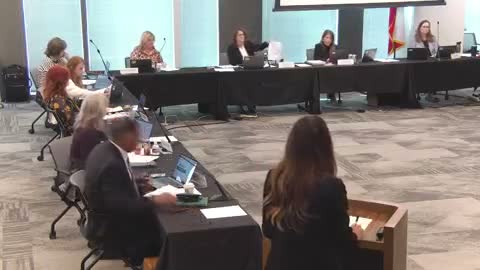
At its meeting the State Board for Educator Certification considered three disciplinary matters and took final action on two.
Alan Manzo: staff recommended denial of a request for good cause after Manzo failed to appear at a State Office of Administrative Hearings (SOA) hearing. Staff counsel told the board Manzo acknowledged he did not intend to participate in the hearing and later indicated he did not plan to return to teaching. A board member moved to find Manzo did not have good cause for failing to appear and to issue an SOA default judgment; the motions carried on voice/raise‑hand votes. No specific roll‑call tally was recorded on the transcript.
Maurice Walker: staff summarized evidence in the contested case record asserting Walker, by his own testimony, had a long history of substance misuse and was offered deferred adjudication after pleading guilty to evading arrest with a vehicle (a third‑degree felony) and was placed on five years of deferred adjudication. The administrative law judge’s proposal for decision recommended no sanction, but staff argued Texas Administrative Code 249.17(e)(4) requires a suspension equal to the deferred adjudication term for felony‑level matters of this type. A board member moved to adopt the ALJ findings but modify conclusions of law and the sanction to impose a five‑year suspension; the motion was seconded and carried.
Board procedure and record: staff counsel framed the Walker motion as a permissible modification under Texas Government Code §2001.0858(e) where the board may alter conclusions of law if the ALJ misapplied board rules. The board stated its vote and adopted the modification; members also commented about the possibility of rehabilitation and encouragement to seek treatment, while preserving the sanction required by board rule.
The board did not publish numerical vote counts in the transcript; motions were adopted by majority voice vote as recorded on the meeting floor.
The board paused for lunch after concluding disciplinary business and resumed later with implementation items.