Get Full Government Meeting Transcripts, Videos, & Alerts Forever!
Get email alerts on the Housing Funding Mirl topic
No spam. Unsubscribe anytime.
Housing advocates urge Eugene to opt into state revolving loans and grants to accelerate affordable and middle‑income housing
Summary
Housing advocates and developers urged the Eugene City Council on Nov. 10 to enact enabling resolutions so local projects can tap new state funds, including Business Oregon infrastructure grants and a $75 million MIRL/MURAL revolving loan pool administered by Oregon Housing and Community Services.
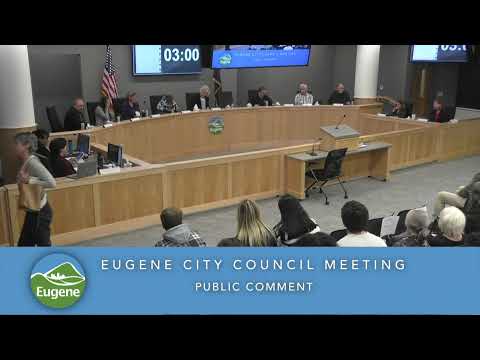
Housing advocates and developers told the Eugene City Council on Nov. 10 that the city must act quickly to access newly available state funding to build affordable and middle‑income housing.
Emily Ryman, CEO of DevNW, said Business Oregon has $10 million in infrastructure grants and OHCS holds a $75 million MIRL/MURAL revolving loan pool; she urged the city to adopt enabling resolutions and an application process so local projects can qualify. “Time is of the essence,” she said, noting that Business Oregon infrastructure applications are due Dec. 17.
Brooke Standefer of Better Housing Together described the MIRL mechanics — 0% interest loans that can act as front‑end financing and are repaid through the first 10 years of property taxes from newly developed homes — and said the program targets households in the 80% to 120% area‑median‑income range. Housing advocates asked staff for council direction and suggested the city could cosponsor applications with developers.
Cornerstone Community Housing representatives thanked council for past LRPD approvals and defended the Low‑Income Rental Property Tax Exemption as essential for preserving affordable projects. Mario Conte argued that imposing prevailing‑wage requirements on such projects would push them past financial viability, using a cost example that would exceed the 20‑year LRPD value.
What happened next: Councilors asked staff follow‑up questions about how the MIRL/MURAL tool fits the city’s housing implementation pipeline and requested further briefing; no final resolution or vote to adopt enabling language occurred at the Nov. 10 meeting.
The public record: Testimony included program descriptions (OHCS administration, $75 million statewide) and application deadlines; these were offered by developers and advocates and recorded as public comment and council questions.