Proposed Amazon distribution hub draws broad opposition over traffic, environment and jobs
Loading...
Summary
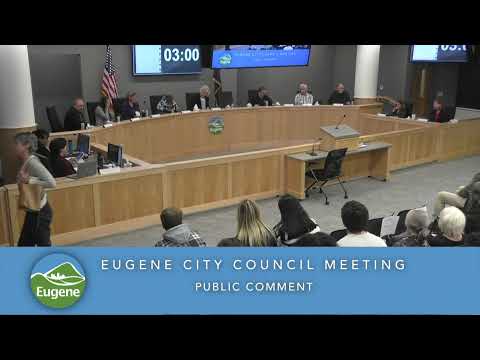
Hundreds of residents and advocates told the Eugene City Council on Nov. 10 to oppose a proposed Amazon distribution hub near the airport, citing traffic, environmental, and labor concerns and criticizing limited public notice.
Hundreds of local residents and advocacy groups pressed the Eugene City Council on Nov. 10 to oppose a proposed Amazon distribution center near the airport and Beltline corridor, raising environmental, traffic and labor concerns and criticizing a lack of neighborhood notice.
“Please do not allow Amazon to build a distribution center here in Eugene,” Mario Conte, a Cornerstone Community Housing board member, told the council, arguing that large corporate projects threaten local businesses and neighborhood character. Multiple speakers cited environmental impacts, including wetland infill, and questioned traffic projections tied to the project.
Ron Burley of North Eugene highlighted transportation and emergency access risks, saying the Beltline Highway already exceeds its design limit and that the Oregon Department of Transportation’s River Road to Delta Highway study showed the corridor is over capacity. He asked how the project could break ground next month and open in January 2027 when ODOT planning and funding horizons are seven to 10 years.
Environmental concerns were emphasized by several speakers. Deborah McGee said the developer’s projection of 2,500 daily trips in light-duty vehicles and a 320,000-square-foot roof would increase greenhouse-gas and particulate emissions and require wetland infill and mitigation. “The 320,000 square foot concrete floor should be required to be low fly ash concrete,” she said, and urged higher wetland mitigation payments.
Labor and economic arguments came from workers and community groups. Multiple speakers said Amazon’s jobs are low-paid and short-lived, and current Amazon workers described inconsistent hours and pressure. Rick Osgood and others warned that Amazon uses delivery-service partners that bear business risk and can result in layoffs of unionized drivers.
Public notice and permitting process were another focus. Stan Taylor (Indivisible Eugene Springfield) and others said the permit packet included non‑disclosure agreements and that neighborhood notification was inadequate, with signs placed on side roads rather than main 99 corridor routes.
What happened next: The council did not vote on any land-use approval at the Nov. 10 meeting. Speakers asked the council to use code amendments, a Type 5 amendment to close zoning loopholes, or stronger review to prevent the type of warehousing proposed. Several called for halting progress until traffic and infrastructure impacts are addressed.
The public record: Testimony at the meeting cited ODOT planning documents and developer traffic estimates; these are claims and public comment observations recorded in the transcript. They were not presented as formal staff findings during the Nov. 10 session.