
Alton Zoning Advisory Committee forwards seven zoning amendments to Planning Board, approves statute-based wording and ADU limit
Get AI-powered insights, summaries, and transcripts
Sign Up Free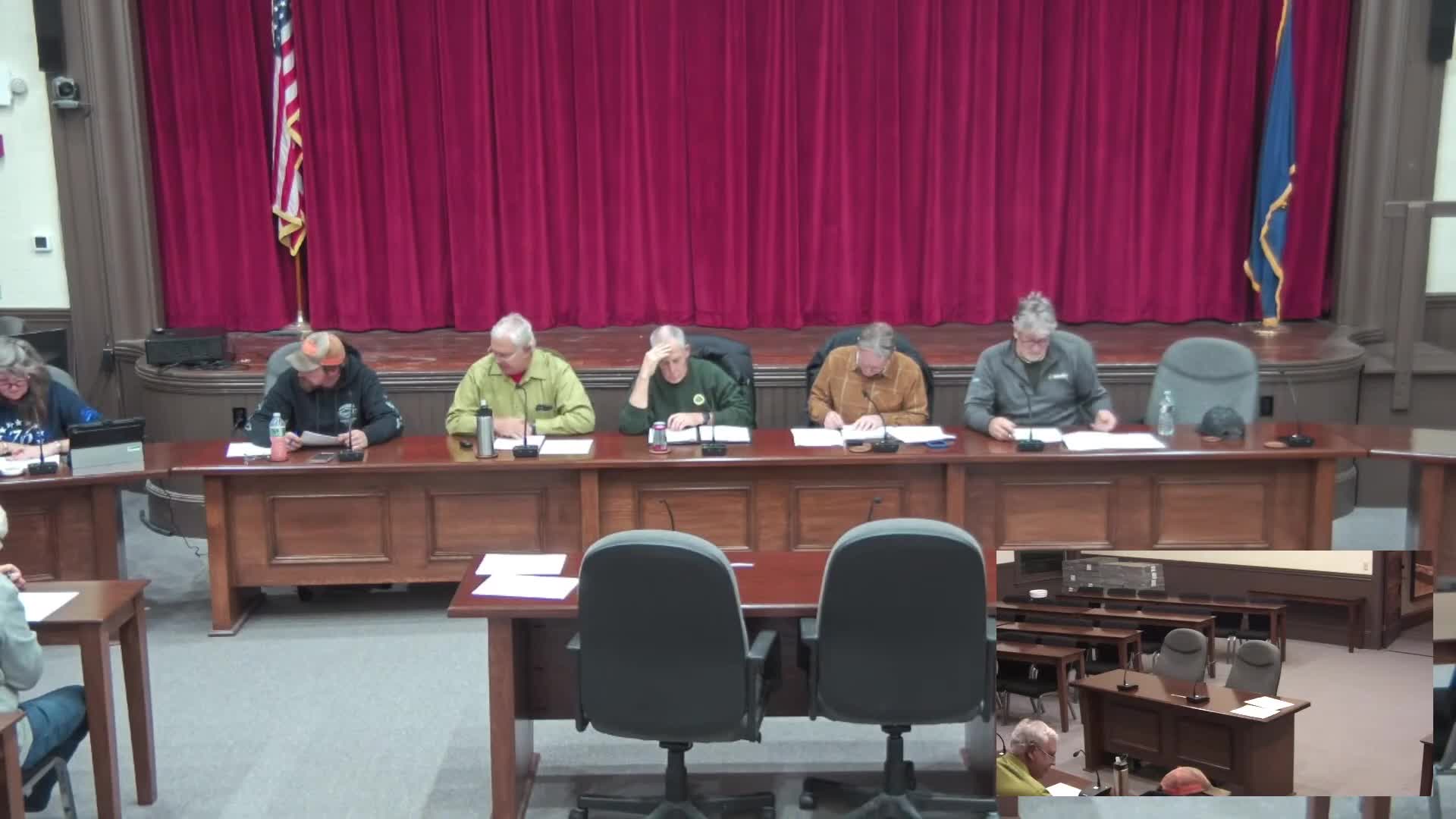
Summary
The Alton Town Zoning Advisory Committee voted on Nov. 10, 2025, to forward seven proposed zoning amendments to the town Planning Board after adopting counsel-recommended wording changes and several specific policy clarifications.
The Alton Town Zoning Advisory Committee voted on Nov. 10, 2025, to forward seven proposed zoning amendments to the town Planning Board after adopting counsel-recommended wording changes and several specific policy clarifications. The packet includes statute citations for multiple definitions, removal of a local "buildable area" definition, retention of a HUD reference in the pre-site-built housing definition, and a restriction of no more than one accessory dwelling unit (ADU) per lot.
Why it matters: The committee's edits affect how applicants and town staff will interpret permit requirements. Citing state statute for technical definitions shifts long‑term upkeep of those definitions to the state level but may require clearer guidance for lay applicants; deleting the local buildable-area definition removes a locally codified standard that could be reintroduced if voters decline related amendments.
Planning staff presented a "fourth draft" of the amendments, saying the changes were largely organizational and included adjustments requested by town counsel. On proposed Amendment No. 2 — the definition of an "abutter" — town counsel recommended replacing the full verbatim definition with a citation to RSA 672:3 "as it may be amended from time to time." Committee member Doug Brown moved to adopt counsel's language; the motion was seconded and the committee approved the change. The transcript does not record a numerical vote tally for that motion.
On the related question of whether the ordinance should retain a local definition of "buildable area," the committee debated convenience for applicants versus the maintenance burden of updating local text. A motion to retain the local definition failed for lack of a second; a subsequent motion to adopt town-council's recommendation to remove the term from the amendment passed, recorded in the transcript as three ayes and one nay.
The committee also debated definitions for pre-site-built housing. Norma (referenced in discussion as an advocate for keeping HUD language) had suggested retaining a reference to the U.S. Department of Housing and Urban Development. The committee voted to keep the HUD reference as counsel recommended.
Amendment No. 3 — changes to the accessory dwelling unit (ADU) provisions — drew substantial discussion. Counsel proposed using the state ADU language and adding a citation; the committee adopted a compromise to keep the local updated definition while also including counsel's citation language. The committee additionally approved a substantive change allowing ADUs on lots that already contain multiple dwelling units and explicitly limited ADUs to "no more than one ADU" per lot.
After agreeing item-by-item changes, the committee unanimously moved to forward Amendments 1 through 7, as revised, to the Planning Board for presentation and potential approval at the next Planning Board meeting. (The transcript records the motion and passage but does not provide a complete roll-call tally for that final forwarding motion.)
Public comment: Richard Shea, identifying himself as a member of the Board of Selectmen speaking as an individual, thanked the committee for the discussion and urged that the packets given to applicants be updated promptly when state law changes so applicants cannot say they relied on outdated guidance.
Next steps: The Planning Board will receive the revised package for presentation and consideration; the committee discussed the option of bundling the amendments into a single Planning Board agenda item or presenting them individually.
Notes on procedure and record: Several votes in the meeting were recorded in voice ("aye/nay") without a full roll-call tally in the audio transcript. When a numeric tally is recorded in the transcript (for example, the recorded 3–1 vote on removing the buildable-area definition), that tally is included above. Where counts are not specified in the transcript, the article reports passage or adoption and notes that a detailed tally was not recorded in the provided record.