Get Full Government Meeting Transcripts, Videos, & Alerts Forever!
Get email alerts on the Legislative Roundup topic
No spam. Unsubscribe anytime.
Utah Senate advances multiple bills and resolutions on Day 4, including protections for vulnerable adults and legislative pay resolution
Summary
On Day 4 of the 2018 Utah legislative session the Senate adopted numerous committee reports, passed a joint resolution setting in‑session employee pay under suspension of the rules and advanced bills including SB67 (fireworks policy), SB88 (financial exploitation protections), SB63 (charity registration amendments) and others.
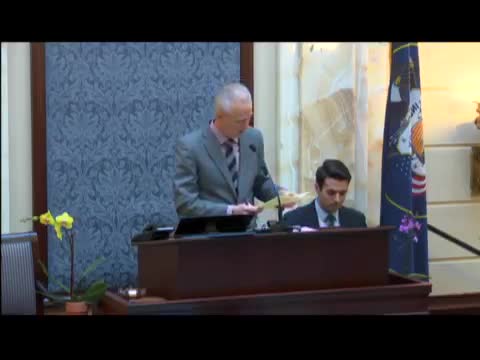
The Utah Senate handled a long calendar on Jan. 25, advancing a series of committee reports, deregulatory reauthorizations and policy bills while approving several resolutions under suspension of the rules.
Committee chairs reported favorable recommendations on a string of bills affecting judiciary, natural resources, transportation and other areas; the Senate unanimously adopted the committee reports on the floor. The Rules Committee assigned numerous bills to standing committees and the Senate referred newly introduced bills (e.g., SB112, SB113, SJR7) to Rules.
Under suspension of the rules, the Senate passed SJR4 to set pay for in-session legislative employees for the 2018 session; the Senate suspended rules by voice vote and the roll call recorded "27 yay votes, 0 nay votes, 2 absent" before sending the resolution to the House for consideration.
The Senate also advanced or recorded procedural passage on multiple bills that day. Highlights (floor-record tallies where provided): SB67 (fireworks storage/disposal policy) was transmitted to the House after the floor recorded 28 yea, 0 nay; SB88 (financial exploitation of vulnerable adults) moved to third reading and a later roll call recorded 25 yea, 0 nay; SB63 (charity registration amendments) and SB85 (controlled‑substance disposal amendments) were recorded on the floor with affirmative tallies (SB63 sent to the House; SB85 recorded 24 yea, 0 nay). SB65 (child‑neglect amendments) was read a third time after a roll call recorded 24 yea votes, 0 nay, 5 absent.
On SB88, sponsor-floor discussion emphasized temporary holds by financial institutions when exploitation is suspected, a requirement to notify the Division of Securities within two days and a short investigative window for the division (7 days as stated on the floor). Questions from Senator Hilliard raised the risk of bad-faith holds and whether the customer could challenge a hold; sponsor replied that the reporting and investigative process limits abuse and that a bad actor who embezzled funds would effectively self-report under these rules.
Other items on the calendar included SB78 (Office of Licensing amendments related to foster-care licensing sanctions), SCR3 (a concurrent resolution supporting civil‑liberties policies on campuses), SCR4 (a resolution on opioid‑related postoperative respiratory depression awareness), and committee scheduling and caucus announcements.
Why it matters: the floor actions moved a mix of public-safety, family‑services, regulatory and administrative items forward and included measures that directly affect local entities (schools, foster families, financial institutions) and statewide awareness resolutions. Most votes were recorded with overwhelming yea tallies; detailed implementation and any technical amendments may follow in committees or the companion chamber.
Next steps: Bills that passed or were transmitted will proceed according to standard legislative flow (House consideration/enrollment or later floor action). Several sponsors noted substitute language or further committee review may appear before final enactment; the transcript records some sponsors indicating a substitute bill could be filed prior to third‑reading consideration.