Get Full Government Meeting Transcripts, Videos, & Alerts Forever!
Get email alerts on the Homelessness topic
No spam. Unsubscribe anytime.
Senate advances House Bill 441 to fund resource centers, set timeline to close Rio Grande shelter
Summary
Senator Milner’s House Bill 441—amending the state’s homeless strategy to fund distributed resource centers and set a timetable toward closing the Rio Grande shelter—drew debate over local authority and site-selection process before the Senate advanced and later passed the bill.
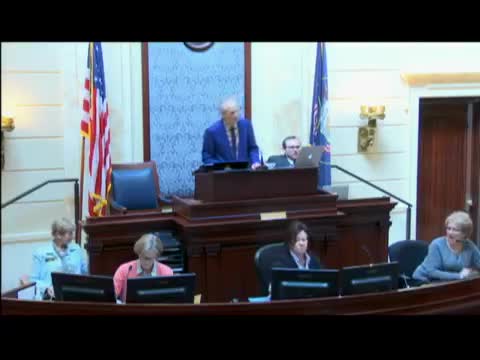
Senators on Feb. 27 debated amendments to House Bill 441, legislation that would move the state toward a distributed network of resource centers for people experiencing homelessness and set a timeline for closing the Rio Grande emergency shelter in Salt Lake City. Sponsor Senator Daniel McCay Milner (presented as Senator Milner in the transcript) said the amendment aligns fiscal notes with the budget and establishes public site-selection timelines and public hearings.
Milner described a multi-year effort to break the “one-size-fits-all” shelter model into several resource centers — two in Salt Lake City, one outside the city and the existing Midvale family shelter — to serve distinct populations (men, women, families) while offering diversion and quicker transitions to housing or treatment. He said the bill provides one-time funding for facility creation plus $250,000 in ongoing support and requires a public site-selection process, open houses (scheduled March 14 and March 18) and subsequent county deliberations with submissions to the state homeless coordinating committee by March 30.
Opponents on the floor pressed that local governments risk being sidelined. Senator Thatcher warned that the bill as drafted gives the county executive significant authority over site acquisition and title, and she asked for either an amendment guaranteeing city participation or time to work toward better safeguards. Milner responded that the bill includes numerous safeguards, public meetings, and consultation with workforce services and Executive Appropriations before final selections, and he urged passage to continue the three-year plan.
The Senate recorded a procedural roll call on the motion to advance the bill and recorded 25 yeas and 4 nays at the second-reading step. The Senate later proceeded with final passage procedures for the measure (provenance below). Throughout the debate senators emphasized the need to coordinate service delivery statewide, the role of pay-for-success pilots and the need for hospice and wraparound services for some homeless populations.
Next steps: the bill was placed for final reading and transmission procedures toward the House and enrollment, per the recorded floor action.