Get Full Government Meeting Transcripts, Videos, & Alerts Forever!
Get email alerts on the Renewable Energy topic
No spam. Unsubscribe anytime.
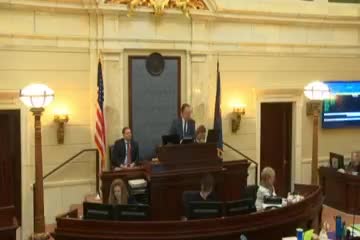
Senate passes opt‑in Community Renewable Energy Act with consumer opt‑out protections
Summary
The Senate passed second substitute House Bill 411, enabling local governments to opt into programs that buy 'net 100% renewable' electricity for their communities, while preserving opt‑out windows for residents and insulating other ratepayers from associated costs. The bill passed 23–6 on the Senate floor.
The Utah Senate on March 14 approved the Community Renewable Energy Act (second substitute, House Bill 411), a framework allowing municipalities and counties to opt into a program intended to achieve "net 100%" renewable electricity over a period of time. Sponsor Senator Hemmert said the measure followed three years of bargaining among communities, Rocky Mountain Power and other stakeholders and includes multiple consumer protections, an extended opt‑out window and regulatory oversight by the Utah Public Service Commission (Sen. Hemmert, SEG 3195–3206).
Key points: Under the bill, a community that adopts an opt‑in resolution would automatically enroll residents but must provide mailed notice and a multi‑stage opt‑out process. The transcript records a "hold harmless" period — described by the sponsor — during which households can opt out after receiving notice; large electricity users must be directly engaged with in person (Sen. Hemmert, SEG 3216–3237).
Cost and rate protections: The bill isolates costs to participating communities so Rocky Mountain Power cannot spread the program’s incremental costs to other ratepayers statewide; the Public Service Commission retains rate‑setting oversight before any charges are assessed.
Technical limits and discussion: Senators raised technical questions about what "net 100% renewable" means in practice when variable generation exists. Sponsor Hemmert and questioners (Sen. Okerlund) clarified that "net" refers to annual accounting — energy purchases and renewable attributes aggregated over a year — and that participants will still rely on conventional grid resources at times when wind and solar are not producing (Sen. Okerlund, SEG 3271–3280; Sen. Hemmert, SEG 3286–3296).
Vote and outcome: The Senate passed second substitute House Bill 411 by roll call; the clerk recorded 23 yay votes and 6 nay votes with no absences (Roll call result, SEG 3386–3388). The bill will go to the House for further consideration and any enrolling steps.
Sponsor quote: "What they're trying to do is they have a goal to be net 100% on renewable electricity by 2030," Sen. Hemmert said, describing participating communities’ goals and the opt‑in/opt‑out protections built into the bill.
Next steps: The measure requires regulatory filings and rate proceedings at the Public Service Commission if communities move forward; sponsors said implementation details and oversight are central to protecting nonparticipating ratepayers.
Context: The bill was described on the floor as a negotiated, multi‑party compromise intended to allow communities that have made local commitments on clean energy to formalize procurement without shifting costs to other customers.