
Eugene pushes ahead on major airport expansion as officials launch feasibility study to close funding gap
Get AI-powered insights, summaries, and transcripts
Subscribe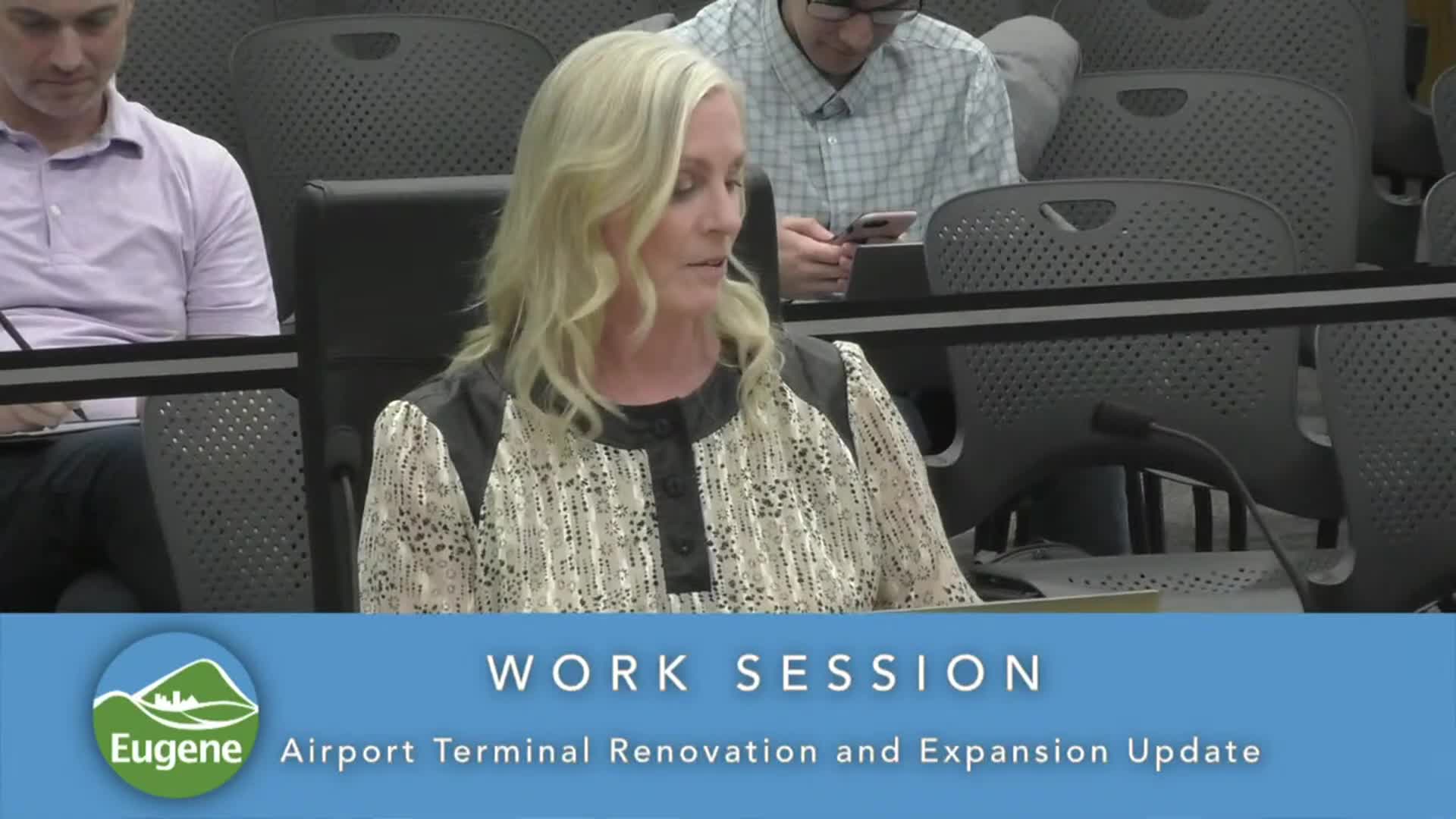
Summary
Eugene — Airport Director Catherine Stevens told the Eugene City Council on Nov. 10 that the airport’s terminal renovation and expansion program (EUG Trex) is moving forward but faces a roughly $240 million funding gap for the Concourse C buildout.
Eugene — Airport Director Catherine Stevens told the Eugene City Council on Nov. 10 that the airport’s multiyear terminal renovation and expansion program, branded EUG Trex, is moving forward but faces a sizable funding shortfall for the full Concourse C buildout.
Stevens said the airport has identified nearly half of the funding needed for enabling projects and that a 30‑year bond could cover roughly $208 million. "The project total cost shows the maximum amount of utilizing a 30 year bond at a total of more than 208,000,000," she said. But, she added, "this includes a total of approximately 240,000,000 needed in additional" funding beyond that amount, leaving a near half‑billion‑dollar program when combined with previously identified amounts.
The presentation reviewed recent work and near‑term construction: a Concourse A asphalt apron rehabilitation this summer that Stevens said was "substantially complete" and an upcoming spring project to add about 7,000 square feet of shared seating and an ADA emergency exit lift at Concourse A. Stevens also described a design for an outbound baggage building and an explosives‑detection system, noting the airport received about $1.4 million from a TSA grant for the design phase.
Stevens framed the expansion as a response to rising demand — "Since 2019, passenger numbers at EUG have increased 41%" — and capacity constraints: the terminal reached gate capacity in May 2021, she said, limiting the airport’s ability to add nonstop flights. She also highlighted projected regional benefits: the airport currently handles about 1.8 million passengers a year and "supports more than 10,000 local jobs," and she said doubling terminal capacity would more than double associated jobs and local economic output, producing an estimated $3.6 billion regional impact.
Councilors pressed Stevens on specifics. Councilor Groves asked whether the city planned to reconfigure the drop‑off and pickup area; Stevens said that work is part of the enabling projects but its timing depends on securing federal reimbursements before extending local funds. Councilor Evans raised a long‑running hotel parcel issue: Stevens said the airport has run three unsuccessful RFP cycles since about 2010 and that FAA rules limit airport land leases to a maximum of 50 years; she noted some developers still see the return‑on‑investment horizon as too long and that the city would consider alternate development models and return to council if a longer lease is required.
Stevens acknowledged uncertainty tied to federal grant language. She said earlier grant agreement language that would have required cooperation with ICE conflicted with Oregon law; the city attorney and FAA agreed to redlined grant agreements removing that language after the city joined litigation and obtained injunctive relief. "We have some injunctive relief right now," she said, and staff are drawing down allowable grants while monitoring ongoing appeals.
With traditional bond financing insufficient to cover the full buildout in a timely way, Stevens said the airport will study nontraditional options through a new Liftoff EUG feasibility study that launches this week. The study will test a mix of additional state and federal grants, congressionally directed spending, public‑private partnerships, naming rights and benefactor funding. "We've seen naming rights here," Stevens said, and the study will test which combinations are viable.
Stevens said the feasibility effort will include a 10‑minute public survey and stakeholder outreach; she estimated roughly six months for the consultant team to report back and noted the study will be presented at community events including the Chamber economic summit and City Club of Eugene. There were no formal votes or decisions at the Nov. 10 work session.
Next steps: staff will continue drawing down eligible grant funds, begin the Liftoff EUG feasibility study and carry the presentation to community briefings in the coming week. The council did not take formal action at the meeting.